

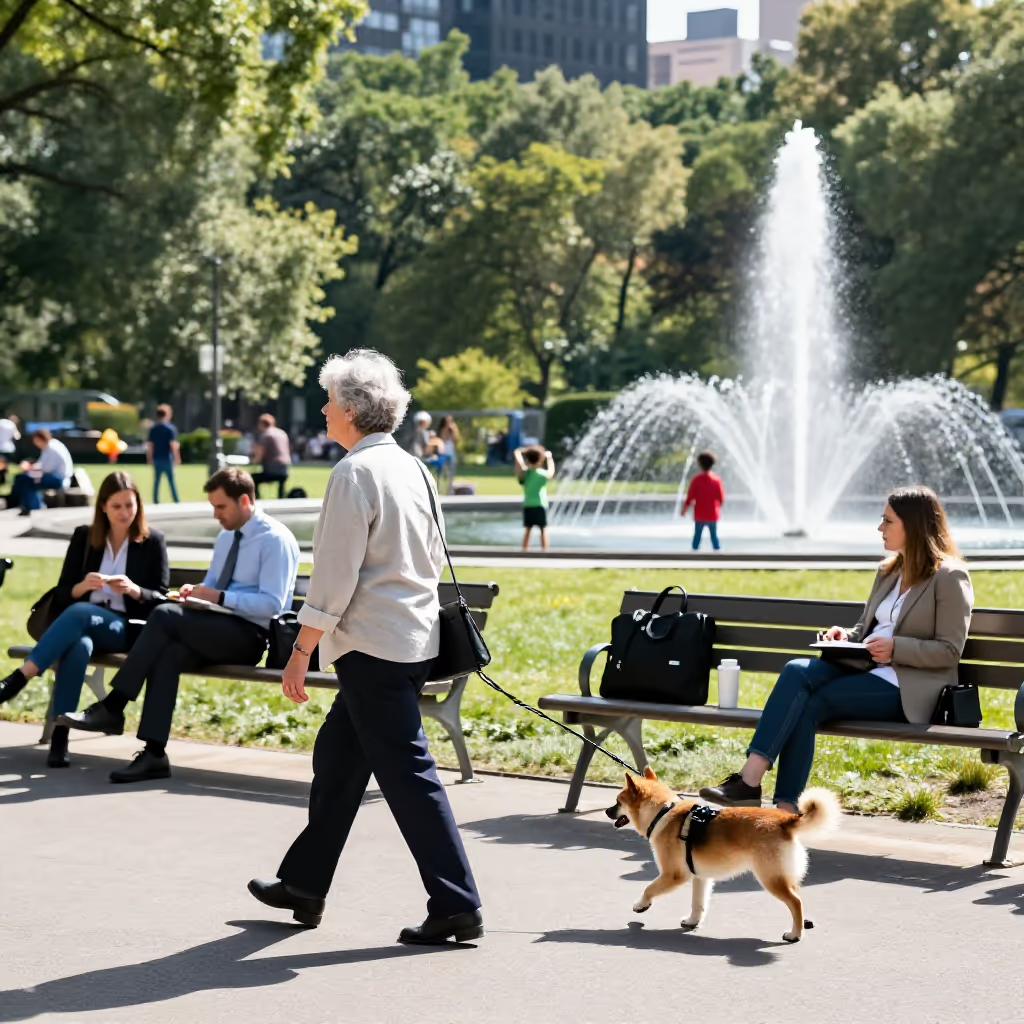
tagsüber
during the day
During the daytime; in the period between sunrise and sunset, as opposed to the night.
EXAMPLE
Tagsüber ist es hier sehr laut, aber nachts ist es ruhig.
During the day it is very loud here, but at night it is quiet.
during the day
Loading your saved state.
during the day
During the daytime; in the period between sunrise and sunset, as opposed to the night.
Tagsüber ist es hier sehr laut, aber nachts ist es ruhig.
During the day it is very loud here, but at night it is quiet.
The word is made up of 'Tag' (day), the linking -s, and 'über' (over). So it literally means 'spread over the day'.
Tagsüber arbeite ich im Büro, abends entspanne ich mich zu Hause.
During the day I work in the office; in the evening I relax at home.
As an adverb, 'tagsüber' (during the day) can stand at the beginning of the sentence (position 1) or in the middle of the sentence. If it stands at the beginning, the verb follows immediately.
Tagsüber scheint die Sonne.
During the day, the sun shines.
'Tagsüber' (during the day) is very often used as a direct contrast to 'nachts' (at night), to distinguish activities or states during the day from those at night.
Viele Tiere sind tagsüber aktiv und schlafen nachts.
Many animals are active during the day and sleep at night.