


die Taille
waist
The narrowest part of the human torso, located between the ribs and the hips.
EXAMPLE
Das Kleid betont ihre schmale Taille.
The dress emphasizes her slim waist.
waist
Loading your saved state.
waist
The narrowest part of the human torso, located between the ribs and the hips.
Das Kleid betont ihre schmale Taille.
The dress emphasizes her slim waist.

waist
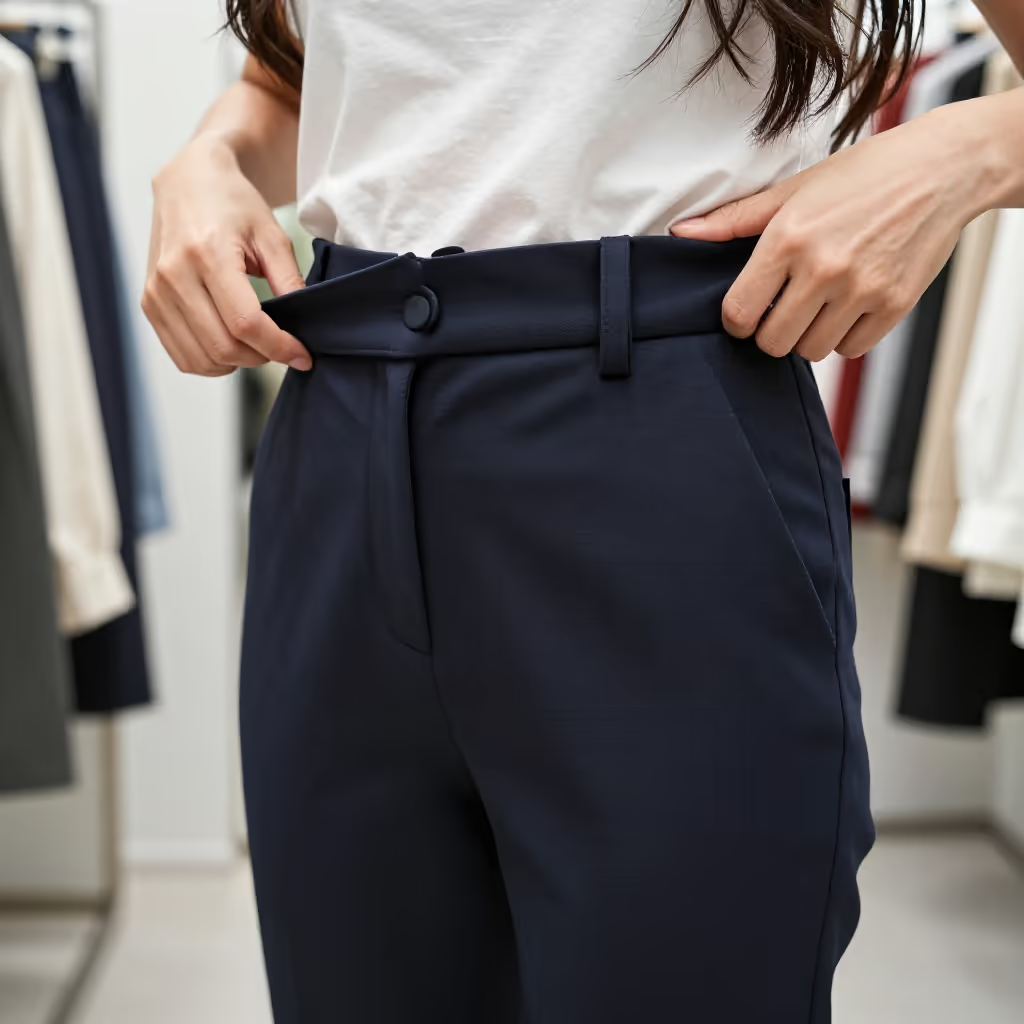
The corresponding, usually close-fitting part of a garment located at the level of the body's waist.
Die Taille dieser Hose ist mir zu weit.
The waist of these pants is too wide for me.
You can tell from context whether the body part or part of a garment is meant. If people are talking about a person, it refers to the body. If they are talking about a dress, pants, or a skirt, it refers to the corresponding part of the garment.
Er legte seinen Arm um ihre Taille.
He put his arm around her waist.
When talking about the waist as a body part, adjectives such as 'schmal' (narrow/slim), 'schlank' (slim), or 'breit' (wide) are often used. Verbs such as 'betonen' (to emphasize) or 'haben' (to have) are also common.
Sie trainiert viel, um eine schlanke Taille zu bekommen.
She works out a lot to get a slim waist.
When it comes to clothing, 'Taille' (waist) describes the fit of the garment. People often say that the waist is 'zu eng' (too tight) or 'zu weit' (too wide), or that it needs to be 'angepasst' (altered/adjusted).
Der Schneider kann die Taille der Jacke anpassen.
The tailor can adjust the waist of the jacket.
federation / waistband / bunch
When referring to clothing, Bund means the actual upper edge of a pair of trousers or a skirt. Taille, by contrast, refers to the usually close-fitting part of a garment at the level of the body's midsection. Use Bund for the edge, and Taille for the garment's shape and fit in this area.
Die Taille des Kleides sitzt beim Stehen zu locker.
The waist of the dress is too loose when standing.
Der Bund der Hose drückt beim Sitzen.
The waistband of the trousers digs in when sitting down.