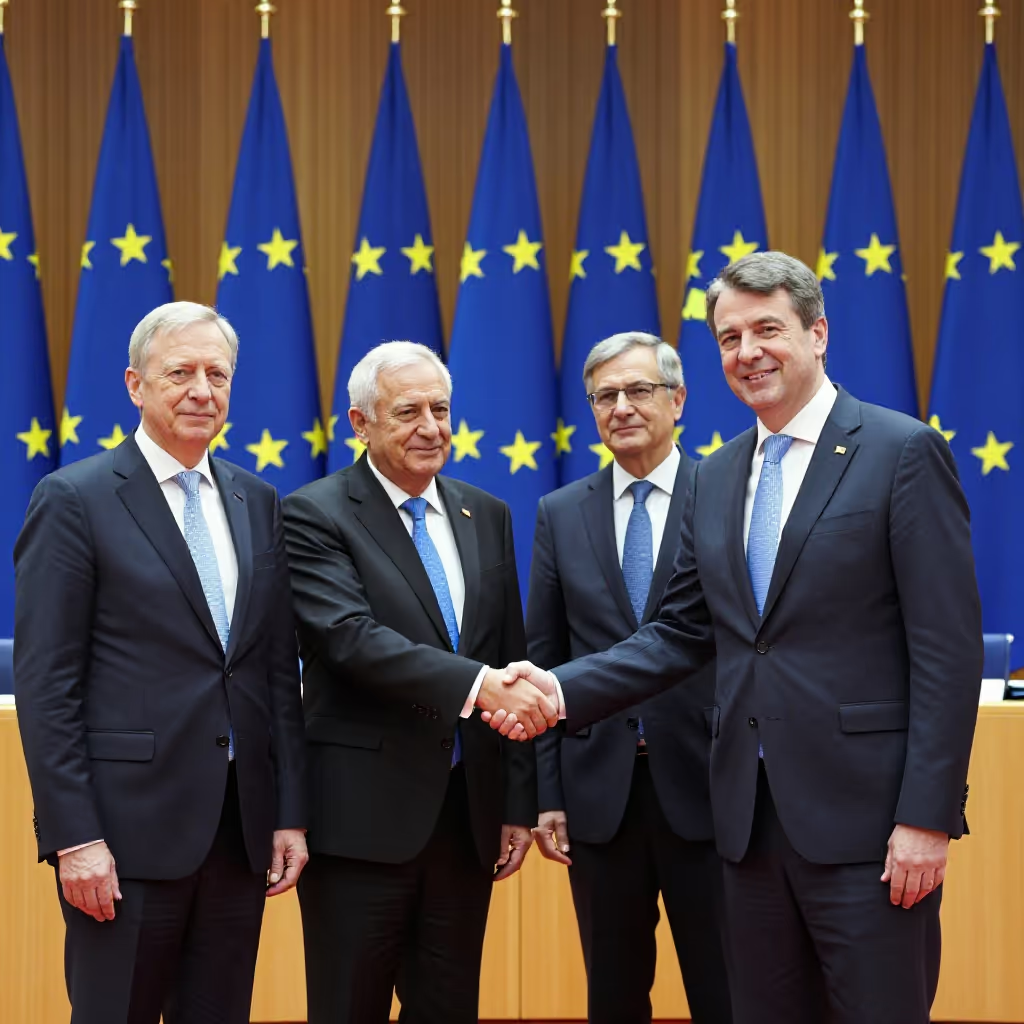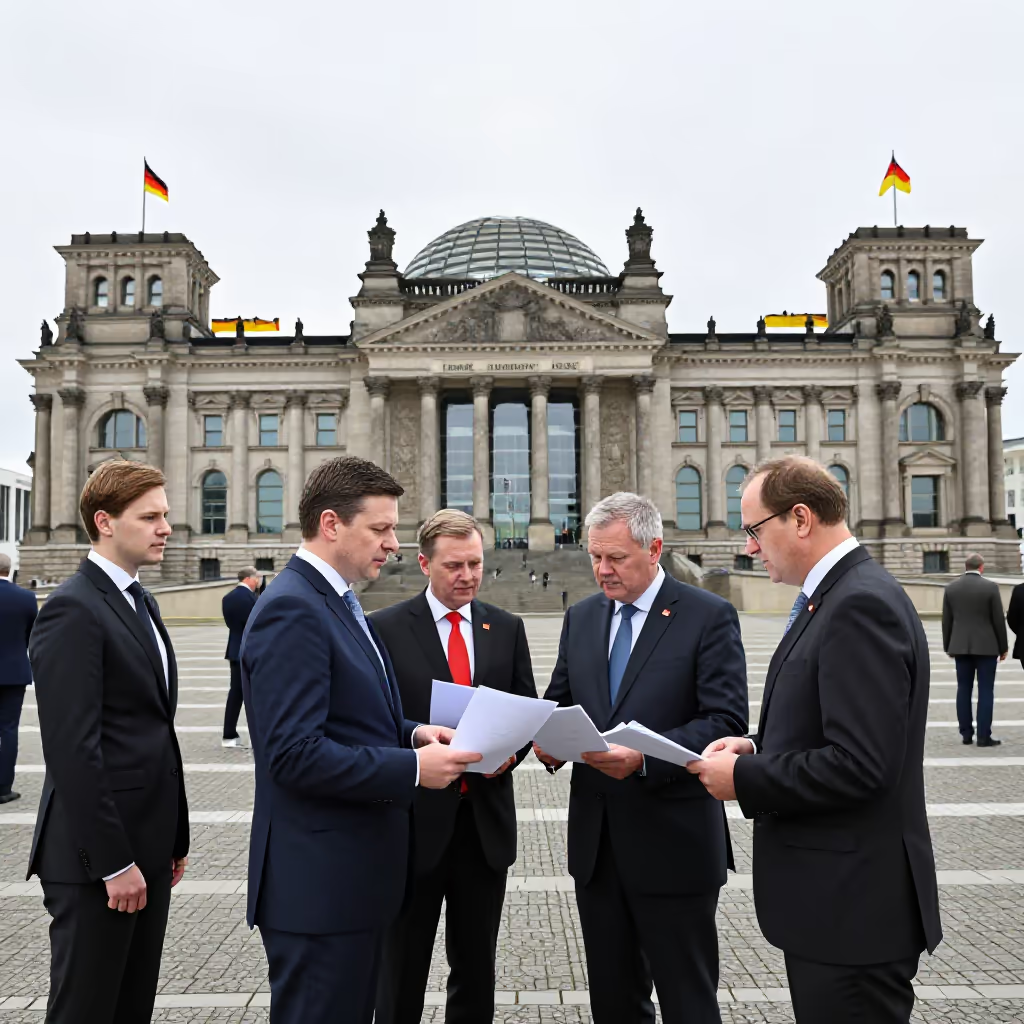
The federal level of government of a state, especially the Federal Republic of Germany. Refers to the entirety of the central state institutions.
example
Der Bund investiert in den Ausbau der digitalen Infrastruktur.
The federal government is investing in the expansion of digital infrastructure.
Usage tips
Word family
The noun 'der Bund' is closely related to the verb 'binden' (to bind/tie). This connection helps explain the different meanings: a government binds a state together, an alliance binds partners, and a waistband binds the garment.
EXAMPLE
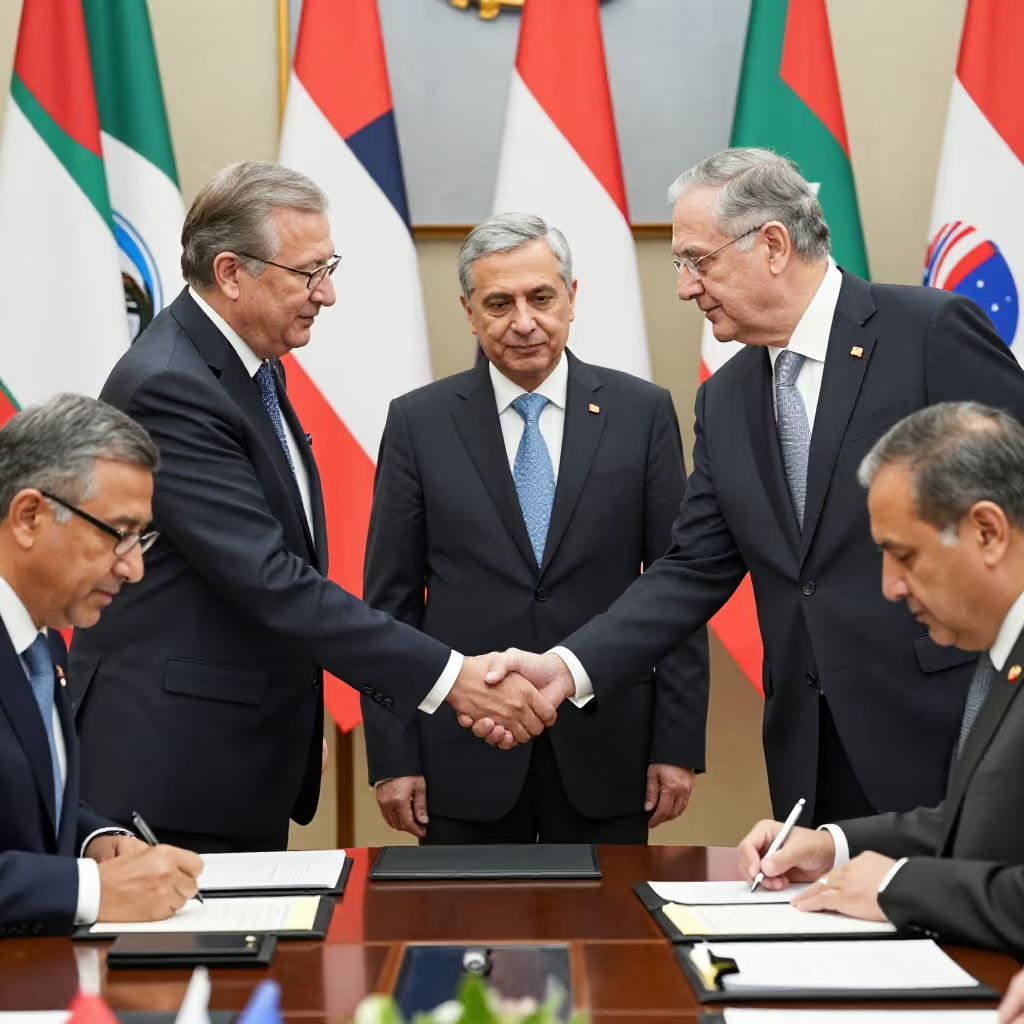
Die beiden Länder schlossen einen Bund, um ihre wirtschaftliche Zusammenarbeit zu stärken.
The two countries formed an alliance to strengthen their economic cooperation.
Distinguishing meanings
The context makes it clear which meaning is intended. In political news, 'der Bund' refers to the federal government. In connection with clothing, it means the waistband of trousers or a skirt. With foods like herbs or vegetables, it refers to a tied-together bunch.
EXAMPLE
Der Bund hat neue Gesetze zur Cybersicherheit beschlossen.
The federal government has passed new laws on cybersecurity.
Use in political contexts
When 'der Bund' refers to the German federal government, it is often treated like a proper noun and capitalized. In this context, people also speak of 'dem Bund und den Ländern' (the federal government and the states) to describe the federal structure.
EXAMPLE
Die Finanzierung des Projekts wird zwischen Bund und Ländern aufgeteilt.
The funding of the project will be divided between the federal government and the states.
Typical collocations
When 'Bund' means an alliance or a pact, it is often used with the verb 'schließen' (to conclude/form). The fixed phrase is 'einen Bund schließen' (to form an alliance).
EXAMPLE
Die beiden Unternehmen schlossen einen Bund, um gemeinsam ein neues Produkt zu entwickeln.
The two companies formed an alliance to develop a new product together.
Typical collocations
In the meaning of 'tied-together quantity', 'Bund' often appears with things that can be bundled. Typical examples are 'ein Bund Karotten' (a bunch of carrots), 'ein Bund Radieschen' (a bunch of radishes), or 'ein Bund Schlüssel' (a bunch of keys).
EXAMPLE
Er trug einen großen Bund Schlüssel an seinem Gürtel.
He carried a large bunch of keys on his belt.
Fixed expression
The poetic description for a marriage, 'der Bund fürs Leben' (the bond for life), is almost always combined with the verb 'schließen' (to conclude/enter into): 'den Bund fürs Leben schließen' (to enter into the bond of marriage).
EXAMPLE
Vor zehn Jahren haben meine Eltern den Bund fürs Leben geschlossen.
Ten years ago, my parents entered into the bond of marriage.
Compare with
confusable
Bund vs Land
country / countryside / land
'das Land' and 'der Bund' can both refer to levels of government in Germany. In this context, 'das Land' is a federal state, for example Bavaria or Hesse. 'der Bund', on the other hand, refers to the central level of government, that is, the Federal Republic with its shared institutions. The words are easily confused because you often hear 'Bund und Länder' (the federal government and the states). The important point is: a Land makes decisions for its own territory, while der Bund makes decisions for all of Germany.
Bund
Der Bund unterstützt die Gemeinden mit zusätzlichem Geld.
The federal government is supporting the municipalities with additional money.
Land
Das Land bezahlt die neuen Lehrerstellen an den Schulen.
The state is paying for the new teaching positions at the schools.