

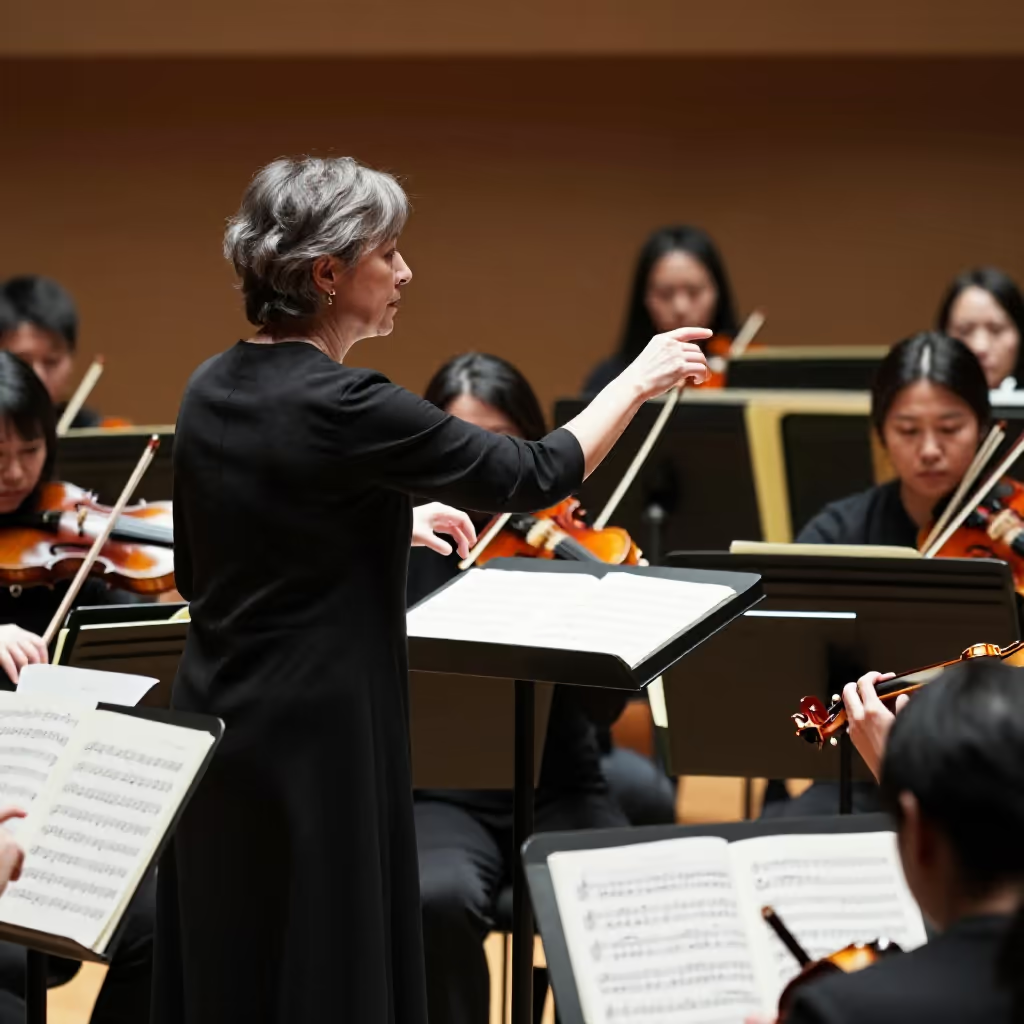
der Takt
beat / meter
In music, the basic rhythmic unit that groups together a certain number of beats and determines the meter of a piece.
EXAMPLE
Der Walzer steht im Dreivierteltakt.
The waltz is in three-quarter time.
beat / tact
Loading your saved state.
beat / meter
In music, the basic rhythmic unit that groups together a certain number of beats and determines the meter of a piece.
Der Walzer steht im Dreivierteltakt.
The waltz is in three-quarter time.

interval / rhythm
The speed or rhythm at which something regularly takes place or is repeated.
Die Maschinen in der Fabrik arbeiten im Sekundentakt.
The machines in the factory work at one-second intervals.

tact
The ability to behave considerately and appropriately in social situations so as not to hurt other people’s feelings; tactfulness.
Er hat die schlechte Nachricht mit viel Takt überbracht.
He delivered the bad news with a lot of tact.
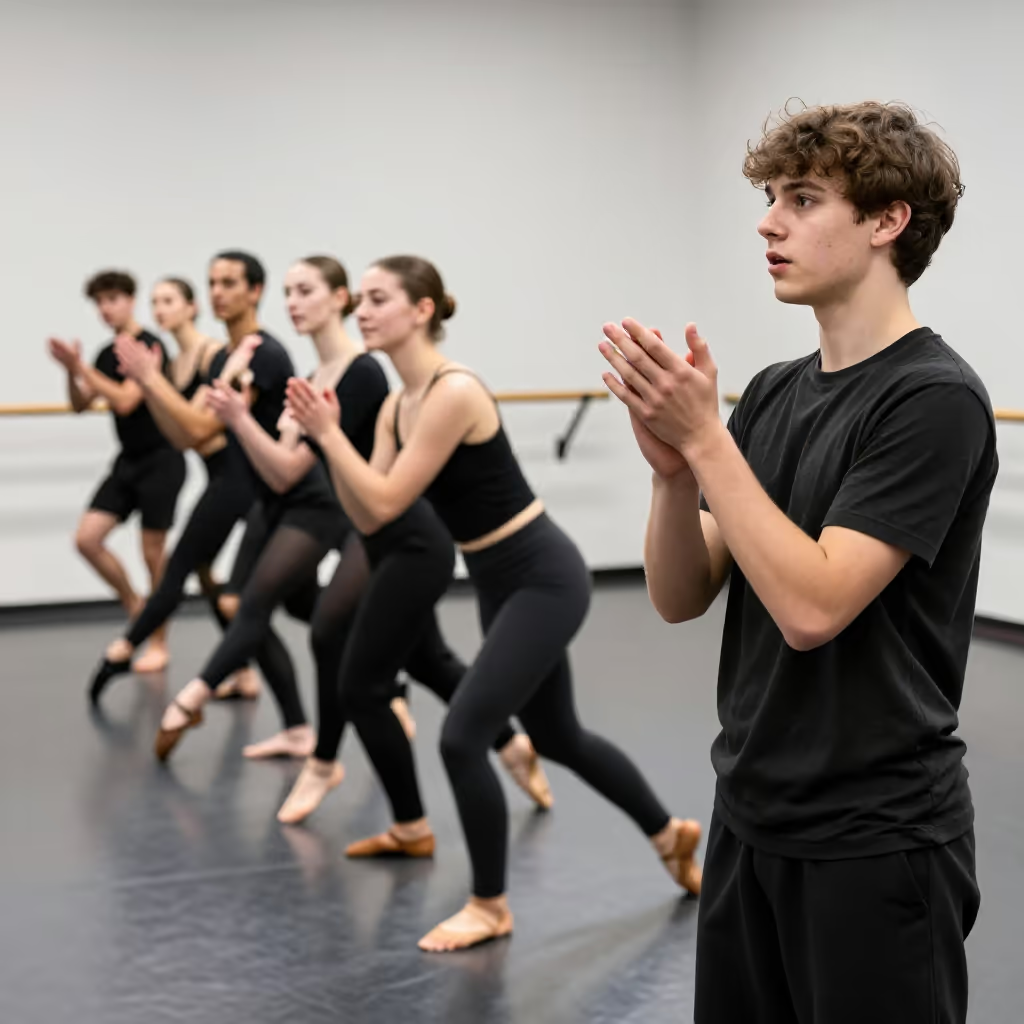
to throw off rhythm
To disturb someone or something in their rhythm, confuse them, or make them lose their train of thought.
Der Zwischenruf des Zuschauers brachte den Redner völlig aus dem Takt.
The audience member’s interjection completely threw the speaker off rhythm.

stroke
A working cycle in an internal combustion engine.
Ein Viertaktmotor benötigt vier Takte für einen vollständigen Arbeitszyklus.
A four-stroke engine needs four strokes for one complete working cycle.
The many meanings of “Takt” (beat/tact) can be distinguished well by context. If it is about music, it means rhythm (m01). With machines or processes, it refers to frequency or intervals (m02). In social interaction, it refers to tactfulness (m03).
Bitte zeig ein wenig Takt und sprich das Thema nicht vor allen an.
Please show a little tact and don’t bring up the topic in front of everyone.
The expression “jemanden aus dem Takt bringen” (to throw someone off rhythm) means to disturb or confuse someone. It can refer both to an actual rhythm and to a person’s concentration.
Die laute Musik hat mich beim Tanzen völlig aus dem Takt gebracht.
The loud music completely threw me off rhythm while dancing.
In the meaning “Frequenz” (frequency), “Takt” (interval/rhythm) is very often used in the fixed structure “im [Zeiteinheit]-takt” (at [time unit] intervals). This then forms a new word.
Die U-Bahn fährt hier morgens im Fünfminutentakt.
The subway runs here every five minutes in the morning.
When “Takt” (tact) means social sensitivity, it is often combined with verbs like “haben” (to have), “besitzen” (to possess), or “beweisen” (to demonstrate). A closely related and more common word is “das Taktgefühl” (tactfulness).
Sie hat viel Takt bewiesen, als sie die heikle Situation gelöst hat.
She showed a lot of tact when she resolved the delicate situation.
In a musical context, the structure “im [Zahl]-takt” (in [number] time) or “im [Zahl/Zahl]-Takt” (in [number/number] time) is often used to describe the meter.
Dieses Lied ist im typischen Viervierteltakt geschrieben.
This song is written in typical four-four time.
speed / tissue / tempo
In music, both words refer to the timing and rhythmic organization of a piece. „Tempo“ mainly refers to how fast the piece is played, while „Takt“ refers to its rhythmic structure in regular beats. Use „Tempo“ for a change in speed and „Takt“ for the counting structure.
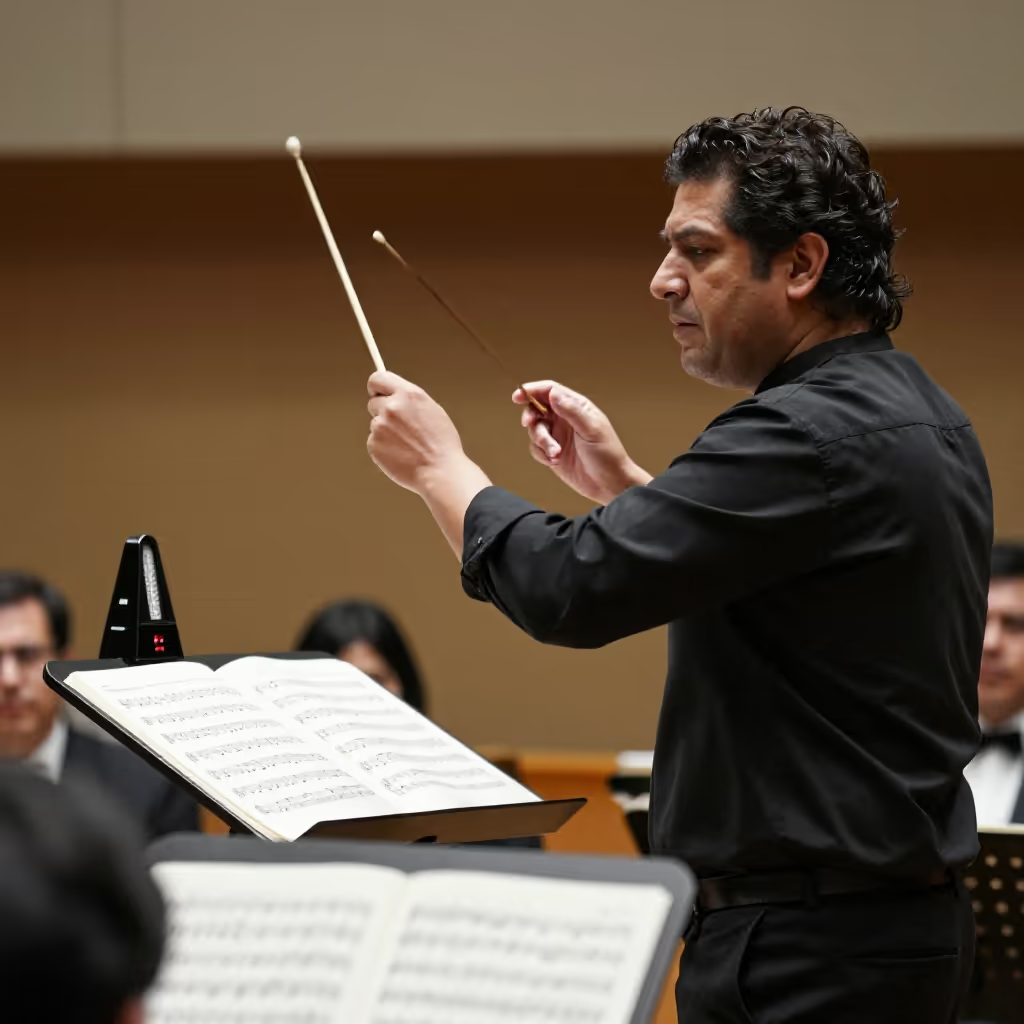
Der Dirigent zählt den Takt des Liedes an, bevor das Orchester beginnt.
The conductor counts in the song's beat before the orchestra begins.
Der Dirigent verlangsamt das Tempo des Liedes für den ruhigen Mittelteil.
The conductor slows down the song's tempo for the quiet middle section.