

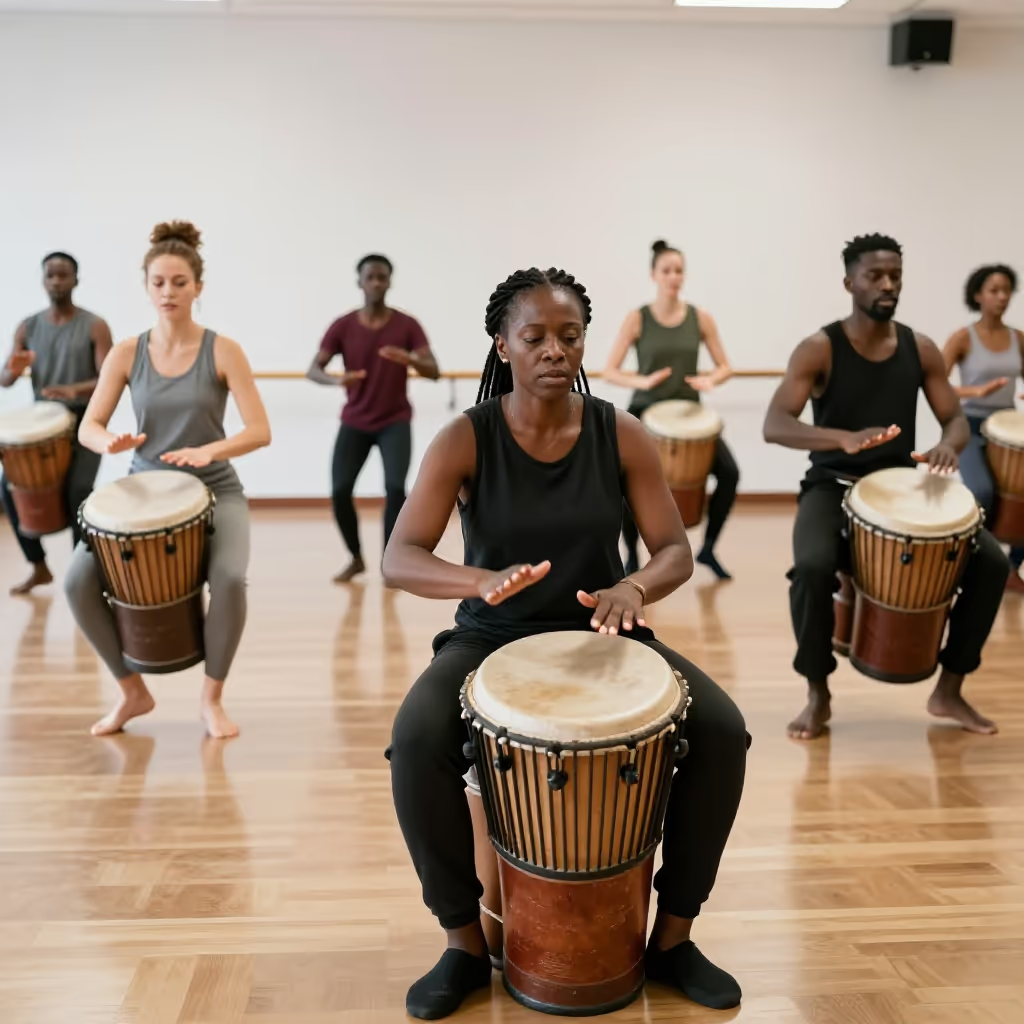
der Rhythmus
rhythm
A regular, recurring sequence of sounds, movements, or stresses, especially in music and dance.
EXAMPLE
Das Schlagzeug gibt den treibenden Rhythmus des Liedes vor.
The drums set the driving rhythm of the song.
rhythm
Loading your saved state.
rhythm
A regular, recurring sequence of sounds, movements, or stresses, especially in music and dance.
Das Schlagzeug gibt den treibenden Rhythmus des Liedes vor.
The drums set the driving rhythm of the song.

rhythm
A regularly repeating process or cycle in biological or everyday life.
Ein fester Schlafrhythmus ist wichtig für die Gesundheit.
A regular sleep rhythm is important for your health.

rhythm
In language and poetry, the structuring of the flow of speech through the alternation of stressed and unstressed syllables.
Der Rhythmus dieses Gedichts ist sehr eingängig.
The rhythm of this poem is very catchy.
Pay attention to the unusual spelling, which comes from Greek: 'Rh' at the beginning and 'th' in the middle. This is a common source of mistakes when writing.
Der richtige Rhythmus ist beim Tanzen sehr wichtig.
The right rhythm is very important when dancing.
The expressions 'aus dem Rhythmus kommen' (to get out of rhythm) and 'jemanden aus dem Rhythmus bringen' (to throw someone off their rhythm) are very common. They mean that you get confused or that a familiar routine is disrupted.
Die ständigen Unterbrechungen haben mich komplett aus dem Rhythmus gebracht.
The constant interruptions completely threw me off my rhythm.
In music, the rhythm is often described with adjectives such as 'schnell' (fast), 'langsam' (slow), or 'treibend' (driving). You can 'den Rhythmus vorgeben' (set the rhythm), 'halten' (keep it), or 'mitklatschen' (clap along).
Alle klatschten im Rhythmus der Musik.
Everyone clapped to the rhythm of the music.
For biological or everyday cycles, 'Rhythmus' (rhythm) is often used in compound words, for example 'Schlafrhythmus' (sleep rhythm) or 'Tagesrhythmus' (daily rhythm).
Nach der Reise musste ich meinen Schlafrhythmus erst wiederfinden.
After the trip, I first had to get my sleep rhythm back.
beat / tact
Rhythmus and Takt both describe the temporal arrangement of beats and sounds in music. Takt is the fixed framework with a specific number of beats, while Rhythmus is the concrete pattern of note lengths and stresses within it. Use „Takt“ when talking about the basic framework and „Rhythmus“ when talking about how it is shaped.
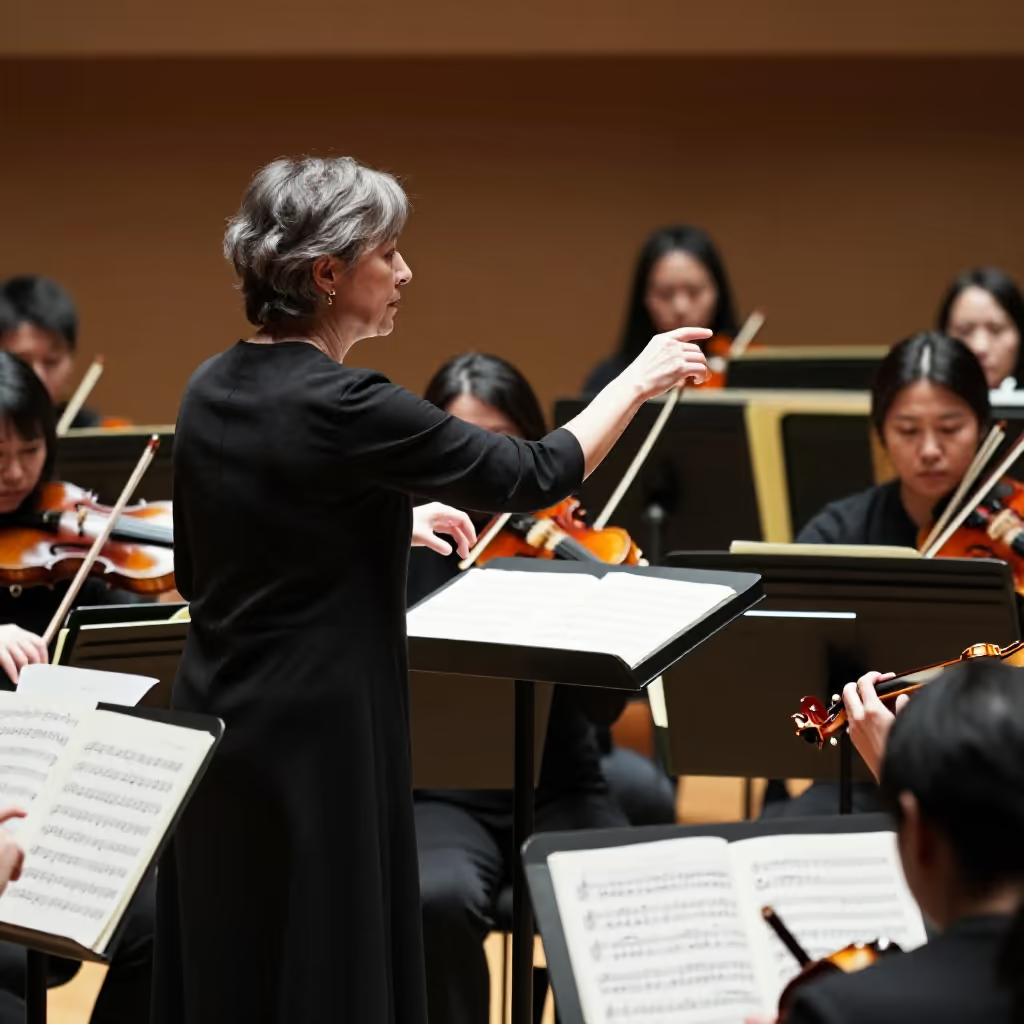
Der Rhythmus des Liedes wechselt zwischen kurzen und langen Tönen.
The rhythm of the song alternates between short and long notes.
Der Dirigent zeigt den Musikern den Takt mit klaren Bewegungen an.
The conductor signals the beat to the musicians with clear movements.