

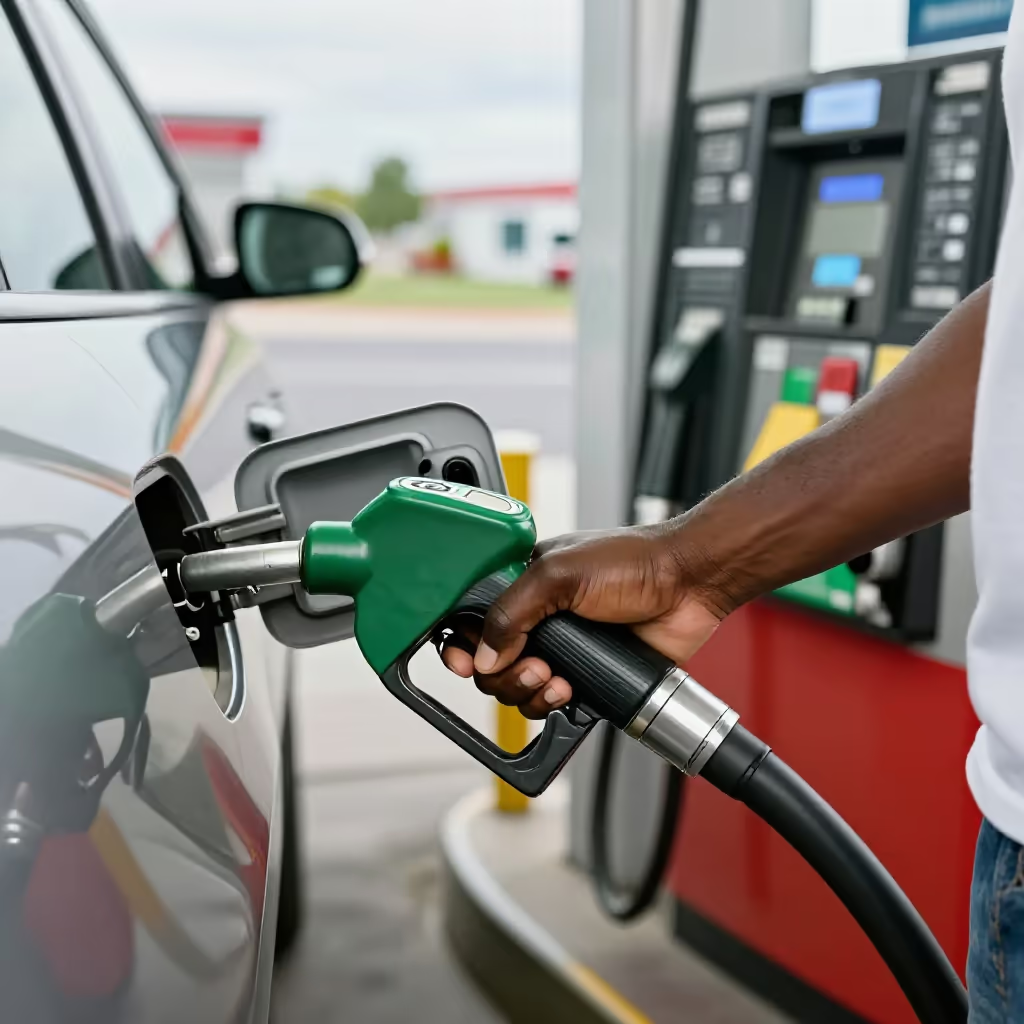
der Tank
tank
A container for storing liquids or gases, especially for the fuel in a vehicle.
EXAMPLE
Ich muss an der nächsten Tankstelle anhalten, der Tank ist fast leer.
I have to stop at the next gas station; the tank is almost empty.
tank
Loading your saved state.
tank
A container for storing liquids or gases, especially for the fuel in a vehicle.
Ich muss an der nächsten Tankstelle anhalten, der Tank ist fast leer.
I have to stop at the next gas station; the tank is almost empty.
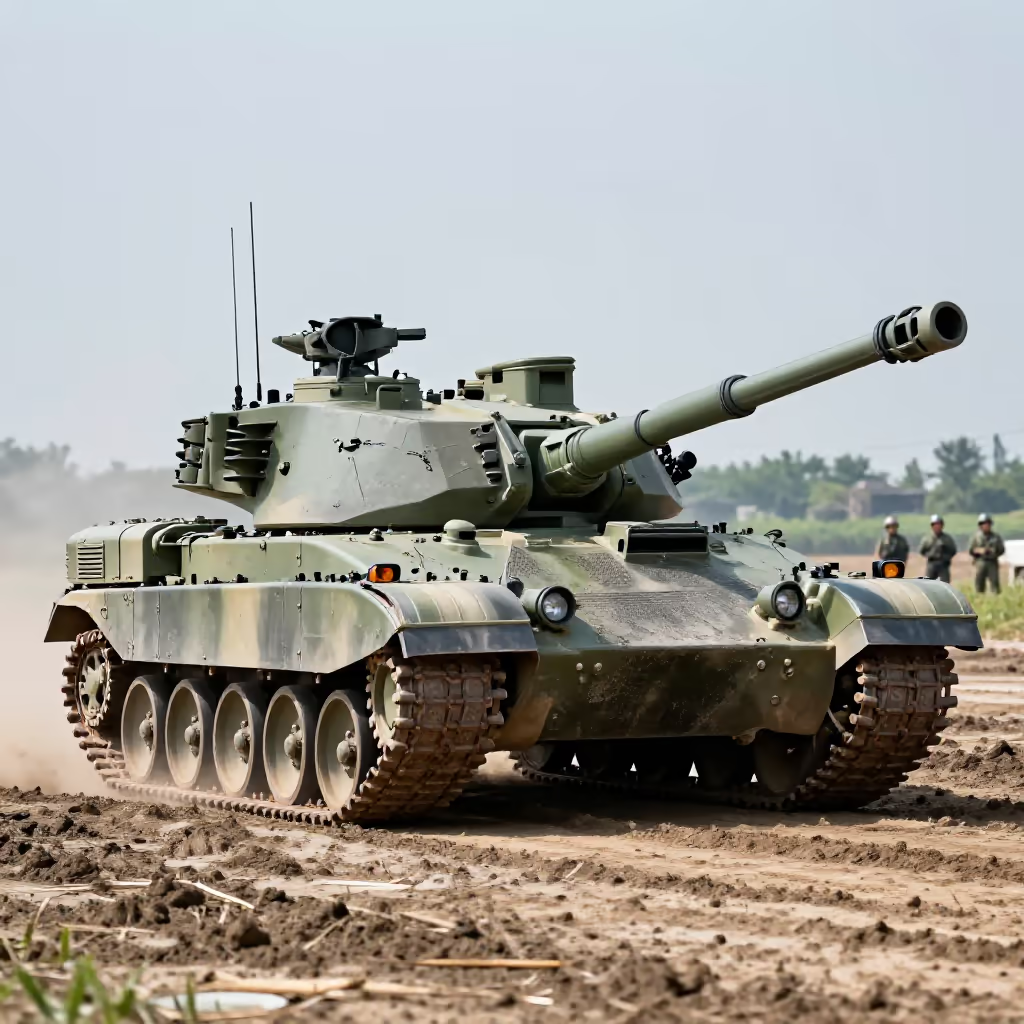
tank
A heavily armored army combat vehicle that moves on tracks and is equipped with a cannon. Synonym of 'Panzer' (tank).
Im Museum war ein alter Tank aus dem Zweiten Weltkrieg ausgestellt.
An old tank from the Second World War was on display in the museum.
You can recognize which meaning is intended from the context. If it is about vehicles, gasoline, or liquids, the container (m01) is meant. In the context of the military, war, or soldiers, the combat vehicle (m02) is meant.
Der Tank meines Motorrads fasst nur 15 Liter.
The tank of my motorcycle holds only 15 liters.
In connection with vehicles, 'Tank' (tank) is often used with the verbs 'tanken' (to refuel) or 'füllen' (to fill). Typical adjectives are 'leer' (empty) or 'voll' (full).
Können wir bitte anhalten? Mein Tank ist fast leer.
Can we please stop? My tank is almost empty.
The very common verb 'tanken' is derived from the noun 'der Tank' (the tank). It means to put fuel into the tank of a vehicle.
Ich muss noch schnell tanken, bevor wir auf die Autobahn fahren.
I still need to refuel quickly before we get on the highway.
tank / shell
Panzer and Tank can both refer to the same type of armored military tracked vehicle. Panzer is the usual term in most of the German-speaking world. Tank is used for this mainly in Switzerland, as well as colloquially or under English influence.
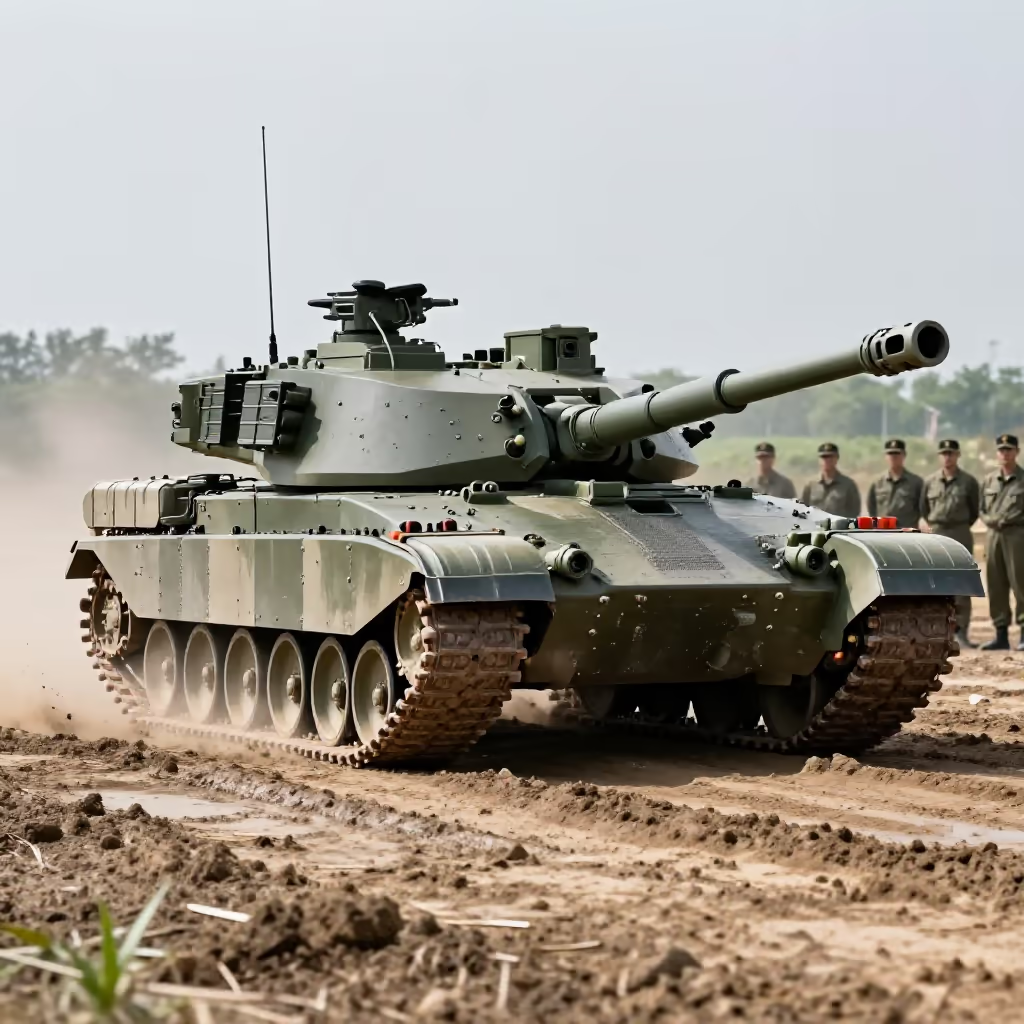
Der Schweizer Bericht zeigt einen Tank auf dem Übungsgelände.
The Swiss report shows a tank at the training grounds.
Der deutsche Bericht zeigt einen Panzer auf dem Übungsgelände.
The German report shows a tank at the training grounds.