

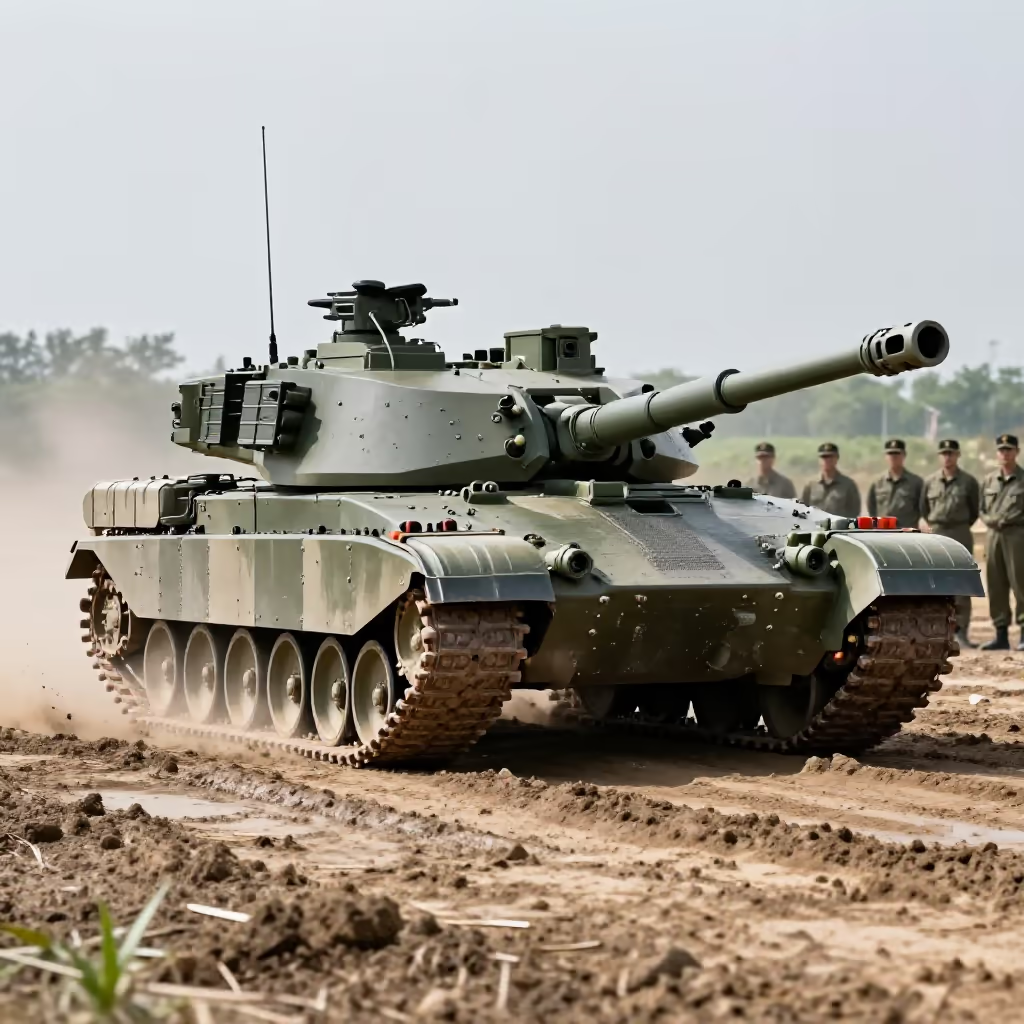
der Panzer
tank
A heavy, armored military combat vehicle equipped with tracks.
EXAMPLE
Bei der Militärparade fuhren mehrere Panzer durch die Stadt.
Several tanks drove through the city during the military parade.
tank / shell
Loading your saved state.
tank
A heavy, armored military combat vehicle equipped with tracks.
Bei der Militärparade fuhren mehrere Panzer durch die Stadt.
Several tanks drove through the city during the military parade.
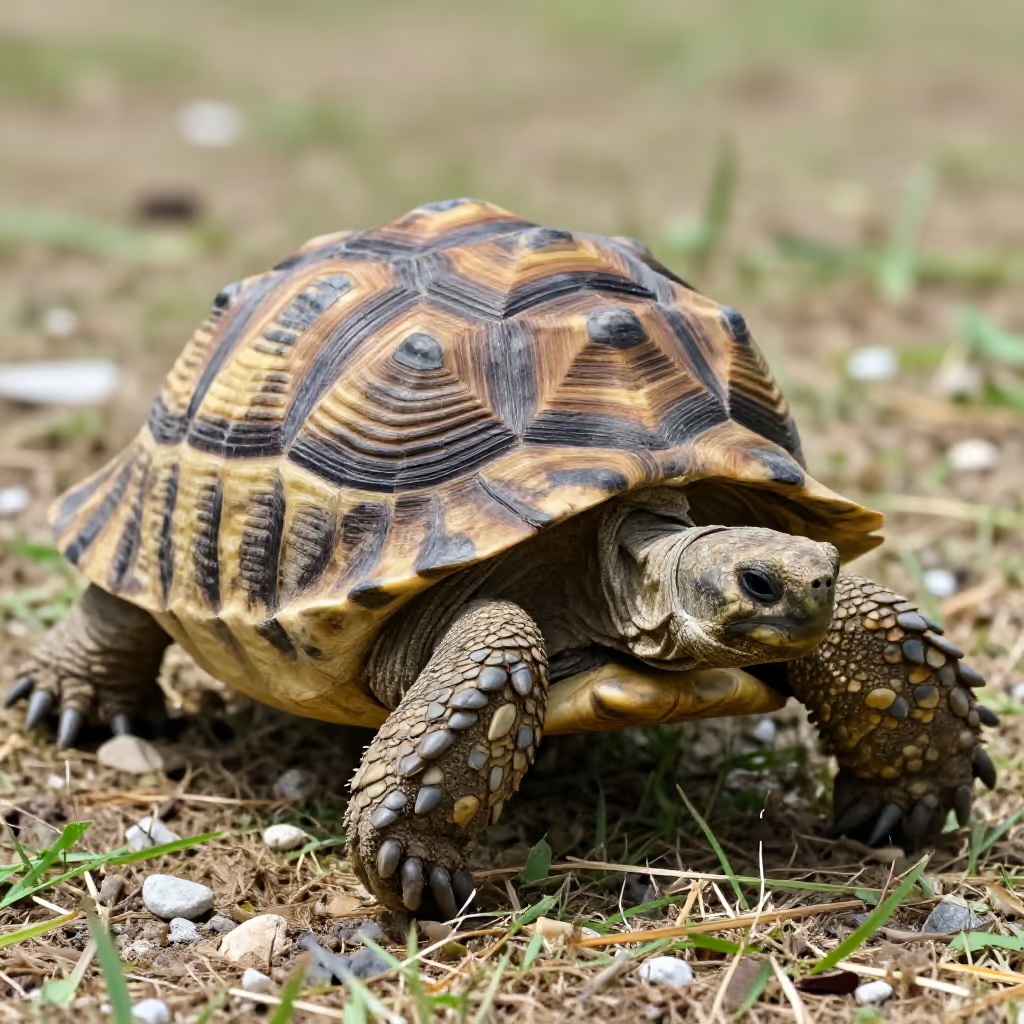
shell
The hard, protective outer covering of certain animals such as turtles, crabs, or armadillos.
Die Schildkröte zog bei Gefahr ihren Kopf in den Panzer zurück.
When in danger, the turtle pulled its head back into its shell.
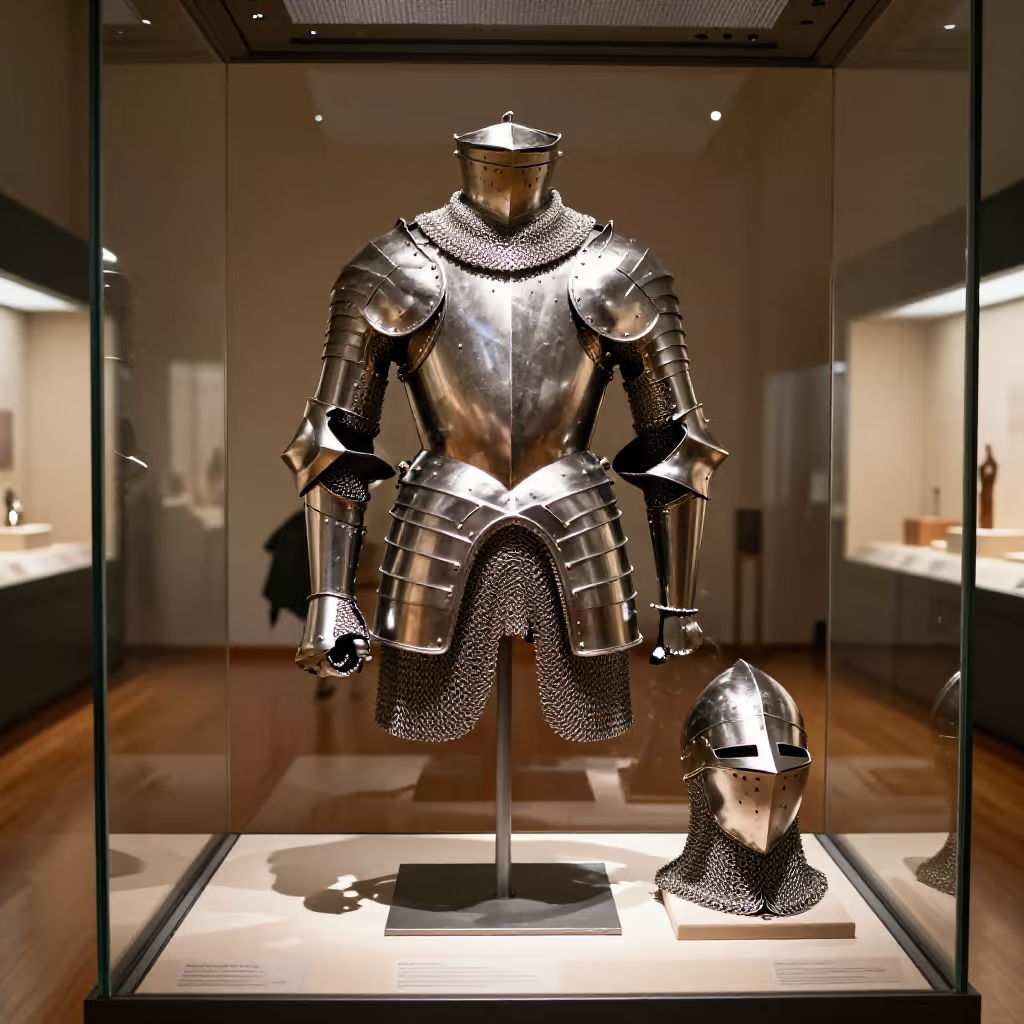
armor
Historical body armor, usually made of metal, that protected the torso of soldiers or knights.
Im Museum kann man den rostigen Panzer eines mittelalterlichen Ritters bewundern.
In the museum, you can admire the rusty armor of a medieval knight.
The meaning of 'Panzer' becomes clear from context. If people are talking about the military, it means the combat vehicle. If they are talking about animals, it means the protective shell. In a historical context, it means armor.
Die Armee hat neue Panzer bestellt.
The army has ordered new tanks.
The word component 'Panzer-' is often used in compound words to express that something is especially protected, reinforced, or 'gepanzert' (armored).
Das Auto des Politikers hat Panzerglas.
The politician's car has bulletproof glass.
The expression 'sich in seinen Panzer zurückziehen' (to retreat into one's shell) is often used metaphorically. It means that a person shuts themselves off emotionally and becomes unapproachable.
Nach der Kritik hat er sich komplett in seinen Panzer zurückgezogen.
After the criticism, he completely retreated into his shell.
shell / bowl
Panzer and Schale can both refer to a hard outer covering on animals. For turtles, crabs, or armadillos, it is called a Panzer; for mollusks such as mussels and snails, the hard casing is called a Schale. The animal in question determines which term is appropriate.
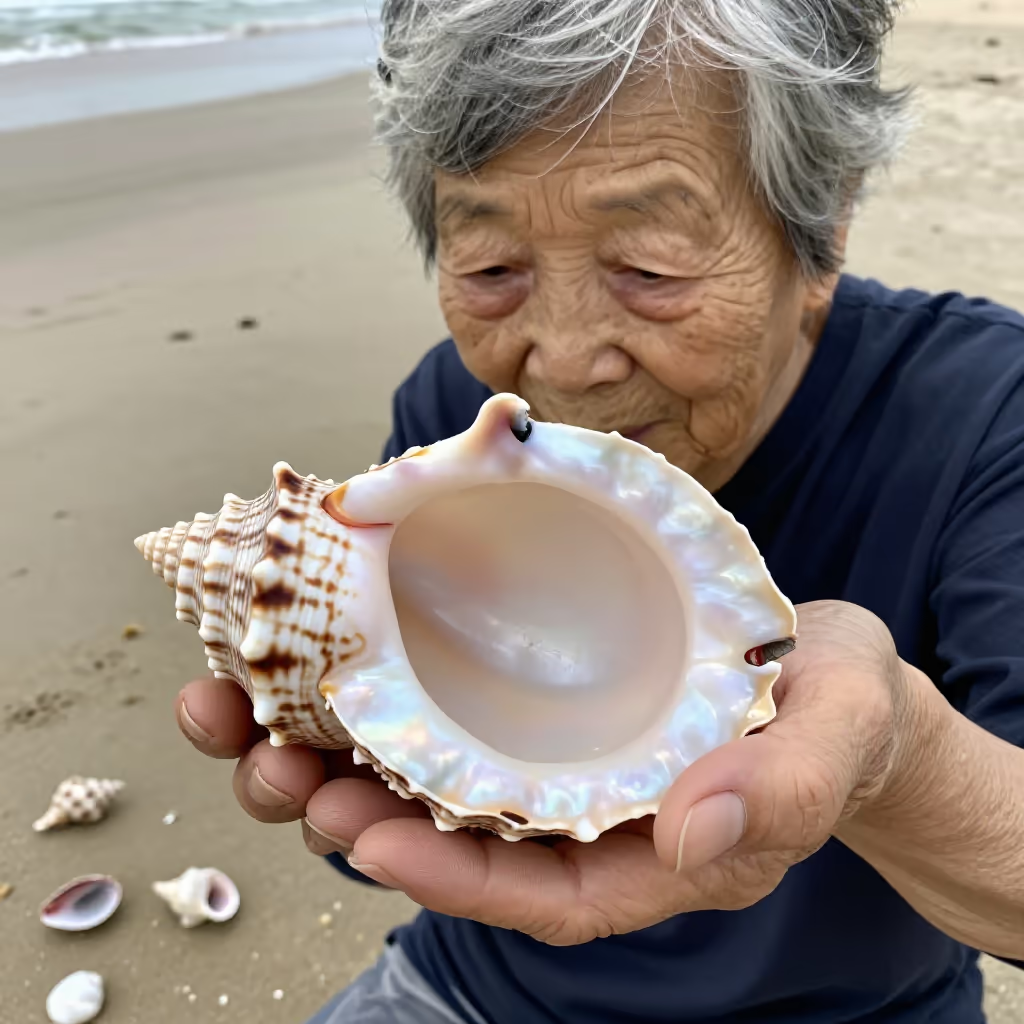
Der harte Panzer schützt die Schildkröte vor Verletzungen.
The turtle’s hard shell protects it from injuries.
Die harte Schale schützt die Muschel vor Verletzungen.
The mussel’s hard shell protects it from injuries.