

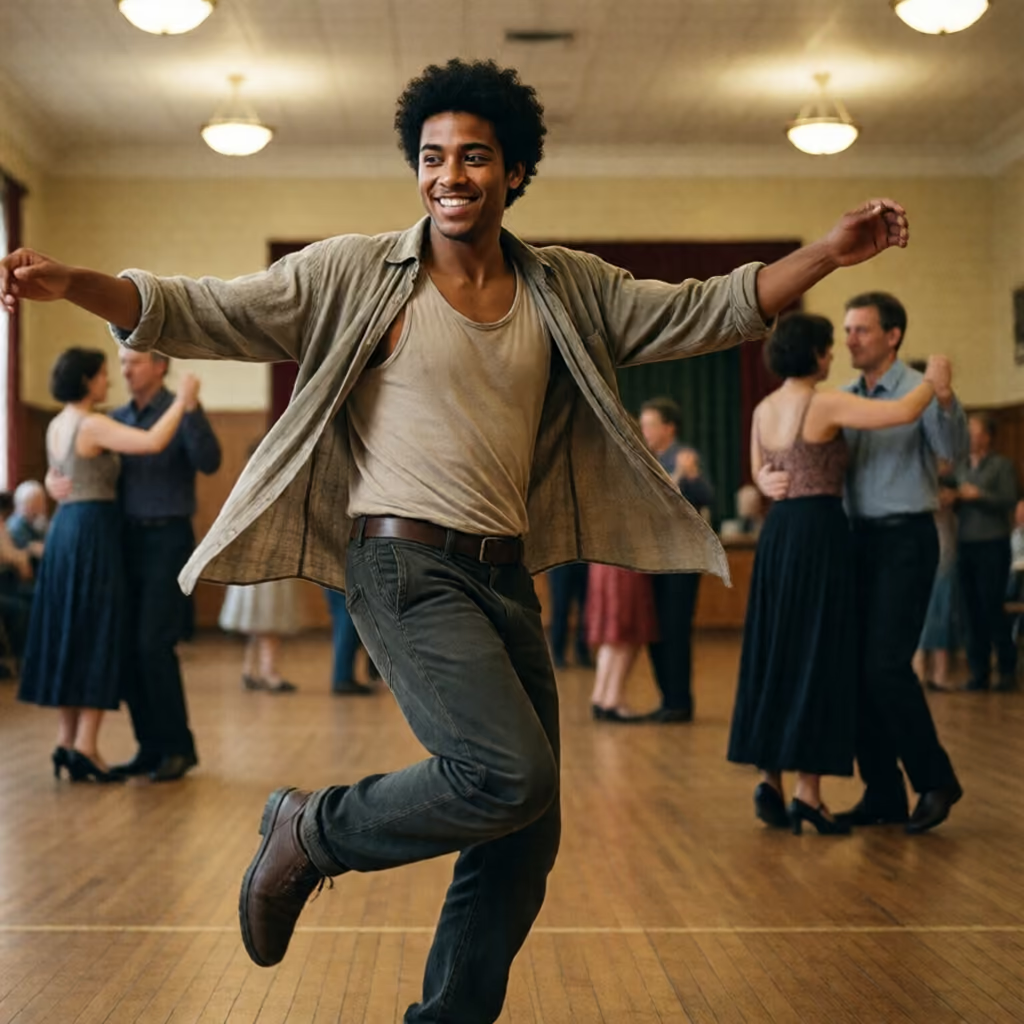
der Tanzende
dancer
A person who is dancing.
EXAMPLE
Der Tanzende bewegte sich leicht und sicher zur Musik.
The dancer moved lightly and confidently to the music.
dancer
Loading your saved state.
dancer
A person who is dancing.
Der Tanzende bewegte sich leicht und sicher zur Musik.
The dancer moved lightly and confidently to the music.
'Tanzende' (dancer) is formed from 'tanzend' (dancing), the present participle (Partizip I) of the verb 'tanzen' (to dance). This pattern also helps you understand words for people such as 'Singende' (people singing) or 'Wartende' (people waiting): people are named after the activity they are currently doing.
Der Tanzende schloss die Augen und folgte dem Rhythmus.
The dancer closed his eyes and followed the rhythm.
Typical phrases include 'die Tanzenden beobachten' (to observe the dancers), 'den Tanzenden zusehen' (to watch the dancers), and 'den Tanzenden applaudieren' (to applaud the dancers). Pay attention to the case: with 'beobachten' (to observe), the person is in the accusative; with 'zusehen' (to watch) and 'applaudieren' (to applaud), the person is in the dative.
Von der Terrasse aus beobachteten wir die Tanzenden.
From the terrace, we observed the dancers.
Nach dem letzten Lied applaudierte das Publikum den Tanzenden.
After the last song, the audience applauded the dancers.
Use 'unter den Tanzenden' (among the dancers) to describe a location within the group; this takes the dative. The phrase 'sich unter die Tanzenden mischen' (to mingle with the dancers) describes movement into the group and requires the accusative.
Unter den Tanzenden entdeckte ich meinen Bruder.
Among the dancers, I spotted my brother.
Nach einer kurzen Pause mischte er sich wieder unter die Tanzenden.
After a short break, he mingled with the dancers again.