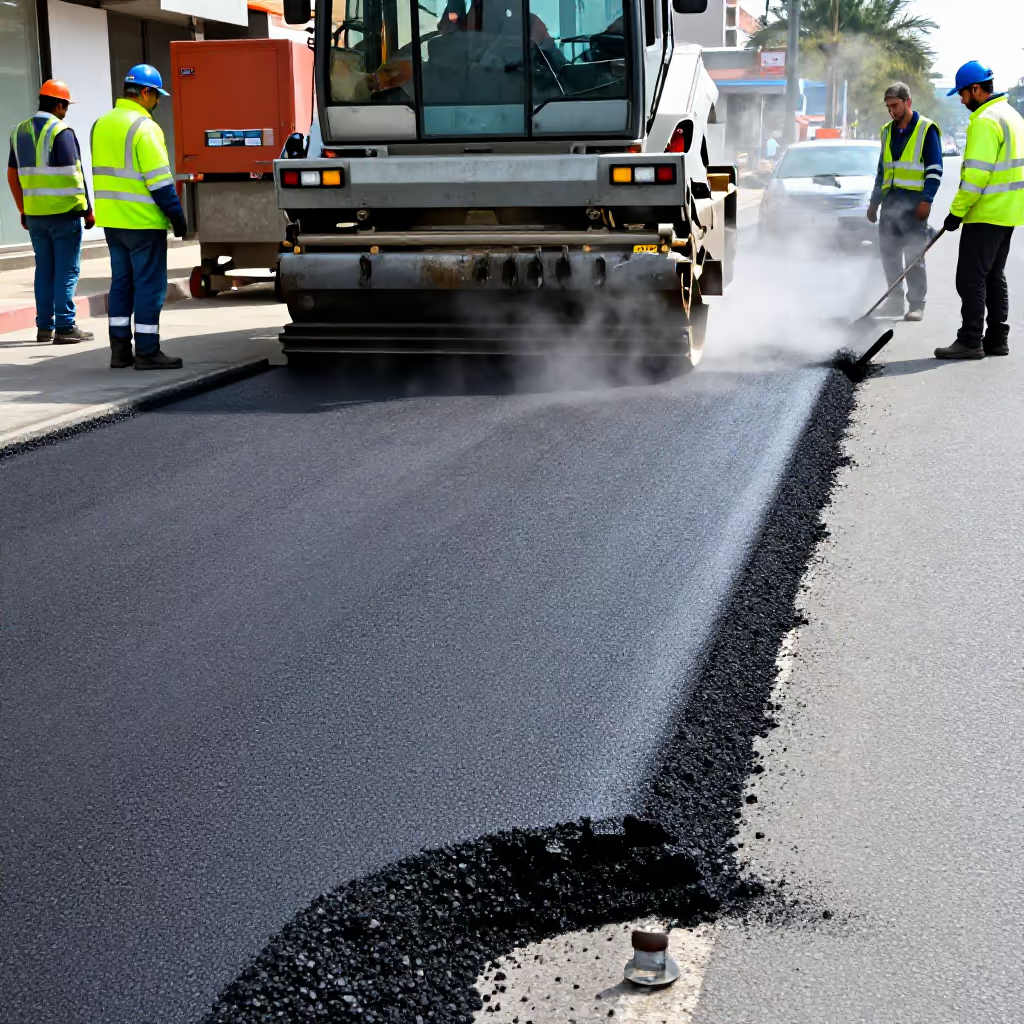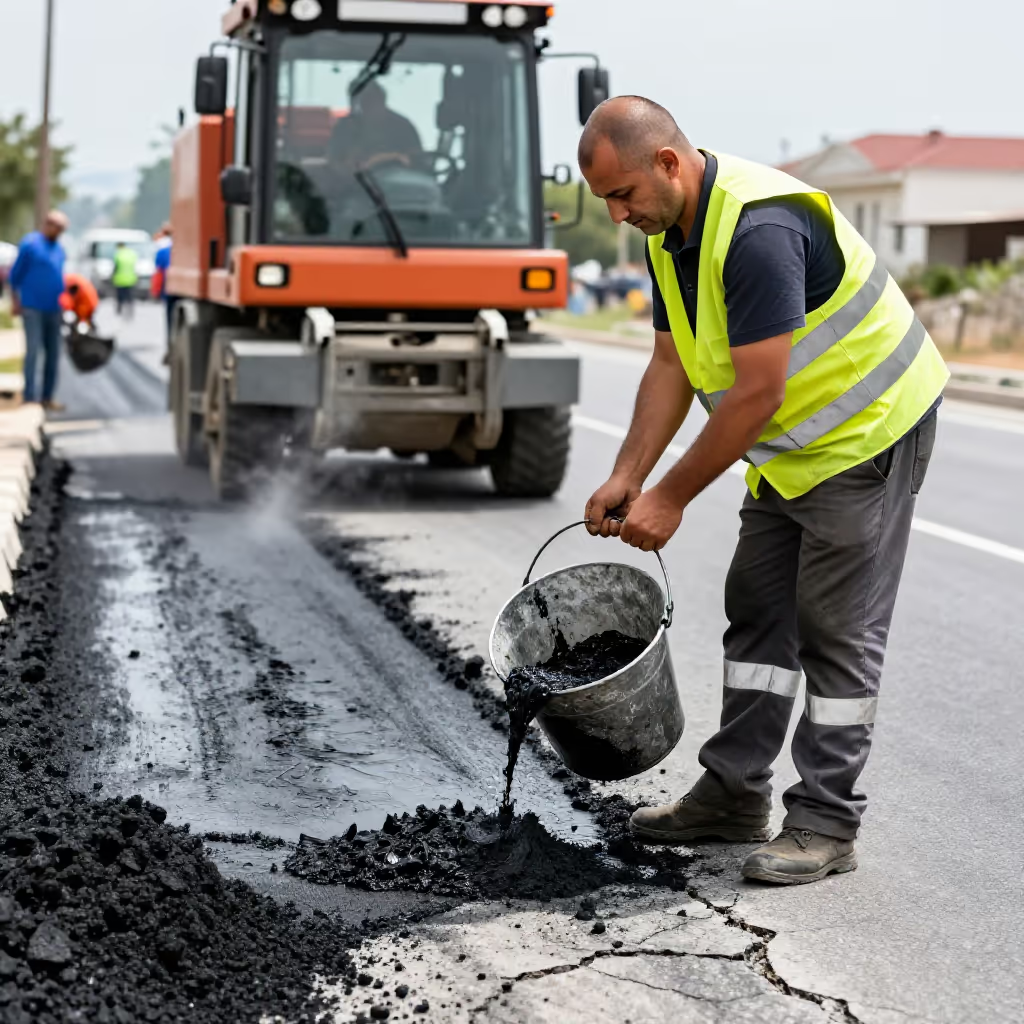
A thick, black, sticky liquid that is produced when organic materials such as coal or wood are processed. It is mainly used for road construction and sealing.
example
Die Straße wurde neu geteert und war deshalb für den Verkehr gesperrt.
The road was newly tarred and was therefore closed to traffic.

Usage tips
False friend
'Teer' sounds like the English word 'tear' (eine Träne), but it means 'tar', the black, sticky substance. This mistake can lead to misunderstandings.
EXAMPLE
Der Geruch von frischem Teer lag in der Luft.
The smell of fresh tar was in the air.
Context clue
The context makes the meaning clear. In connection with road construction or roofs, it refers to the black substance. If the topic is smoking or health, it refers to the harmful substance in cigarettes.
EXAMPLE
Die Arbeiter versiegeln das Dach mit heißem Teer.
The workers are sealing the roof with hot tar.
Word family
The verb 'teeren' (to tar) is derived from the noun 'der Teer' (tar). It means to cover a surface with tar.
EXAMPLE
Früher hat man viele Straßen und Einfahrten geteert.
In the past, many roads and driveways were tarred.
Compare with
near_synonym · confusable
Teer vs Pech
bad luck / pitch
'Pech' and 'Teer' can both refer to a black, sticky substance. That is why they can be easy to confuse. 'Teer' is more the substance that is produced when coal, wood, or similar materials are processed, and is used, for example, in road construction or for sealing. 'Pech' is also thick and sticky, but is often understood as a substance obtained from tar or resin. Important: here, 'Pech' is not about bad luck. In everyday language, you hear 'Pech' much more often in the meaning 'bad luck'; for roads and building materials, 'Teer' is often more natural.
Teer
Nach der Arbeit klebte Teer an den Schuhen der Straßenarbeiter.
After work, tar was sticking to the road workers' shoes.
Pech
Zum Abdichten der alten Fugen wurde früher oft Pech verwendet.
In the past, pitch was often used to seal old joints.