

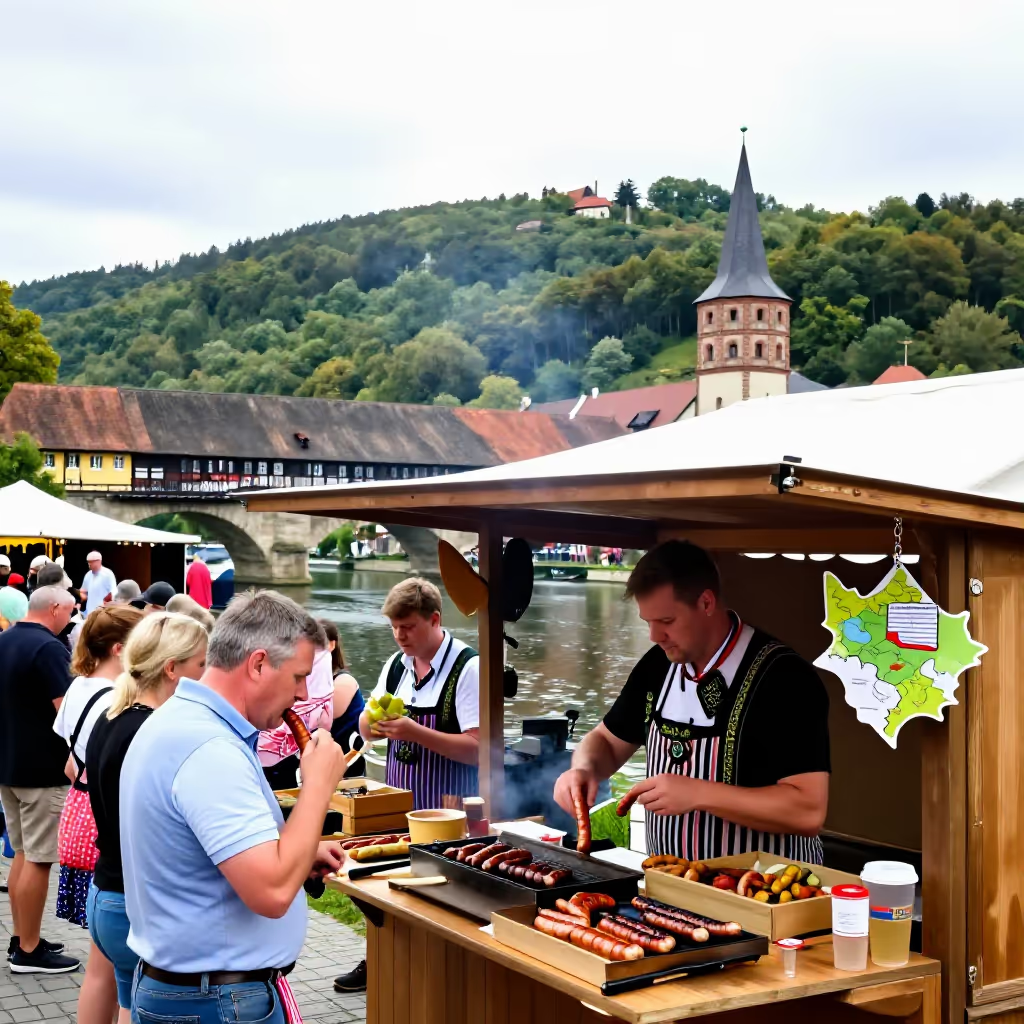
thüringisch
Thuringian
Relating to the German federal state of Thuringia, its inhabitants, or their dialect.
EXAMPLE
Ihr thüringischer Akzent war kaum zu überhören.
Her Thuringian accent was hard to miss.
Thuringian
Loading your saved state.
Thuringian
Relating to the German federal state of Thuringia, its inhabitants, or their dialect.
Ihr thüringischer Akzent war kaum zu überhören.
Her Thuringian accent was hard to miss.
The adjective 'thüringisch' (Thuringian) is derived from the name of the federal state 'Thüringen' (Thuringia). The ending '-isch' is a very common way to form adjectives from geographical names.
Die thüringische Landschaft ist bekannt für ihre Wälder.
The Thuringian landscape is known for its forests.
'Thüringisch' (Thuringian) is a normal adjective and is declined when it comes before a noun. Its ending adapts to the gender, case, and number of the noun.
Wir haben eine typisch thüringische Bratwurst gegessen.
We ate a typical Thuringian bratwurst.
When the word describes how someone speaks (that is, refers to the dialect), it is used as an adverb and written in lowercase. In this form, it remains unchanged.
Mein Großvater spricht noch echtes Thüringisch.
My grandfather still speaks real Thuringian dialect.
Thuringian
Both words indicate a connection with Thuringia. „thüringer“ is especially common in fixed names for people and products and is not declined, while „thüringisch“ is the general adjective and can be declined. „Thüringer“ is suitable in a fixed name, while „thüringisch“ is used in a freely formed description.
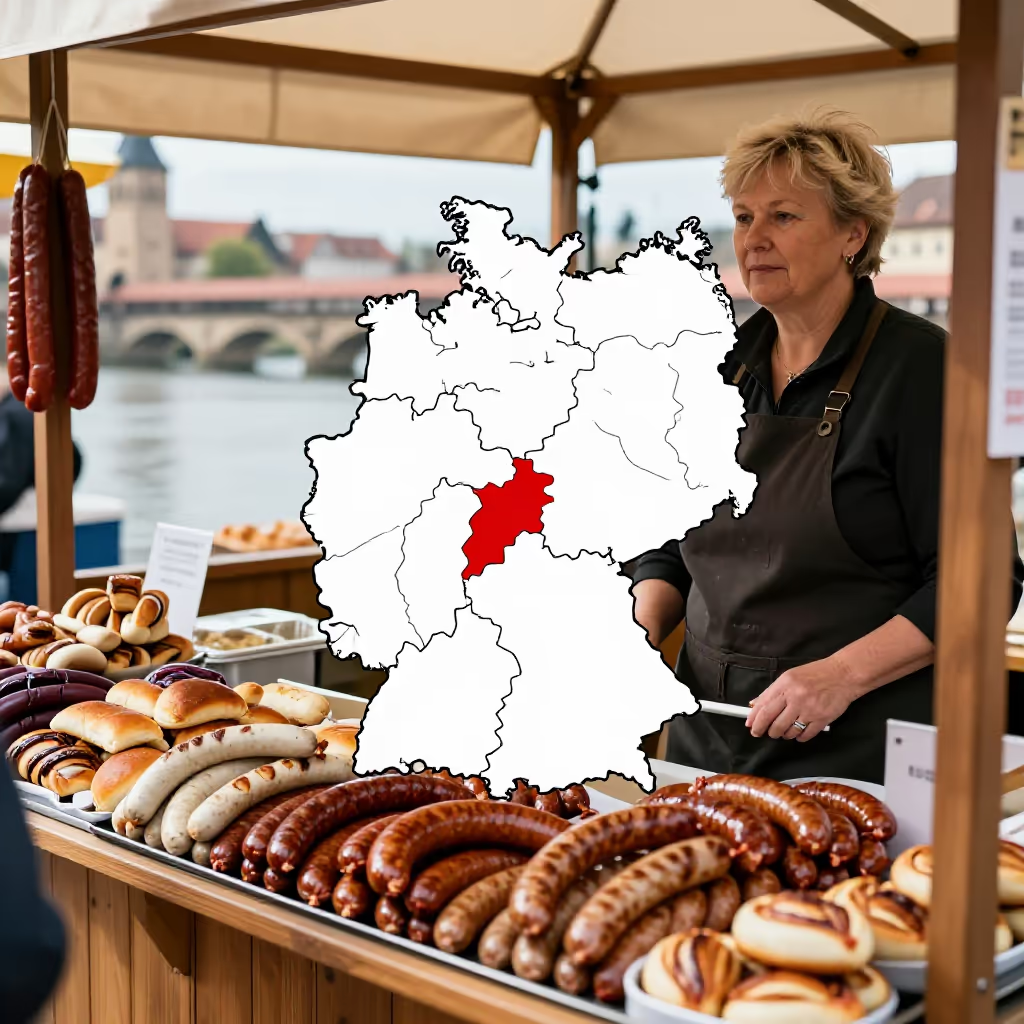
Im Museum lernten wir viel über thüringische Geschichte und Kultur.
At the museum, we learned a lot about Thuringian history and culture.
Im Laden kaufte ich eine thüringer Spezialität aus der Region.
At the store, I bought a Thuringian specialty from the region.