

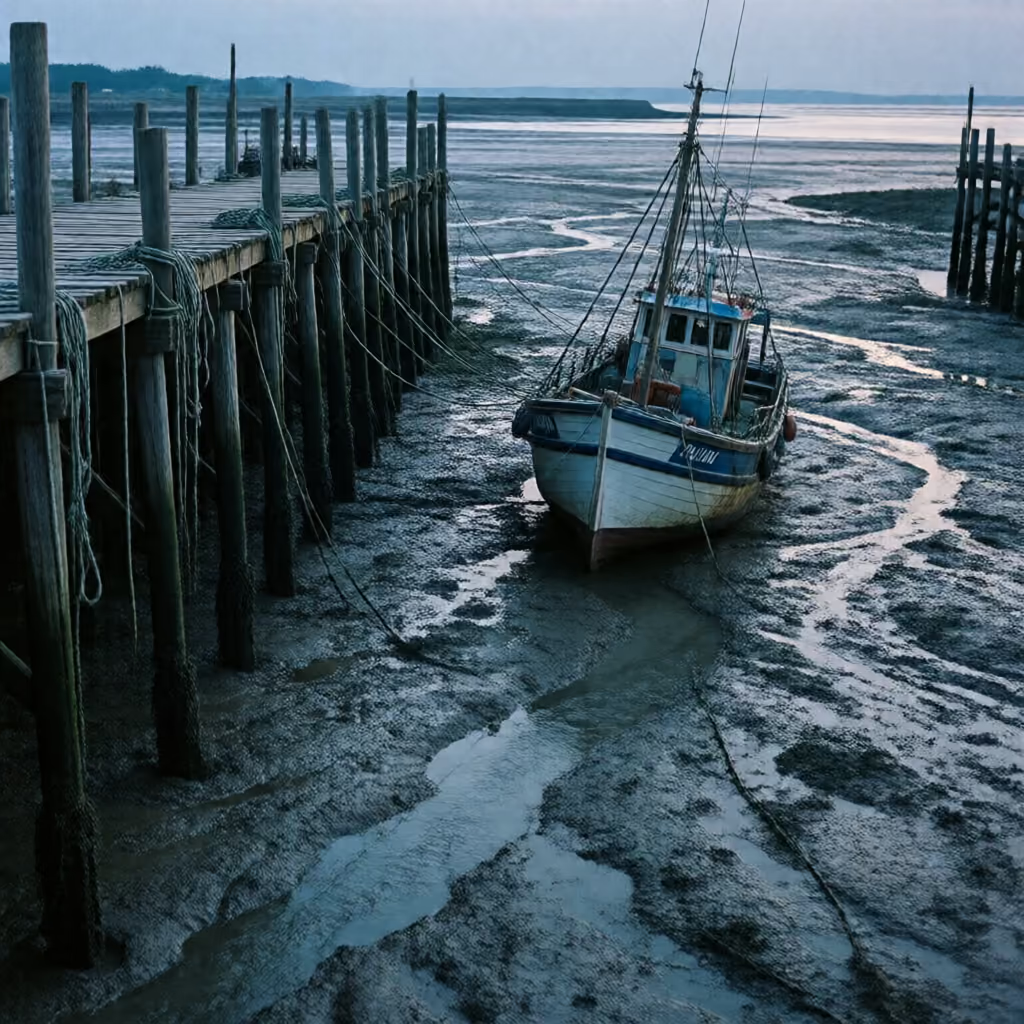
die Tide
tide
The regular movement of sea level caused by the gravitational pull of the Moon and the Sun; the tides.
Wegen der Tide konnte das Schiff erst am Abend auslaufen.
Because of the tide, the ship could not set sail until the evening.
tide
die Tide, die Tiden
Loading your saved state.

tide
The regular movement of sea level caused by the gravitational pull of the Moon and the Sun; the tides.
Wegen der Tide konnte das Schiff erst am Abend auslaufen.
Because of the tide, the ship could not set sail until the evening.
| gender | feminine die |
|---|---|
| plural | die Tiden |
| genitive | der Tide |
| singular | plural | |
|---|---|---|
| nominative | die Tide | die Tiden |
| accusative | die Tide | die Tiden |
| dative | der Tide | den Tiden |
| genitive | der Tide | der Tiden |
The article changes with the case; it is shown in colour.
Common collocations include „ablaufende Tide“ (ebb tide), „auflaufende Tide“ (flood tide), „die Tide kippt“ (the tide turns), and „tideabhängig“ (tide-dependent). They are especially common in maritime contexts.
Bei ablaufender Tide liegt das Boot bald auf dem Trockenen.
At ebb tide, the boat will soon be left high and dry.
In context, „Tide“ can often be recognized by words related to seafaring and coastal life, such as „Hafen“ (harbor), „Watt“ (mudflats), „Schiff“ (ship), or „Tidenkalender“ (tide calendar). The word refers to the regular change in water level.
Vor der Abfahrt prüfte der Kapitän, wann die Tide im Hafen kippen würde.
Before departure, the captain checked when the tide would turn in the harbor.
„Tide“ is particularly common in the technical language of seafaring and in texts about the German North Sea coast. People on the coast also frequently hear and read the word in everyday life.
An der Küste bestimmt die Tide den Zeitpunkt, zu dem die Wattwanderung beginnt.
On the coast, the tide determines when the mudflat hike begins.