


tierisch
very
Colloquial for 'very' or 'enormously'; used as an intensifier.
EXAMPLE
Ich habe mich tierisch über deinen Besuch gefreut.
I was really happy about your visit.
animal / very
Loading your saved state.
very
Colloquial for 'very' or 'enormously'; used as an intensifier.
Ich habe mich tierisch über deinen Besuch gefreut.
I was really happy about your visit.
animal
Coming from an animal, relating to animals, or characteristic of animals.
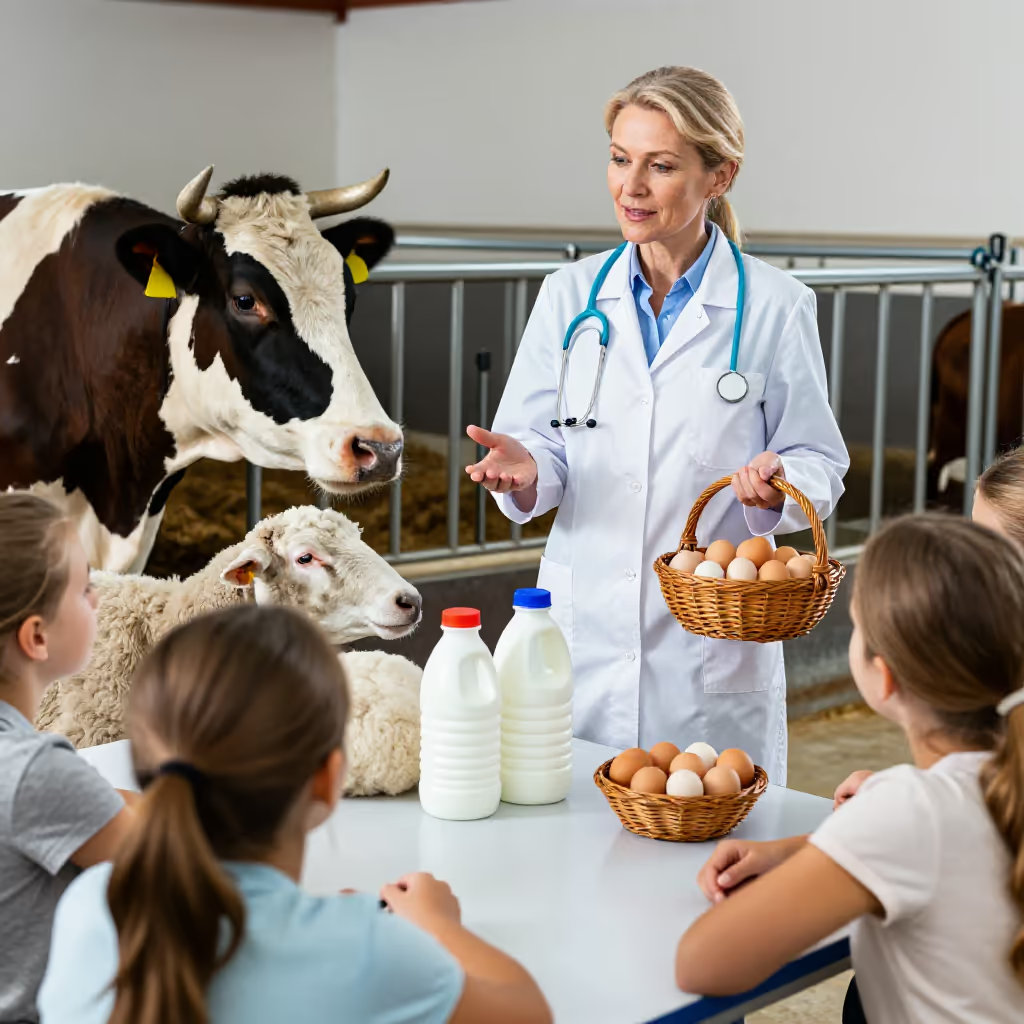
Als Veganerin verzichtet sie auf alle tierischen Produkte wie Milch oder Eier.
As a vegan, she avoids all animal products such as milk or eggs.

animal-like / intense
In a negative way that recalls the raw or uncontrolled behavior of animals; brutal or driven by instinct.
Nach der langen Wanderung hatte er einen tierischen Hunger.
After the long hike, he was ravenously hungry.
The adjective 'tierisch' (animal / very) is derived from the noun 'das Tier' (the animal). The ending '-isch' means 'in the manner of' or 'relating to'.
Das ist ein typisch tierisches Verhalten.
That is typical animal behavior.
When 'tierisch' comes as an adverb before another adjective or a verb, it usually means the colloquial 'very'. When it comes directly before a noun, it often refers to origin from animals.
Das Konzert gestern war tierisch laut.
The concert yesterday was really loud.
In colloquial speech, 'tierisch' is very often used as a synonym for 'sehr' (very) or 'enorm' (enormously) to intensify feelings or qualities. This use is informal.
Ich habe mich tierisch geärgert, als der Bus ohne mich abgefahren ist.
I got really annoyed when the bus left without me.
In the meaning 'coming from an animal', 'tierisch' is used in factual and scientific contexts, for example in biology or when describing food.
Tierisches Eiweiß ist in Fleisch, Eiern und Milch enthalten.
Animal protein is found in meat, eggs, and milk.