

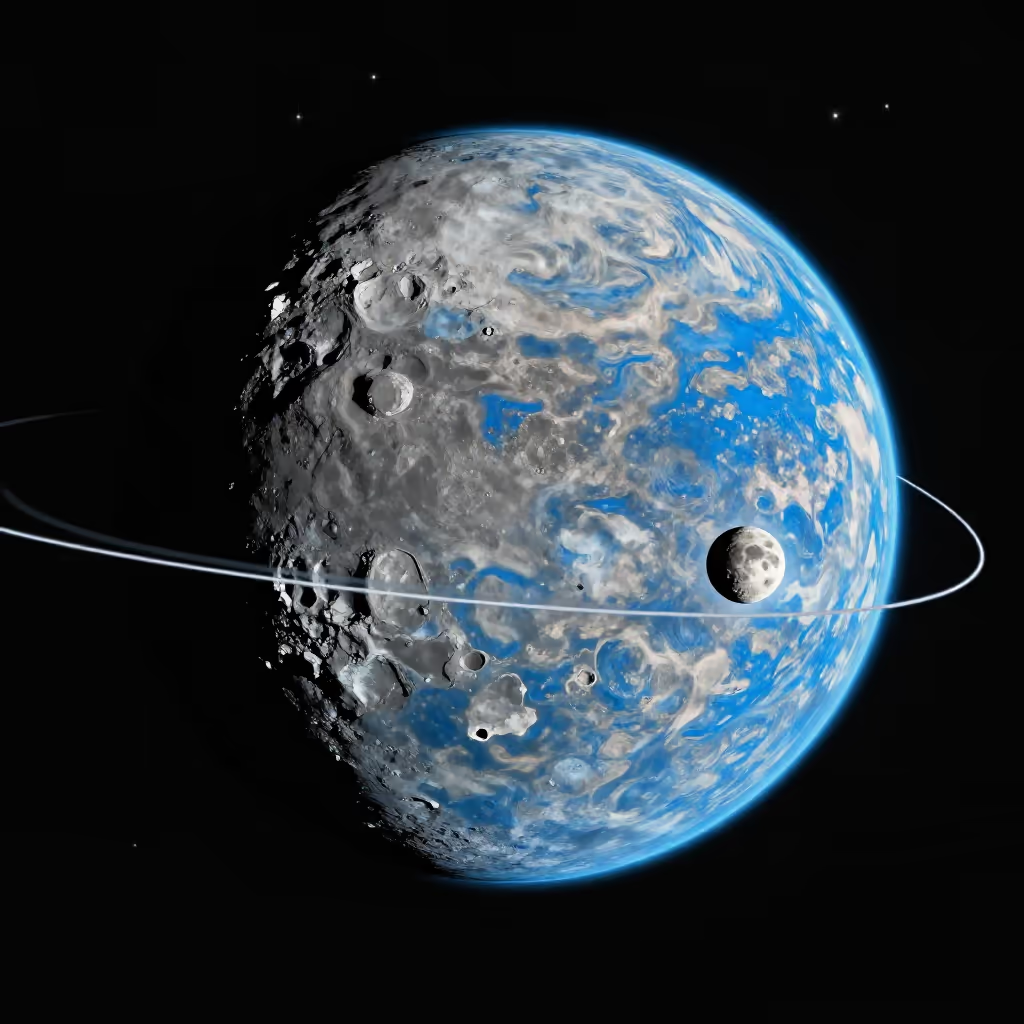
der Trabant
satellite / moon
In astronomy, a natural celestial body that orbits a planet; a moon.
EXAMPLE
Der Mond ist der einzige natürliche Trabant der Erde.
The Moon is Earth's only natural satellite.
satellite / Trabant
Loading your saved state.
satellite / moon
In astronomy, a natural celestial body that orbits a planet; a moon.
Der Mond ist der einzige natürliche Trabant der Erde.
The Moon is Earth's only natural satellite.
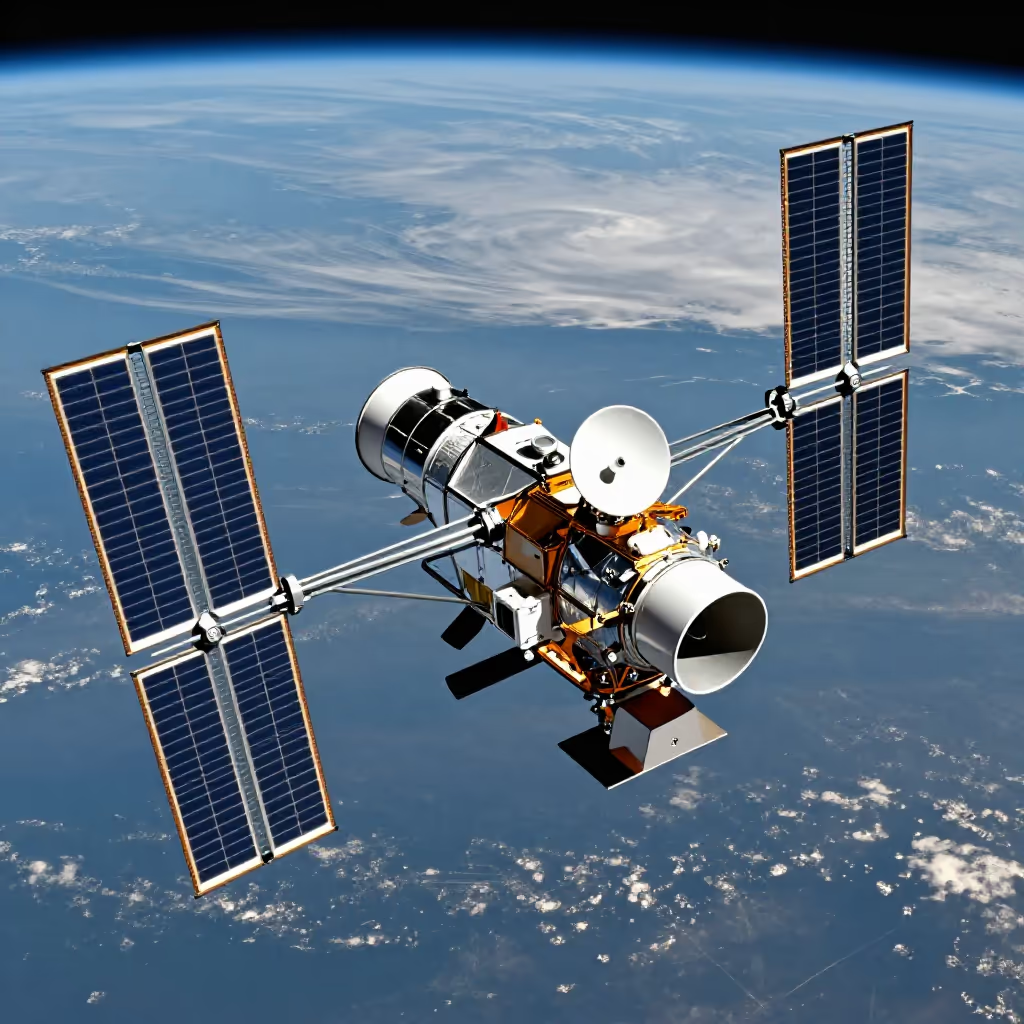
satellite
An artificial satellite that has been placed into orbit around a celestial body, usually Earth.
Der Wettersatellit ist ein wichtiger Trabant für die Klimaforschung.
The weather satellite is an important satellite for climate research.
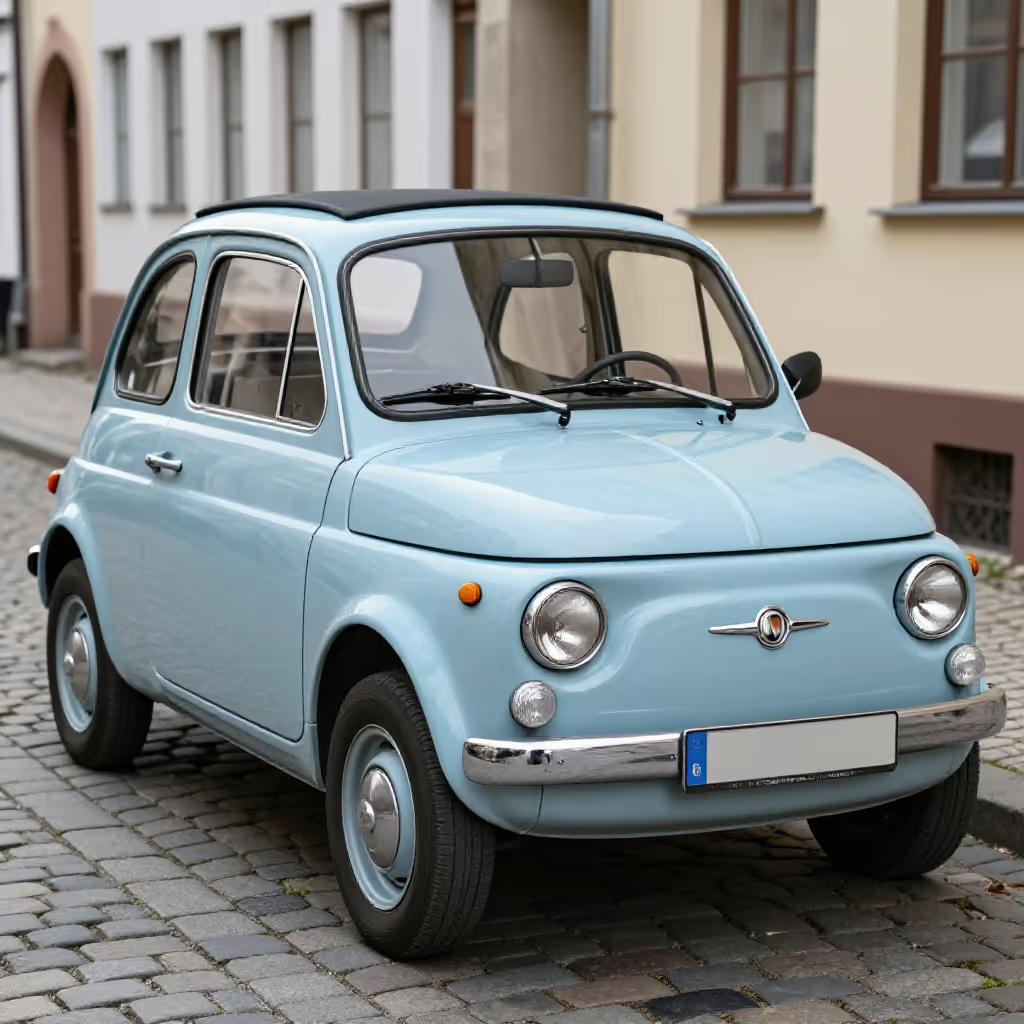
Trabant
The name of a well-known car model that was manufactured in the former GDR. The short form 'Trabi' is often used.
Viele Leute verbinden mit dem himmelblauen Trabant nostalgische Erinnerungen an die DDR.
Many people associate the sky-blue Trabant with nostalgic memories of the GDR.

follower / henchman
An outdated, often derogatory term for a follower, retainer, or henchman of a powerful person.
Der Herrscher umgab sich nur mit seinen treuesten Trabanten, die jeden seiner Befehle ausführten.
The ruler surrounded himself only with his most loyal henchmen, who carried out his every command.
The different meanings of 'Trabant' share the basic idea of a companion or of something that orbits something else. A moon accompanies a planet, a follower accompanies a ruler, and the car was named after artificial satellites.
Die Erde hat nur einen Trabanten, den Mond.
Earth has only one satellite, the Moon.
The context makes the meaning clear: in texts about astronomy or space travel, it refers to a celestial body. If the topic is the GDR or classic cars, it refers to the car. In historical texts, it can refer to a follower.
Mein Opa fährt heute noch stolz seinen alten Trabant.
My grandpa still proudly drives his old Trabant today.
To distinguish between a moon and a satellite, the adjectives 'natürlich' (natural) and 'künstlich' (artificial) are often used. 'Natürlicher Trabant' (natural satellite) is a synonym for moon.
Die ESA hat einen neuen künstlichen Trabanten ins All geschickt.
The ESA has sent a new artificial satellite into space.
This meaning refers to a famous car model from the GDR. The car is a strong symbol of the period before reunification and is often affectionately called 'Trabi'.
Als die Mauer fiel, fuhren Tausende mit ihrem Trabi in den Westen.
When the Wall fell, thousands drove west in their Trabi.
The meaning 'Gefolgsmann' (follower) or 'Handlanger' (henchman) is outdated today and is hardly used anymore. If you find it in old texts, it often has a negative or derogatory connotation.
Der König war von seinen ergebenen Trabanten umgeben.
The king was surrounded by his devoted henchmen.
supporter / trailer / pendant
Both words can refer to a person in the circle of a powerful figure. „Anhänger“ is the neutral modern term for someone who supports that person, while „Trabant“ is outdated and usually derogatory. In a factual statement, „Anhänger“ is therefore normally the appropriate choice.

Der alte Herrscher ließ sich von seinen Trabanten begleiten, die von ihm abhängig waren.
The old ruler was accompanied by his retainers, who depended on him.
Der Politiker hatte viele Anhänger, die ihn bei seinen Auftritten unterstützten.
The politician had many supporters who backed him at his public appearances.