

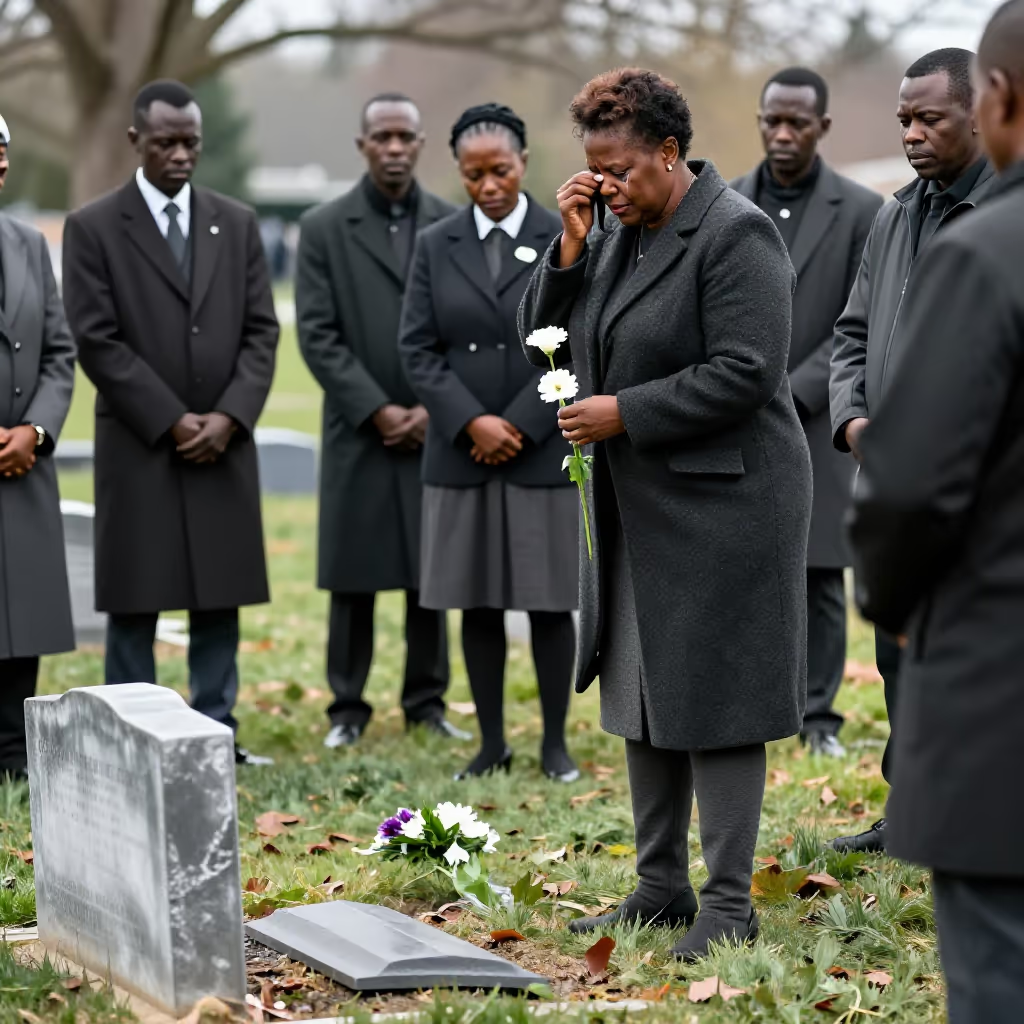
trauern um
to mourn
To feel and express deep pain and sadness over the death of a person or beloved animal.
EXAMPLE
Die ganze Familie trauert um die verstorbene Großmutter.
The whole family is mourning the deceased grandmother.
to mourn
Loading your saved state.
to mourn
To feel and express deep pain and sadness over the death of a person or beloved animal.
Die ganze Familie trauert um die verstorbene Großmutter.
The whole family is mourning the deceased grandmother.

to mourn
To feel great sadness about the loss or end of something abstract or ideal, for example a missed opportunity or a time that has passed.
Er trauerte noch lange der verpassten Gelegenheit nach, im Ausland zu studieren.
He mourned the missed opportunity to study abroad for a long time.
The verb 'trauern' (to mourn) belongs to the word family around 'die Trauer' (grief) and 'traurig' (sad). All these words describe a state of deep pain or great sorrow.
Nach dem Tod ihres Hundes war ihre Trauer sehr groß.
After the death of her dog, her grief was very great.
'Trauern' (to mourn) is almost always used with the preposition 'um' and the accusative. You mourn 'um jemanden' (for someone) or 'um etwas' (over something).
Er trauert immer noch um seine Katze, die letztes Jahr gestorben ist.
He is still mourning his cat, which died last year.
The object after 'um' shows the exact meaning. 'Um eine Person trauern' means to mourn that person's death. 'Um eine verpasste Chance trauern' means to regret the loss of that opportunity.
Die Mannschaft trauert um den verstorbenen Trainer.
The team is mourning the deceased coach.
When you regret the loss of a thing or a period of time, you can also use the separable verb 'nachtrauern' (to mourn/regret). This verb requires the dative: 'einer Sache nachtrauern' (to mourn/regret something).
Er trauert der alten Zeit nach, als alles einfacher schien.
He mourns the old days, when everything seemed simpler.
to miss
Vermissen and trauern can both refer to a deceased person or a beloved animal. Vermissen emphasizes that someone is absent and that this causes suffering. Trauern describes the deep pain caused by death or loss, and often its visible expression as well.

Seit dem Tod ihres Hundes trauert Lea tief um ihn.
Since her dog died, Lea has been deeply mourning his loss.
Seit dem Tod ihres Hundes vermisst Lea seine Nähe jeden Tag.
Since her dog died, Lea has missed being close to him every day.