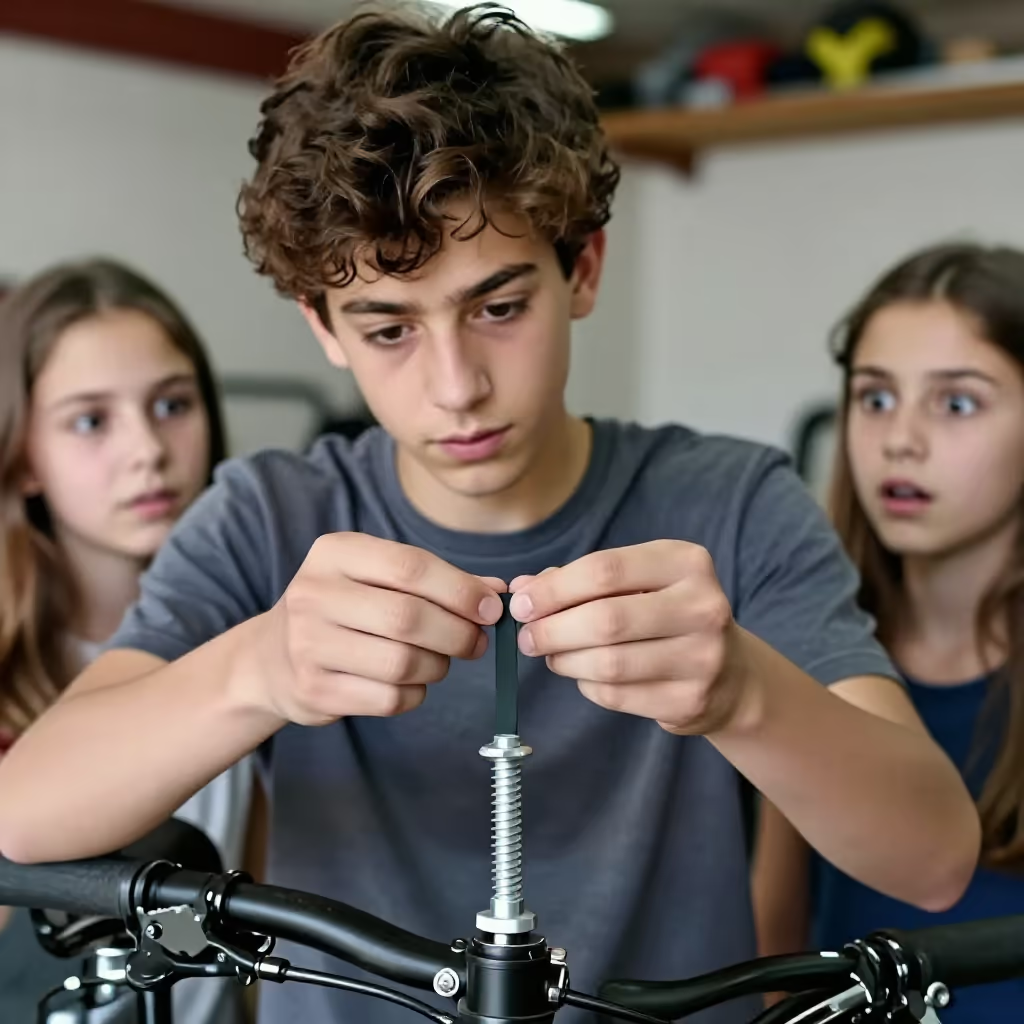
A clever or skillful method for achieving a goal more easily, solving a problem, or outsmarting someone.
example
Es gibt einen einfachen Trick, wie man dieses Glas ohne viel Kraft öffnen kann.
There is a simple trick for opening this jar without much strength.
Usage tips
Origin of the word
'Der Trick' is a loanword from English ('trick'). The meaning is very similar in German and describes a clever, often surprising method or a deception.
EXAMPLE
Dieser Trick funktioniert wirklich jedes Mal.
This trick really works every time.
Context clues
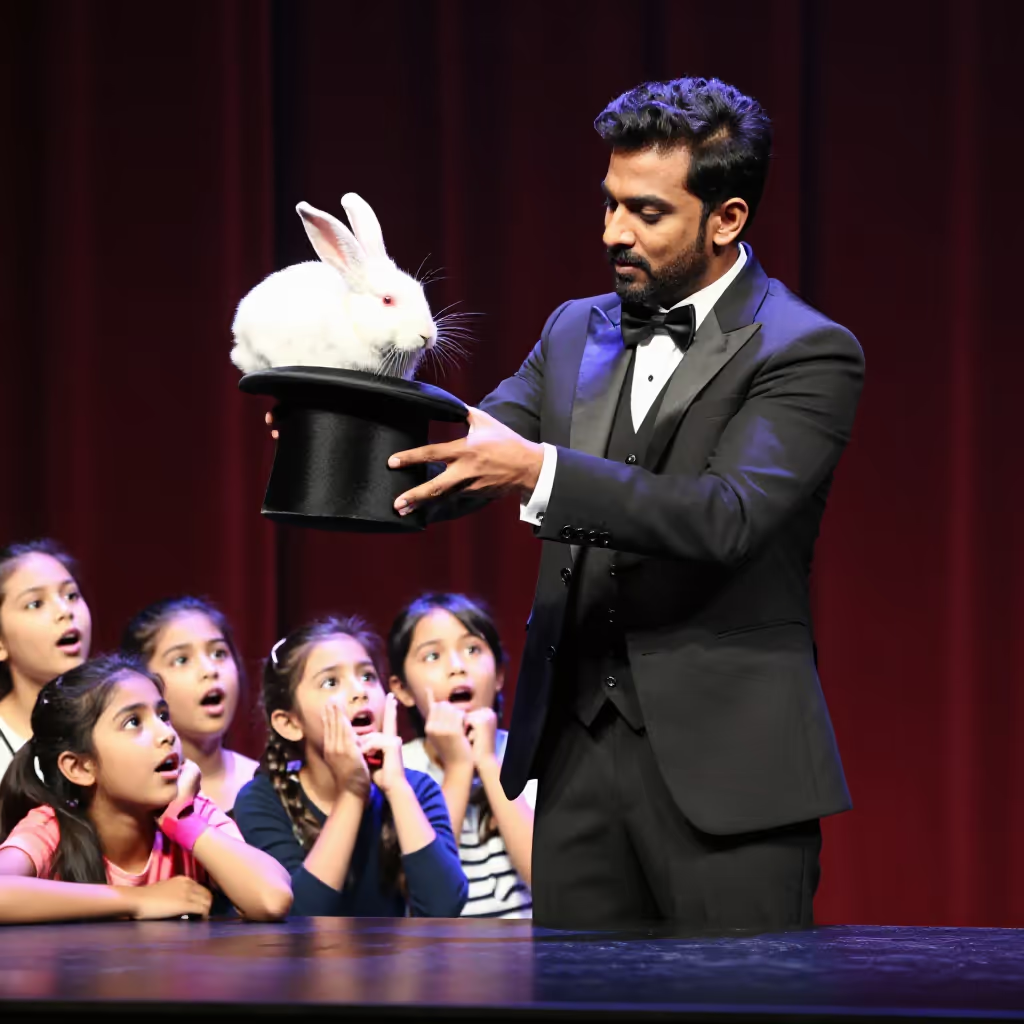
The context makes clear what kind of trick is meant. In everyday life, it is about problem-solving; in a show, it is about magic ('Zaubertrick' — magic trick); and in film, it is about special effects ('Filmtrick' — film trick / special effect).
EXAMPLE
Kennst du einen Trick, um Rotweinflecken zu entfernen?
Do you know a trick for removing red wine stains?
Sentence structure with 'um ... zu'
To explain the purpose of a trick, an infinitive construction with 'um ... zu' is very often used. This pattern describes what goal is meant to be achieved with the trick.
EXAMPLE
Ich zeige dir einen Trick, um Flaschen schnell zu kühlen.
I'll show you a trick for cooling bottles quickly.
Compare with
near_synonym · confusable
Trick vs Tour
tour
'die Tour' and 'der Trick' can both mean a clever way in which someone achieves a goal. 'der Trick' is often a specific small idea or technique that makes something easier or outsmarts someone. 'die Tour' is more colloquial and describes more the whole way someone goes about something, often with a critical undertone. Learners may confuse the words because both can refer to something clever or roundabout. If you mean a single practical solution, 'Trick' is more natural. If you mean a person's typical behavior or scheme, 'Tour' fits better.
Trick
Mit einem einfachen Trick öffnet Herr Fischer das Glas, ohne viel Kraft zu brauchen.
With a simple trick, Mr. Fischer opens the jar without needing much strength.
Tour
Seine Tour kenne ich schon: Erst ist er sehr freundlich, dann bittet er um Geld.
I already know his routine: first he's very friendly, then he asks for money.