

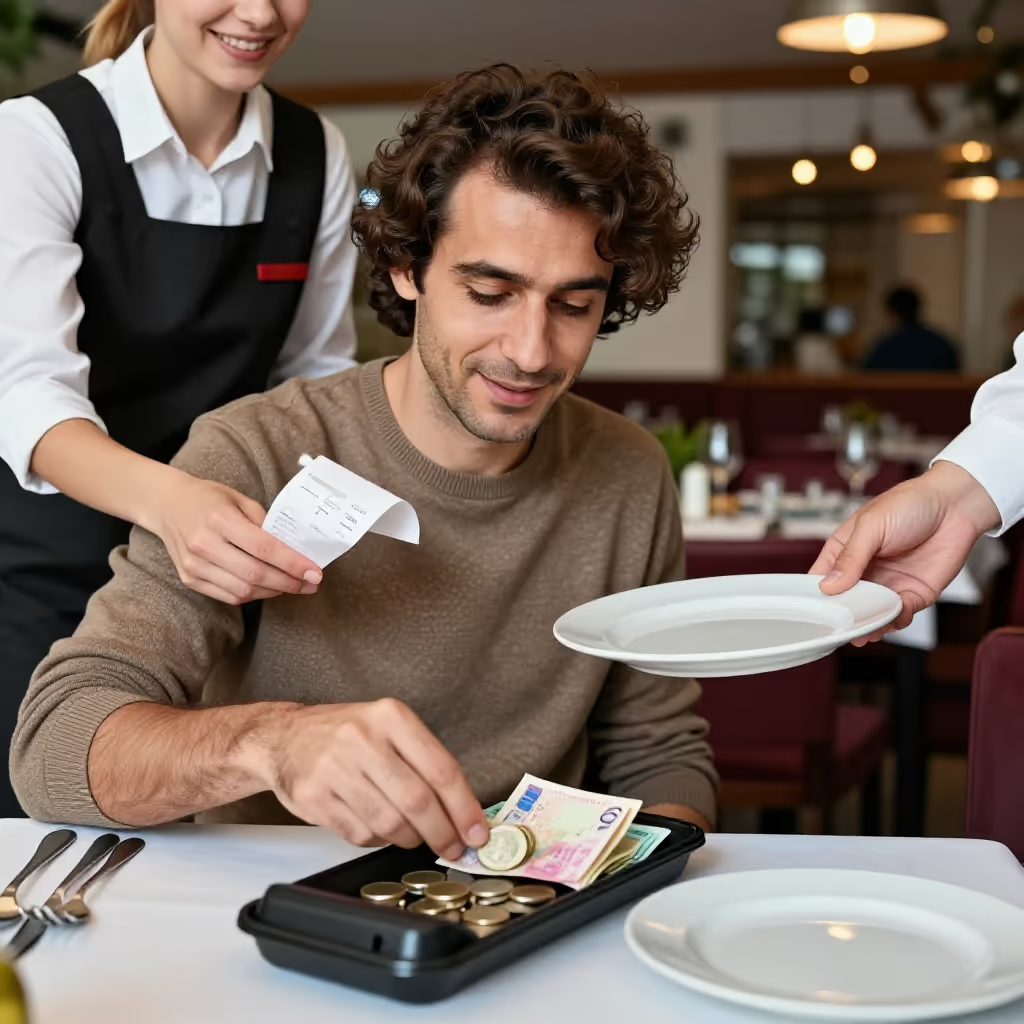
An amount of money that you voluntarily give in addition to the bill for a service in order to express your satisfaction.
example
Der Service war ausgezeichnet, also haben wir ein großzügiges Trinkgeld gegeben.
The service was excellent, so we gave a generous tip.
Usage tips
Word composition
The word is made up of 'trinken' (to drink) and 'Geld' (money). Historically, it was a small amount of money given to a service provider so that they could buy themselves a drink with it.
EXAMPLE
Er gab dem Kofferträger ein kleines Trinkgeld.
He gave the porter a small tip.
Typical verbs
As a guest, you can 'geben' (give), 'hinterlassen' (leave), or 'dalassen' (leave behind) a tip. The person providing the service 'bekommt' (gets) or 'erhält' (receives) the tip.
EXAMPLE
Wir haben dem Kellner ein gutes Trinkgeld dagelassen.
We left the waiter a good tip.
Practical usage
If you want to give the remaining amount as a tip when paying, you often simply say 'Stimmt so' (keep the change). This signals to the server that you do not expect any change back.
EXAMPLE
Die Rechnung war 18 Euro, ich gab 20 und sagte: „Stimmt so.“
The bill was 18 euros, I gave 20 and said, 'Keep the change.'
Compare with
near_synonym · confusable
Trinkgeld vs Bonus
bonus
'der Bonus' and 'das Trinkgeld' can both be extra money. You often receive a 'Bonus' from a company or organization, for example as a reward for good performance. A 'Trinkgeld' is given voluntarily by a customer in addition to the bill, for example in a restaurant, in a taxi, or at the hairdresser's. The words can be confused because both are paid as something extra. The key point is: a bonus usually comes from an employer or provider; a tip comes from the customer for a service.
Trinkgeld
Im Restaurant gibt sie dem Kellner ein Trinkgeld, weil der Service freundlich war.
In the restaurant, she gives the waiter a tip because the service was friendly.
Bonus
Daniel hat am Jahresende einen Bonus von seiner Firma bekommen.
Daniel received a bonus from his company at the end of the year.