

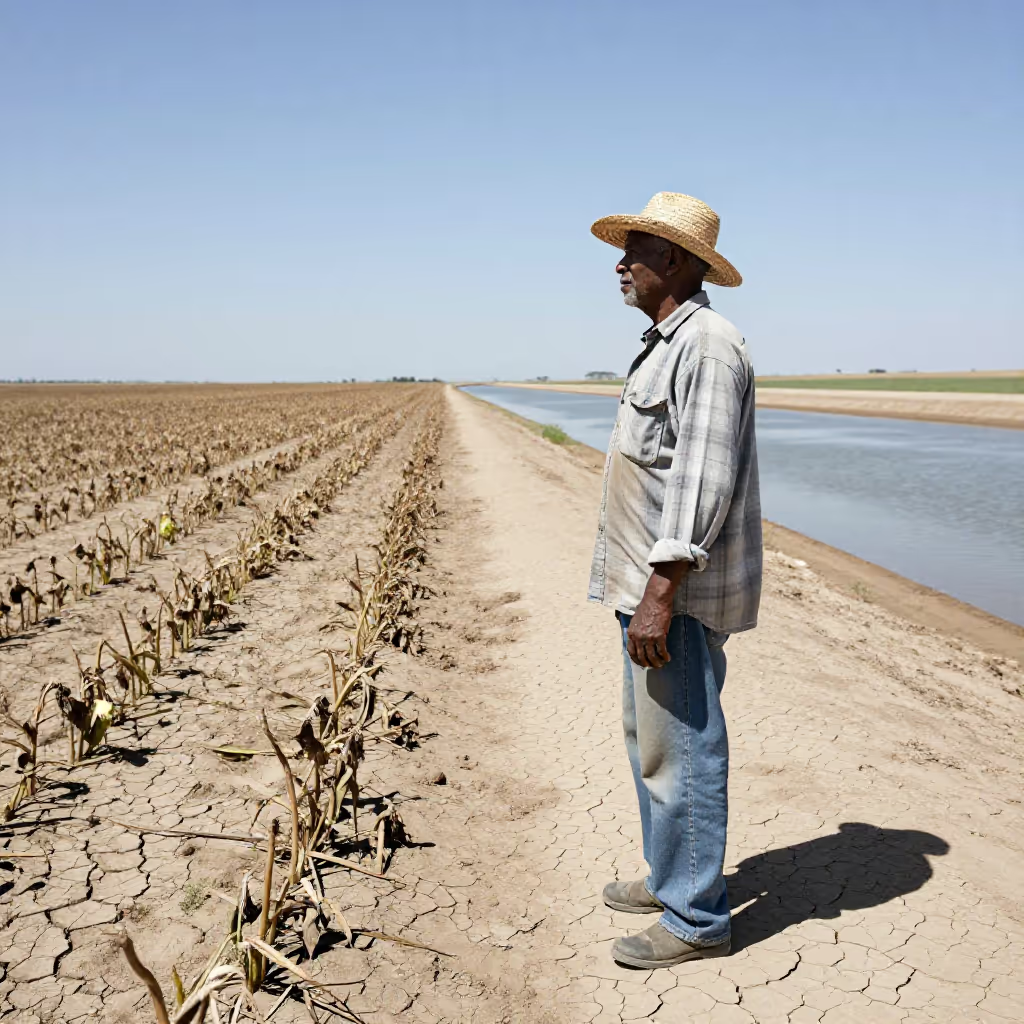
die Trockenheit
drought
A condition characterized by a prolonged lack of rain or precipitation that leads to water shortages.
Wegen der anhaltenden Trockenheit sind die Ernten in Gefahr.
Because of the ongoing drought, the harvests are in danger.


dryness
Loading your saved state.
drought
A condition characterized by a prolonged lack of rain or precipitation that leads to water shortages.
Wegen der anhaltenden Trockenheit sind die Ernten in Gefahr.
Because of the ongoing drought, the harvests are in danger.
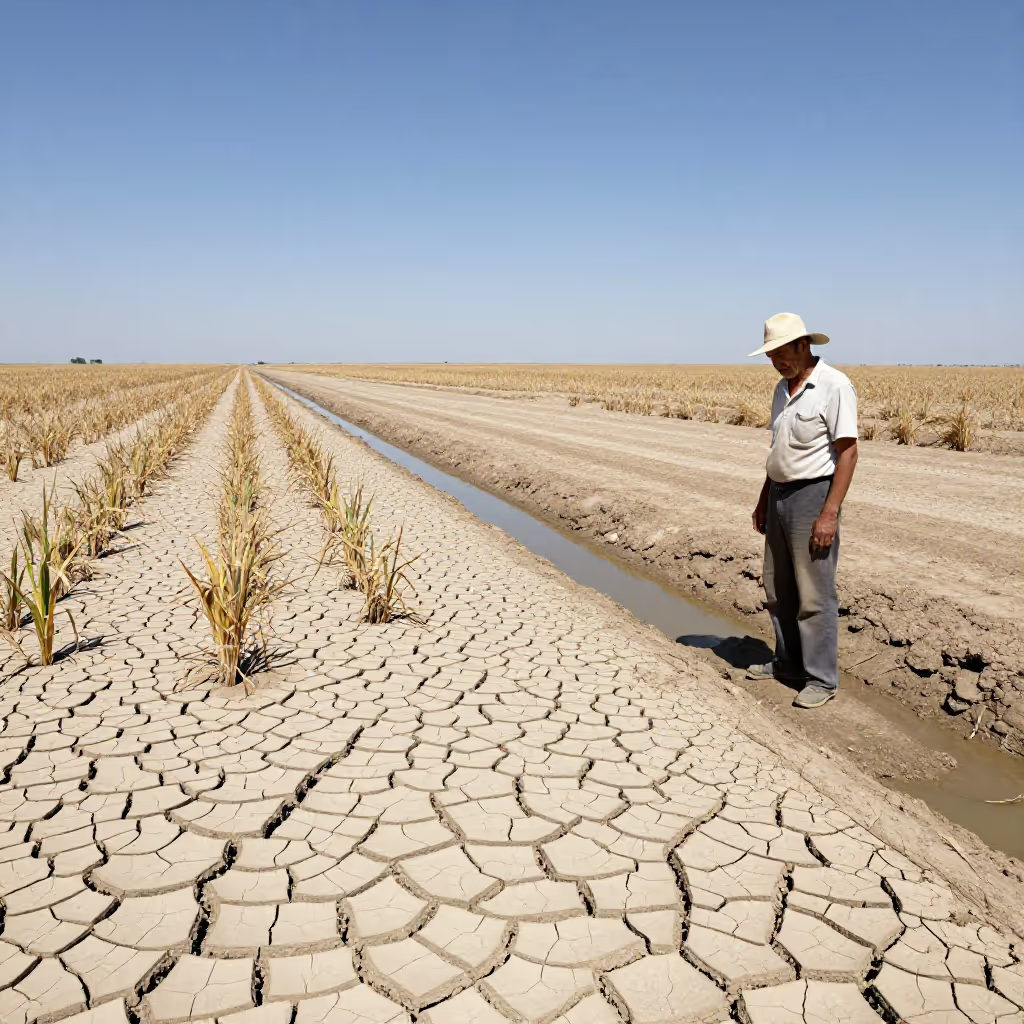
'Trockenheit' (dryness) is derived from the adjective 'trocken' (dry). The ending '-heit' is a typical way in German to form abstract feminine nouns from adjectives that describe a state or quality.
Die Trockenheit des Sommers hat viele Pflanzen beschädigt.
The dryness of the summer damaged many plants.
The meaning becomes clear from the context. If it is about weather and agriculture, it means drought. In the context of the body or air, it refers to a lack of moisture. If people are talking about communication or humor, it means an unemotional manner.
Die lange Trockenheit führte zu Wasserknappheit in der Region.
The long drought led to water shortages in the region.
When talking about the weather, 'Trockenheit' (drought) is often combined with adjectives such as 'anhaltend' (ongoing), 'extrem' (extreme), or 'lang' (long). A typical verb in this context is 'leiden unter' (to suffer from).
Die Landwirte leiden unter der extremen Trockenheit.
The farmers are suffering from the extreme drought.
To specify what is dry, the genitive or a prepositional phrase with 'von' (of/from) or 'in' (in) is often used. Examples are 'die Trockenheit der Haut' (the dryness of the skin), 'die Trockenheit im Hals' (dryness in the throat), or 'die Trockenheit in der Luft' (dryness in the air).
Gegen die Trockenheit der Augen helfen spezielle Tropfen.
Special drops help against dryness of the eyes.
This meaning is a metaphor. The quality 'trocken' (dry, without water/life) is transferred to human behavior or communication. It describes a lack of emotion, liveliness, or humor.
Er ist für die Trockenheit seines Humors bekannt.
He is known for the dryness of his humor.
moisture
'die Feuchtigkeit' and 'die Trockenheit' are opposites here. 'Feuchtigkeit' means that something contains some water or is slightly wet. 'Trockenheit' means that moisture is missing, for example in the air, on the skin, or in the mouth. The contrast is especially clear with materials, rooms, skin, or weather. Important: 'Trockenheit' can also mean a long period without rain, but in direct contrast to 'Feuchtigkeit', it is usually simply about being dry.

Wegen der Trockenheit braucht meine Haut im Winter mehr Pflege.
Because of the dryness, my skin needs more care in winter.
Die Feuchtigkeit im Bad verschwindet schneller, wenn das Fenster offen ist.
The moisture in the bathroom disappears faster when the window is open.