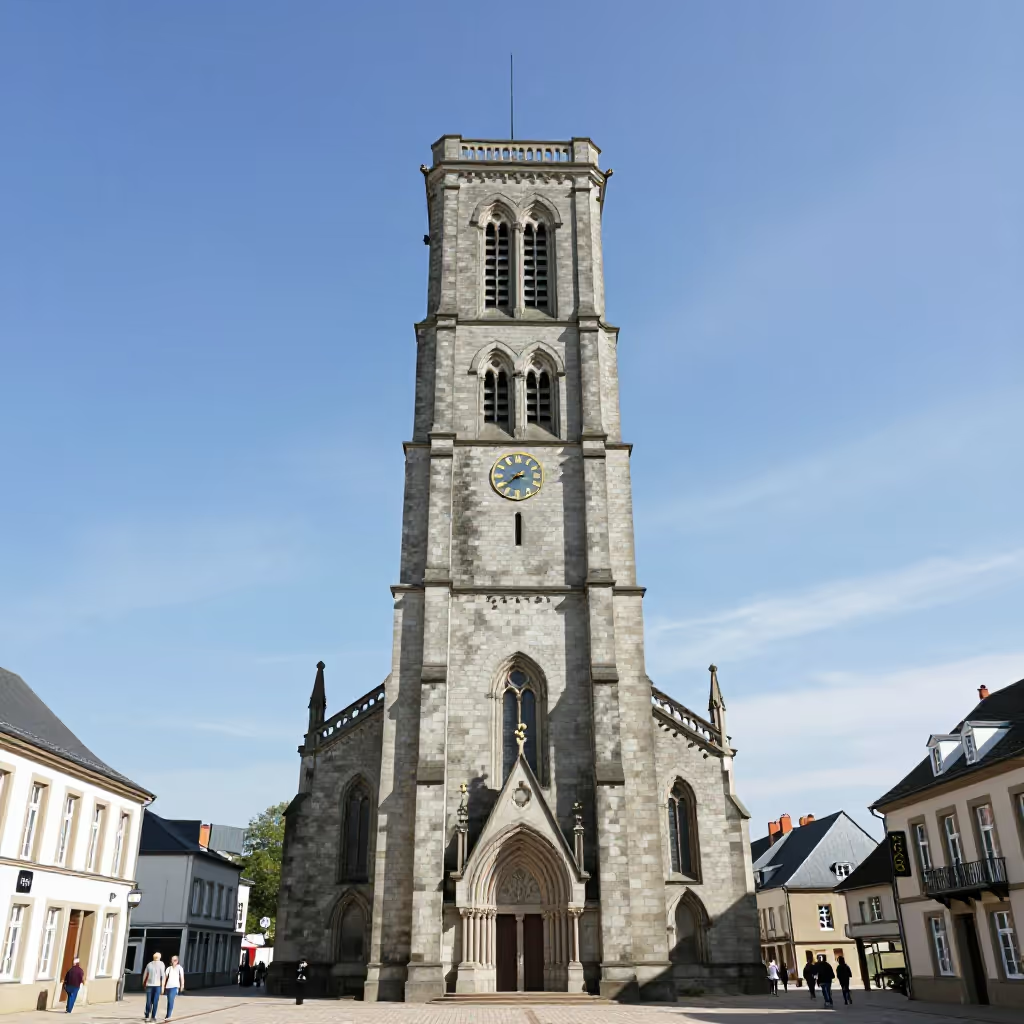
A tall, narrow structure that either stands on its own or is part of a larger building such as a church or castle.
example
Vom Turm der Kathedrale hat man eine fantastische Aussicht über die ganze Stadt.
From the tower of the cathedral, you have a fantastic view over the whole city.

Usage tips
Productive compounds
The word 'Turm' (tower) is a common component of compound nouns that describe a specific type of tower. Examples are 'Kirchturm' (church tower), 'Fernsehturm' (TV tower), or 'Wachturm' (watchtower).
EXAMPLE
Der Fernsehturm in Berlin ist ein bekanntes Wahrzeichen.
The TV tower in Berlin is a well-known landmark.
Context clue
The meaning of 'Turm' (tower) becomes clear from context. In connection with buildings, it refers to a structure (m01). In 'Schach' (chess), it is a chess piece (m02). When stacked things are being discussed, it means a stack (m03).
EXAMPLE
Wir sind auf den alten Turm gestiegen.
We climbed the old tower.
Use with 'aus'
In the meaning of 'Stapel' (stack), it is often described more precisely with the preposition 'aus' (made of/from) and the dative, indicating what the stack consists of.
EXAMPLE
Auf dem Boden stand ein hoher Turm aus alten Zeitungen.
There was a tall tower of old newspapers on the floor.
Compare with
near_synonym · confusable
Turm vs Berg
mountain
'der Berg' and 'der Turm' can both refer to something tall. The most important difference is: a Berg is normally a natural elevation in the landscape. A Turm is a tall, narrow structure or a high stack of things. The words can be confused because both rise upward and can also be used figuratively for a large amount. For nature and landscapes, 'Berg' fits. For buildings or piled-up objects, 'Turm' fits.
Turm
Vom alten Turm sieht man die ganze Stadt.
From the old tower, you can see the whole city.
Berg
Am Wochenende wandert die Gruppe auf einen hohen Berg.
At the weekend, the group hikes up a high mountain.