

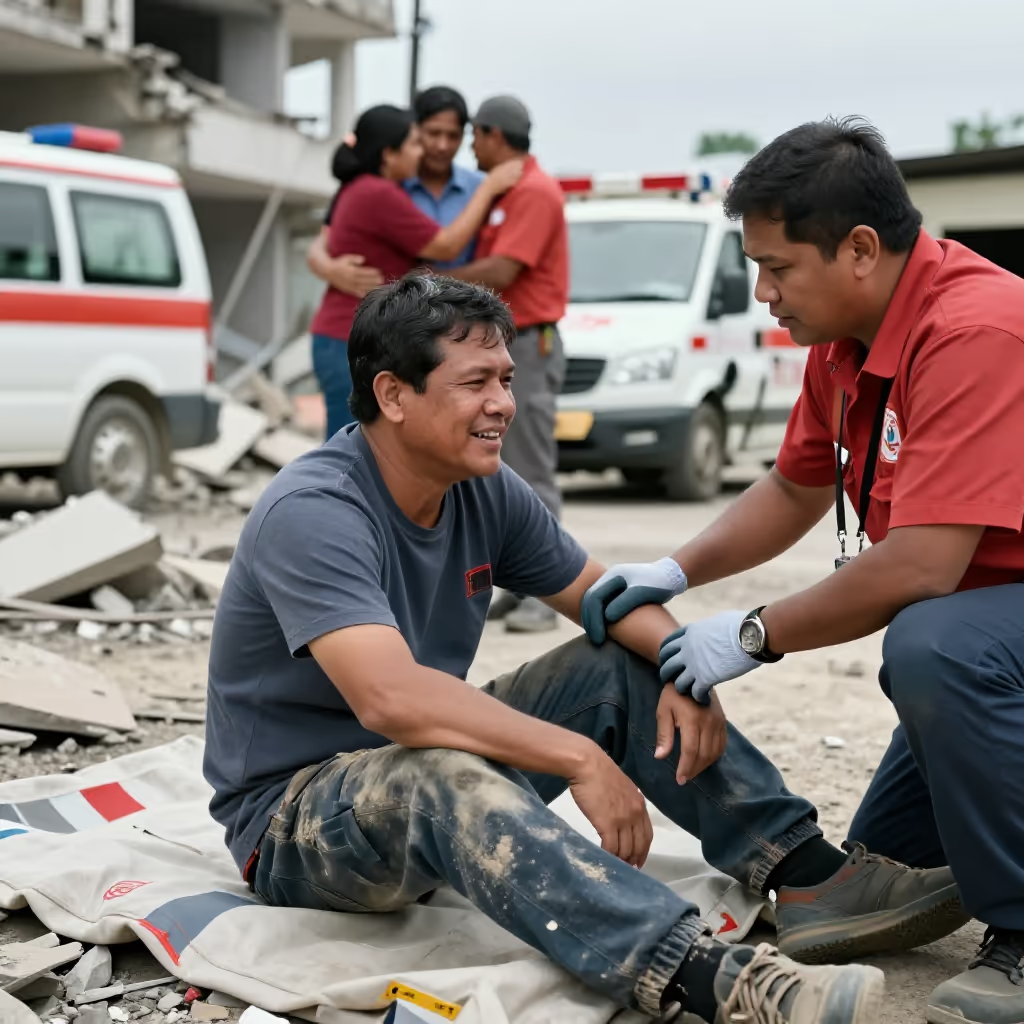
A person who has lived through a life-threatening event such as an accident, a disaster, a war, or a serious illness.
example
Als einziger Überlebender des Flugzeugabsturzes konnte er den Rettungskräften berichten, was passiert war.
As the only survivor of the plane crash, he was able to tell the rescue workers what had happened.
Usage tips
Word structure
The word is a nominalized form of the present participle of the inseparable verb 'überleben' (to survive). So it describes a person who is currently surviving or has survived.
EXAMPLE
Das Verb „überleben“ ist nicht trennbar: Sie überlebte das Unglück.
The verb 'überleben' (to survive) is not separable: She survived the accident.
Adjectival declension
This noun is declined like an adjective. The ending changes depending on the article and case. Pay attention to the different forms.
EXAMPLE
Der Überlebende konnte sich an nichts erinnern.
The survivor could not remember anything.
Typical collocations
The genitive or the preposition 'von' (of/from) is often used to specify what the person survived. A very typical combination is also 'der einzige Überlebende' (the only survivor).
EXAMPLE
Er ist ein Überlebender des Holocaust.
He is a survivor of the Holocaust.
Compare with
antonym
Überlebender vs Tote
dead person
'der Tote' and 'der Überlebender' are clear opposites. A dead person is someone who has died. A survivor is someone who has lived through a dangerous situation and is still alive. Both words are often used after accidents, disasters, wars, or serious illnesses. The important difference is the outcome: 'der Tote' did not survive, while 'der Überlebender' did.
Überlebender
Am Montag sprach die Ärztin lange mit dem Überlebenden des Brandes.
On Monday, the doctor spoke at length with the survivor of the fire.
Tote
Nach dem Unfall wurde ein Toter aus dem Auto geborgen.
After the accident, one dead person was recovered from the car.