


überrennen
to overrun
To conquer, occupy, or flood a place or a group of opponents through a fast, massive attack or a large number of people.
Die Fans überrannten nach dem Sieg das Spielfeld.
After the victory, the fans overran the playing field.

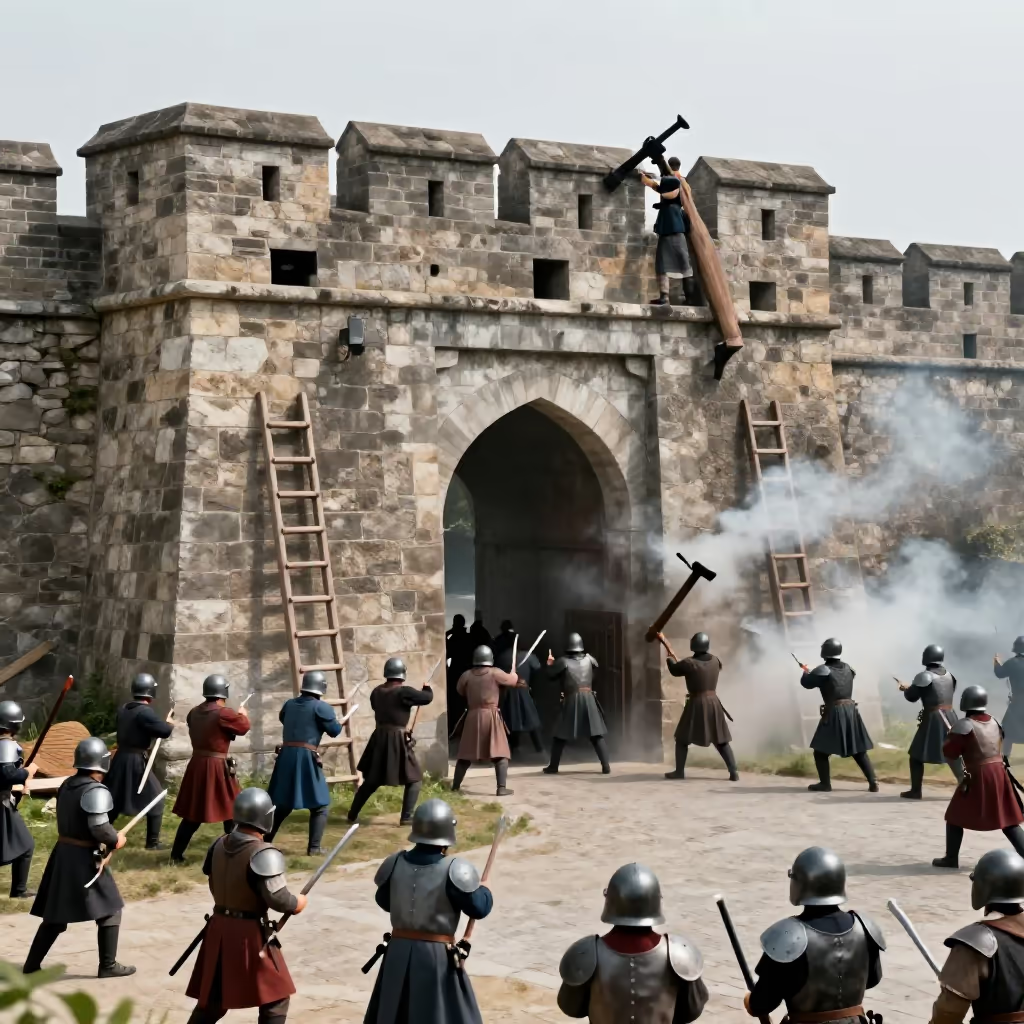
to overrun
Loading your saved state.
to overrun
To conquer, occupy, or flood a place or a group of opponents through a fast, massive attack or a large number of people.
Die Fans überrannten nach dem Sieg das Spielfeld.
After the victory, the fans overran the playing field.

'Überrennen' (to overrun / to run over) is an inseparable verb. The prefix 'über-' remains firmly attached to the verb 'rennen' (to run) in all tenses and sentence constructions.
Die Angreifer überrannten die Verteidigungslinie.
The attackers overran the defensive line.
This verb is always transitive and requires an accusative object. You always 'überrennt' (overrun / run over) someone or something.
Eine große Welle von Touristen überrennt jeden Sommer die kleine Stadt.
A large wave of tourists overruns the small town every summer.
In the meaning 'erobern' (to conquer) or 'überfluten' (to flood), the subject is typically a large group (fans, soldiers, tourists), and the object is a place (playing field, town) or an opposing group.
Die Armee überrannte die feindlichen Stellungen in nur wenigen Stunden.
The army overran the enemy positions in just a few hours.
In the meaning 'umstoßen' (to knock over), it is usually a single person or a vehicle that accidentally bumps into another person and knocks them down. The context is often haste or carelessness.
Der Radfahrer hat in der Eile beinahe einen Fußgänger überrannt.
In his hurry, the cyclist almost ran over a pedestrian.
to occupy / fill / cast
'besetzen' and 'überrennen' can both describe a place being brought under control. 'besetzen' emphasizes that someone then remains in a place and controls it. This can be military. 'überrennen' emphasizes the fast, forceful attack or the large number of people that is hard to stop. Learners may confuse the words because after a place has been overrun, it may also be occupied. If you mean the state or the control, 'besetzen' fits better. If you mean the fast and violent movement, 'überrennen' fits better.

Bei dem Angriff überrannten die Truppen die Grenze in wenigen Minuten.
During the attack, the troops overran the border in just a few minutes.
Die Soldaten besetzten die Brücke, damit niemand mehr hinüberkam.
The soldiers occupied the bridge so that no one could get across anymore.