

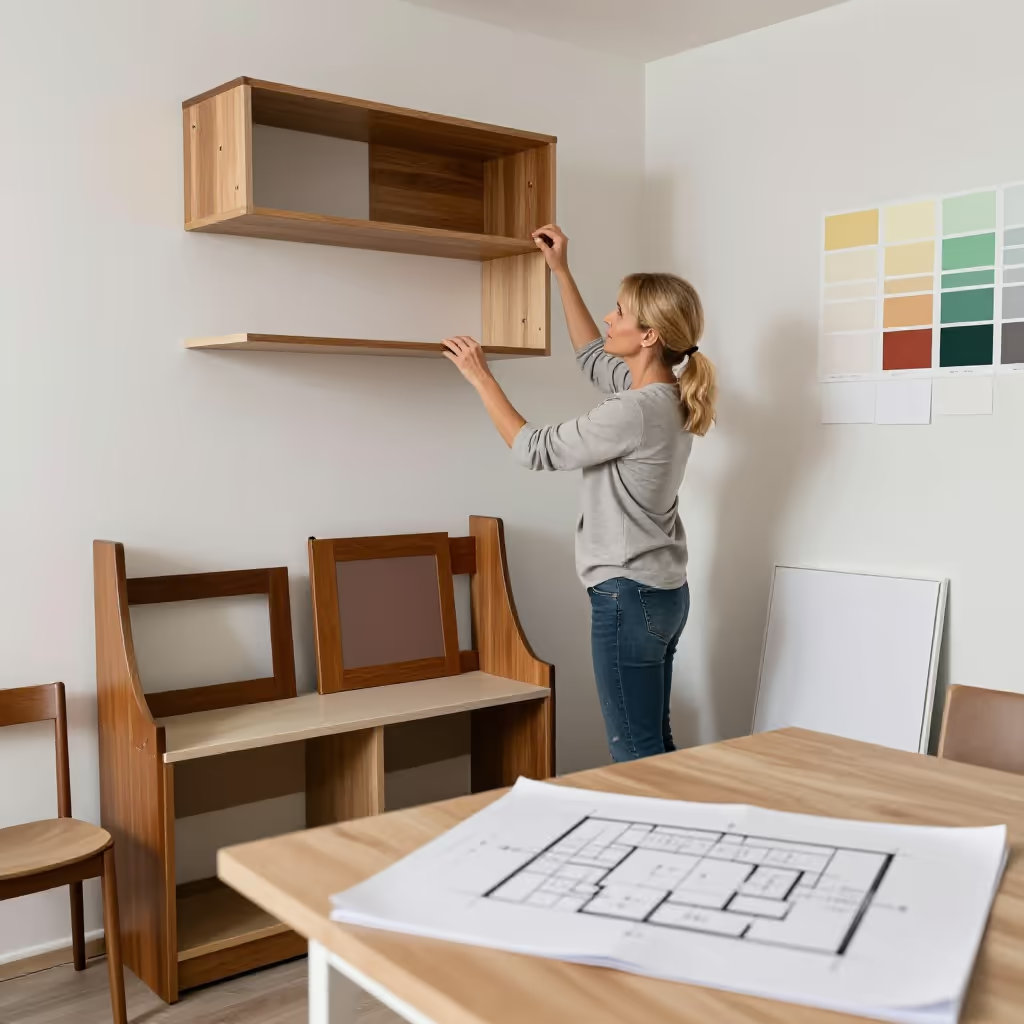
umgestalten
to redesign
To deliberately and often fundamentally change the appearance, structure, or form of something.
Die Stadt plant, den alten Marktplatz komplett umzugestalten.
The city plans to completely redesign the old market square.
to redesign
Loading your saved state.

to redesign
To deliberately and often fundamentally change the appearance, structure, or form of something.
Die Stadt plant, den alten Marktplatz komplett umzugestalten.
The city plans to completely redesign the old market square.
'Umgestalten' (to redesign) is a separable verb. The prefix 'um' comes at the end in a main clause, while it remains attached to the verb in a subordinate clause. In the infinitive with 'zu', 'zu' comes between the prefix and the verb.
Die neue Regierung gestaltet das Bildungssystem um.
The new government is restructuring the education system.
The verb consists of the prefix 'um-' and the verb 'gestalten' (to shape/design). Here, the prefix 'um-' expresses a fundamental, often comprehensive change or renewal.
Sie haben den alten Bauernhof in ein modernes Wohnhaus umgestaltet.
They converted the old farmhouse into a modern residential house.
You can redesign both concrete things and abstract concepts. Typical objects are: a room, a garden, a website, a plan, or a process.
Wir wollen nächstes Jahr unseren Garten komplett umgestalten.
We want to completely redesign our garden next year.
to convert / transform
Umwandeln can refer to a general change into another form, state, or substance. Umgestalten, by contrast, means deliberately and often fundamentally changing the appearance, structure, or form of something. Use „umwandeln“ for a new state and „umgestalten“ for a planned redesign.

Das Team gestaltet den alten Raum zu einem modernen Büro um.
The team is redesigning the old room as a modern office.
Das Team wandelt den alten Raum in ein modernes Büro um.
The team is converting the old room into a modern office.