

umwandeln
to convert
To change something into another form, another state, or another substance.
EXAMPLE
Ein Kraftwerk wandelt Wärme in elektrische Energie um.
A power plant converts heat into electrical energy.
to convert / transform
Loading your saved state.
to convert
To change something into another form, another state, or another substance.
Ein Kraftwerk wandelt Wärme in elektrische Energie um.
A power plant converts heat into electrical energy.

to convert
In sports, especially in soccer, to successfully turn a penalty kick into a goal. In a legal sense, it can also mean to change a punishment into another form.
Der Stürmer konnte den Elfmeter sicher zum 1:0 umwandeln.
The striker safely converted the penalty to make it 1-0.

to transform
To change by itself into something else.
Die Raupe wird sich bald in einen Schmetterling umwandeln.
The caterpillar will soon transform into a butterfly.
'Umwandeln' (to convert/transform) is a separable verb. In a main clause, the prefix 'um' comes at the end. In a subordinate clause and in the infinitive, the verb stays together.
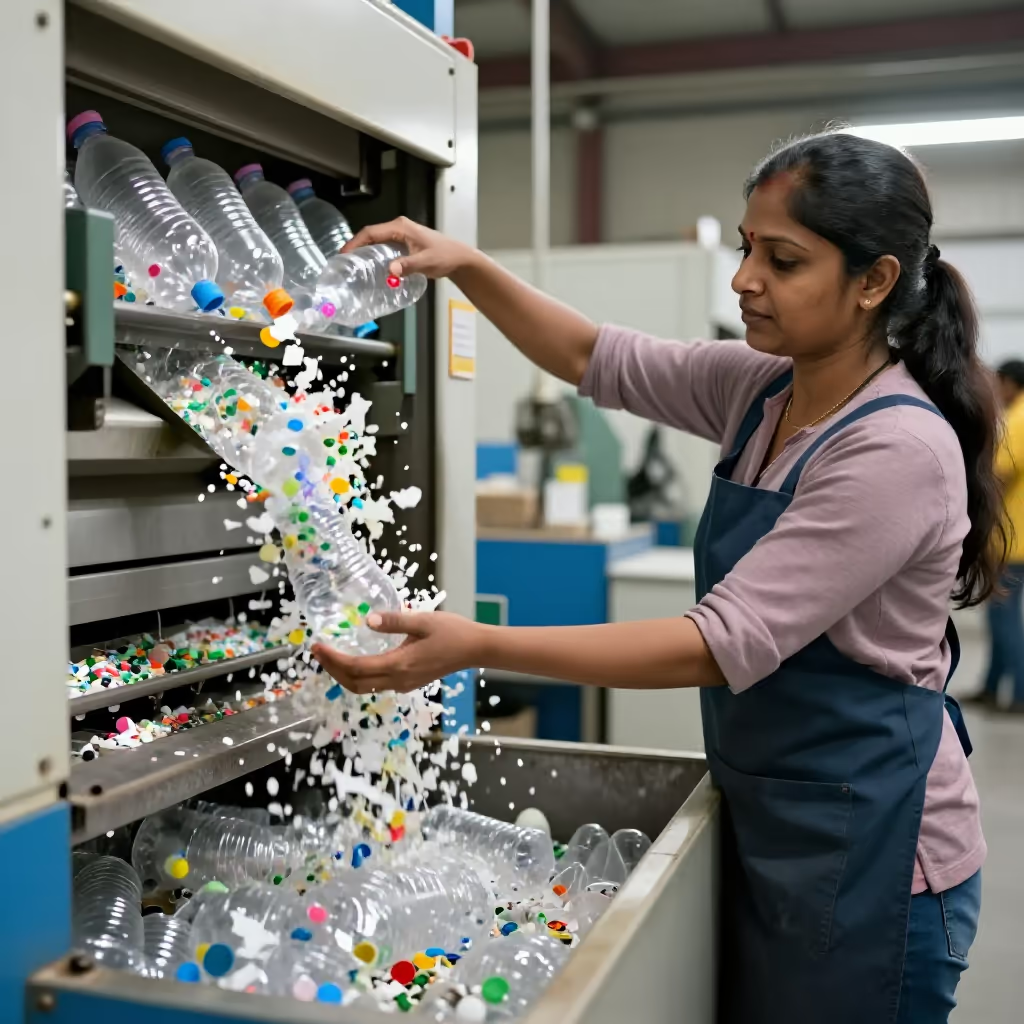
Die Maschine wandelt Plastik in Granulat um.
The machine converts plastic into granulate.
The structure for a conversion is almost always: 'etwas (Akkusativ) in etwas anderes (Akkusativ) umwandeln' (to convert something into something else). The preposition 'in' indicates the result of the change.
Man kann Sonnenlicht in Strom umwandeln.
You can convert sunlight into electricity.
Common uses of 'umwandeln' (to convert) refer to energy, data, or finance. Typical combinations are: 'Energie umwandeln' (to convert energy), 'eine Datei umwandeln' (to convert a file), or 'eine Währung umwandeln' (to convert a currency).
Können Sie diese Word-Datei in ein PDF umwandeln?
Can you convert this Word file into a PDF?
In a sports context, 'umwandeln' almost always means to successfully turn a penalty or penalty kick into a goal. In a legal context, you can recognize the meaning from words like 'Strafe' (punishment/sentence) or 'Urteil' (judgment/sentence).
Der Kapitän verwandelte den Elfmeter souverän zum Siegtreffer um.
The captain confidently converted the penalty for the winning goal.
When something changes by itself, the reflexive form 'sich umwandeln' (to transform) is used. Here too, the preposition 'in' is followed by the accusative to describe the result.
Unter Druck und Hitze wandelt sich Kohlenstoff in einen Diamanten um.
Under pressure and heat, carbon transforms into a diamond.
to change
Verändern and umwandeln can both express that something becomes different. However, umwandeln emphasizes changing into another form or state, while verändern can also refer to a partial change to the existing object. For a new form, umwandeln is appropriate; for a limited change, verändern is usually the better choice.

Wir wandeln den Plan in einen neuen Ablauf für den späteren Termin um.
We are converting the plan into a new schedule for the later date.
Wir verändern den Plan nur an zwei Stellen, damit er besser zum neuen Termin passt.
We are changing the plan in only two places so that it fits the new date better.