

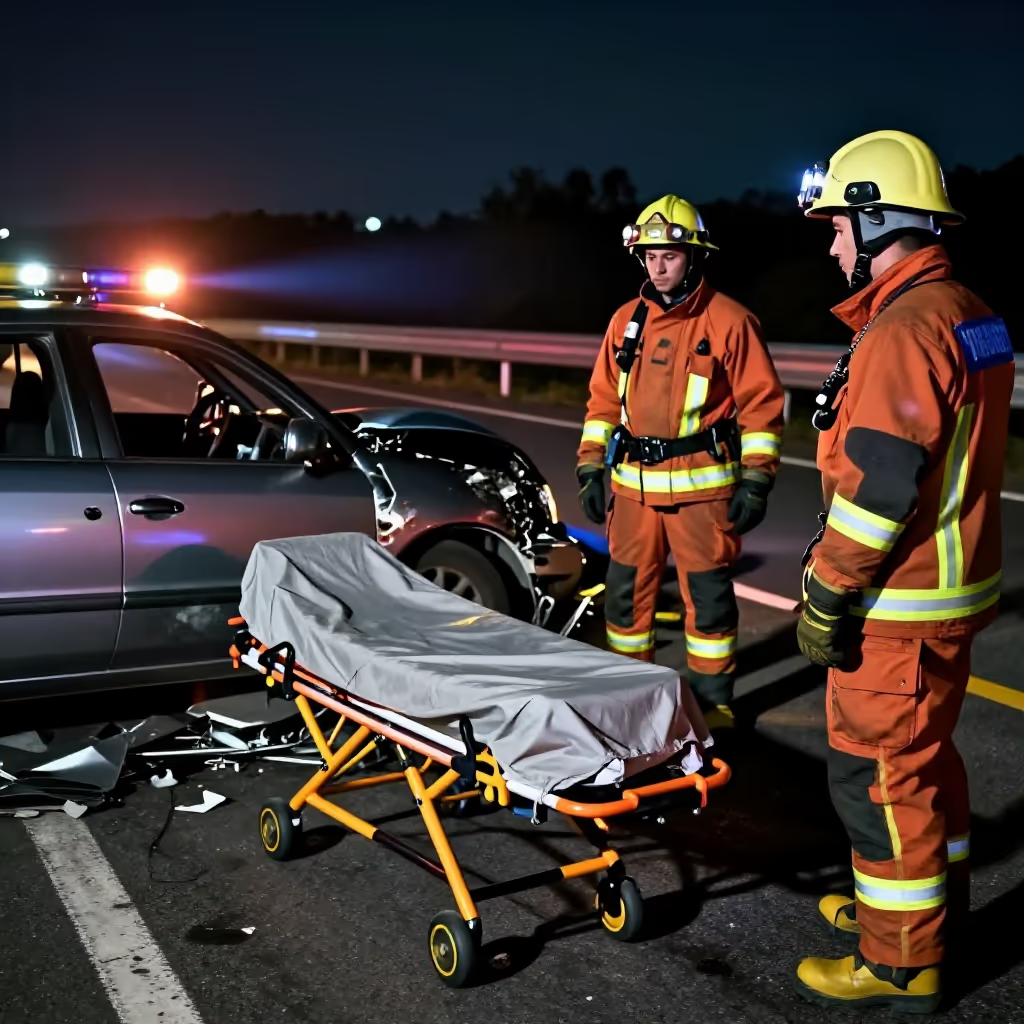
umkommen
to die
To die as a result of an accident, a disaster, a war, or a crime; to lose one's life.
EXAMPLE
Bei dem schweren Erdbeben sind leider Hunderte von Menschen umgekommen.
Sadly, hundreds of people died in the severe earthquake.
to die / to spoil
Loading your saved state.
to die
To die as a result of an accident, a disaster, a war, or a crime; to lose one's life.
Bei dem schweren Erdbeben sind leider Hunderte von Menschen umgekommen.
Sadly, hundreds of people died in the severe earthquake.

to spoil
To spoil or go bad, usually referring to food. This meaning is very rare today and is considered outdated.
Iss den Salat bald, sonst kommt er in der Wärme noch um.
Eat the salad soon, otherwise it will spoil in the heat.
Since 'umkommen' (to die) describes a change of state (from life to death), the perfect tense is always formed with the auxiliary verb 'sein' (to be), not with 'haben' (to have). This is a common mistake.
Bei dem Flugzeugabsturz sind alle Passagiere umgekommen.
All the passengers died in the plane crash.
'Umkommen' (to die) is a separable verb. In a main clause in the present or simple past tense, the prefix 'um-' comes at the end of the sentence.
Jedes Jahr kommen viele Menschen bei Verkehrsunfällen um.
Every year, many people die in traffic accidents.
To name the cause of death, the prepositions 'bei' (in/during) for an event (e.g., an accident, a fire) or 'durch' (through/from) for a direct cause (e.g., an explosion, an illness) are often used.
Er ist bei einem Lawinenunglück in den Alpen umgekommen.
He died in an avalanche accident in the Alps.
The meaning 'verderben' (to spoil) for food is very rare today and is perceived as outdated. You find it almost only in old literature or regional dialects.
Lass das Gemüse nicht in der Sonne liegen, sonst kommt es um.
Don't leave the vegetables lying in the sun, or they will spoil.
to please / to fall
Gefallen refers, in formal military language, to dying in combat or war. Umkommen is more general and emphasizes a violent or tragic death caused by external circumstances. Thus, a soldier fällt in battle, while a civilian, for example, umkommt in an attack.
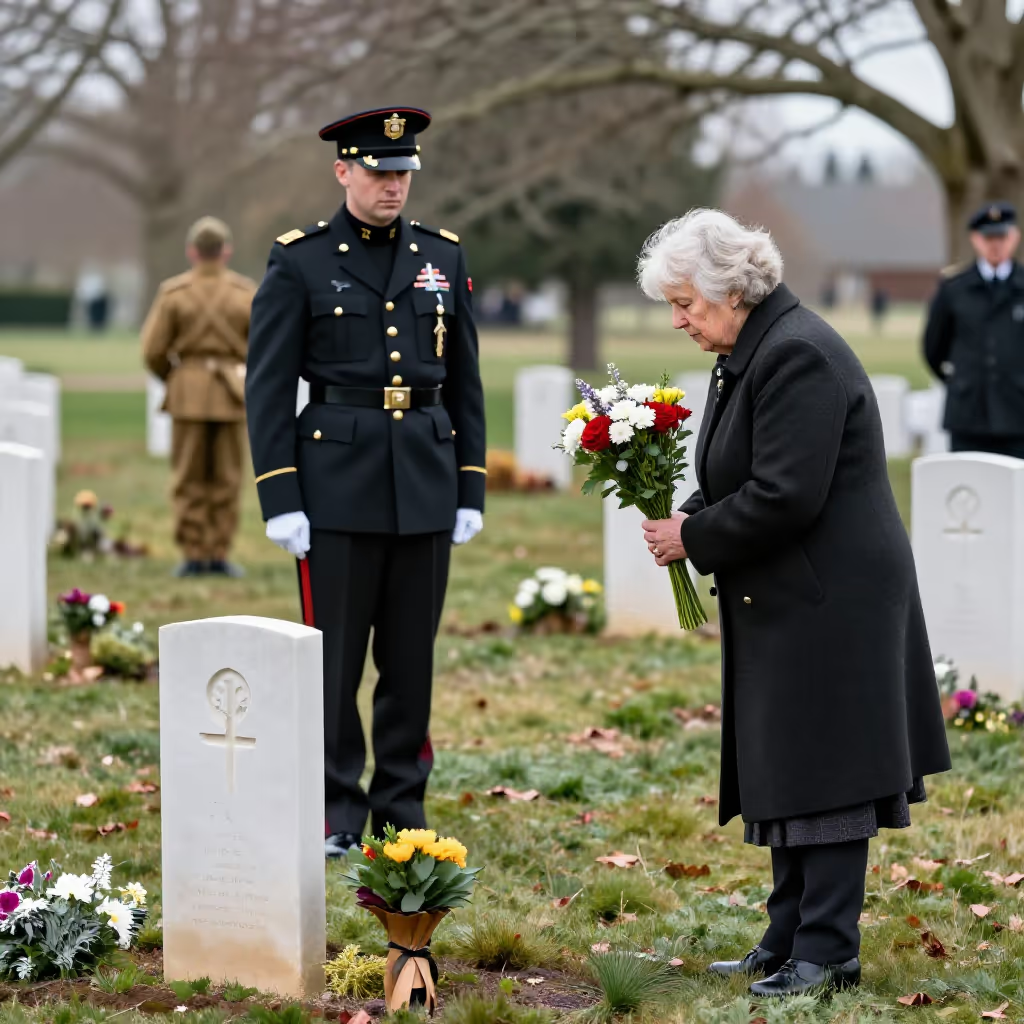
Ein Zivilist ist während derselben Kämpfe bei einem Angriff umgekommen.
A civilian died in an attack during the same fighting.
Der Soldat ist während der Kämpfe gefallen.
The soldier was killed in action during the fighting.