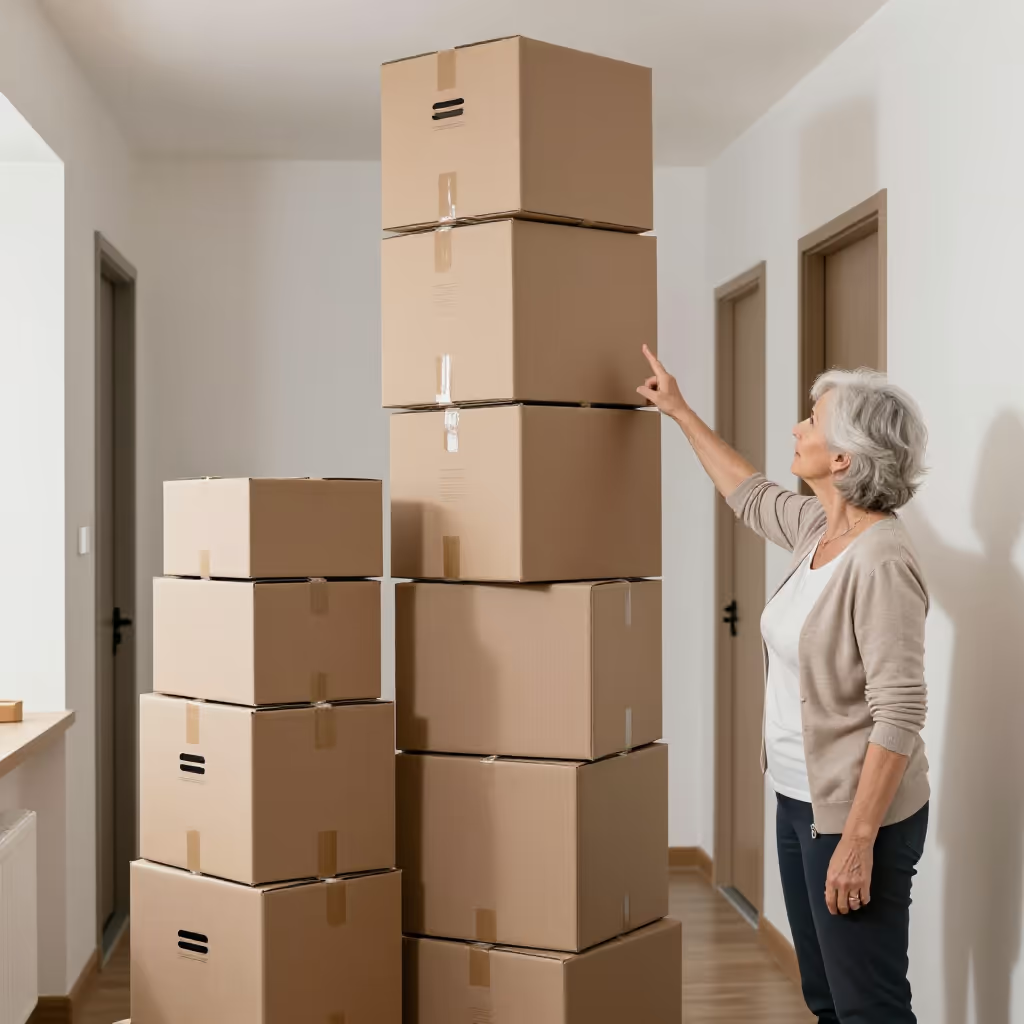
Used in a two-part construction to express a proportional relationship. It indicates that one change leads to a corresponding other change.
example
Je mehr man übt, umso besser wird man.
The more you practice, the better you get.
Usage tips
Context clue
The two meanings are easy to distinguish by the sentence structure. If 'umso' appears in a sentence with 'je', it expresses a relationship. If it stands alone before a comparative, it intensifies it.
EXAMPLE
Je früher du kommst, umso mehr Zeit haben wir.
The earlier you come, the more time we'll have.
Sentence structure: Je ..., umso ...
In this construction, 'je' introduces a subordinate clause, so the verb comes at the end. The 'umso' part is a main clause, in which the verb comes directly after the comparative.
EXAMPLE
Je länger er wartete, umso ungeduldiger wurde er.
The longer he waited, the more impatient he became.
Use with comparatives
As an intensifier, 'umso' always comes directly before an adjective or adverb in the comparative, e.g. 'besser' (better), 'wichtiger' (more important), 'mehr' (more).
EXAMPLE
Die Aufgabe war schwierig, aber umso interessanter.
The task was difficult, but all the more interesting.
Compare with
confusable
umso vs je
ever / per
'je' and 'umso' can together express a proportional relationship. In the form 'je ..., umso ...', 'je' appears in the first part and 'umso' in the second part. 'Je länger wir warten, umso schwieriger wird es' (the longer we wait, the more difficult it becomes) shows that when one thing increases, the other also increases or changes. Learners confuse the words because they occur in the same sentence structure. 'umso' can also intensify a comparative without 'je', for example after giving a reason. Then it means roughly 'even more' or 'all the more'.
umso
Nach dem Lob arbeitet Maria umso motivierter weiter.
After the praise, Maria continues working all the more motivated.
je
Je besser Tom vorbereitet ist, umso ruhiger bleibt er in der Prüfung.
The better prepared Tom is, the calmer he remains in the exam.