

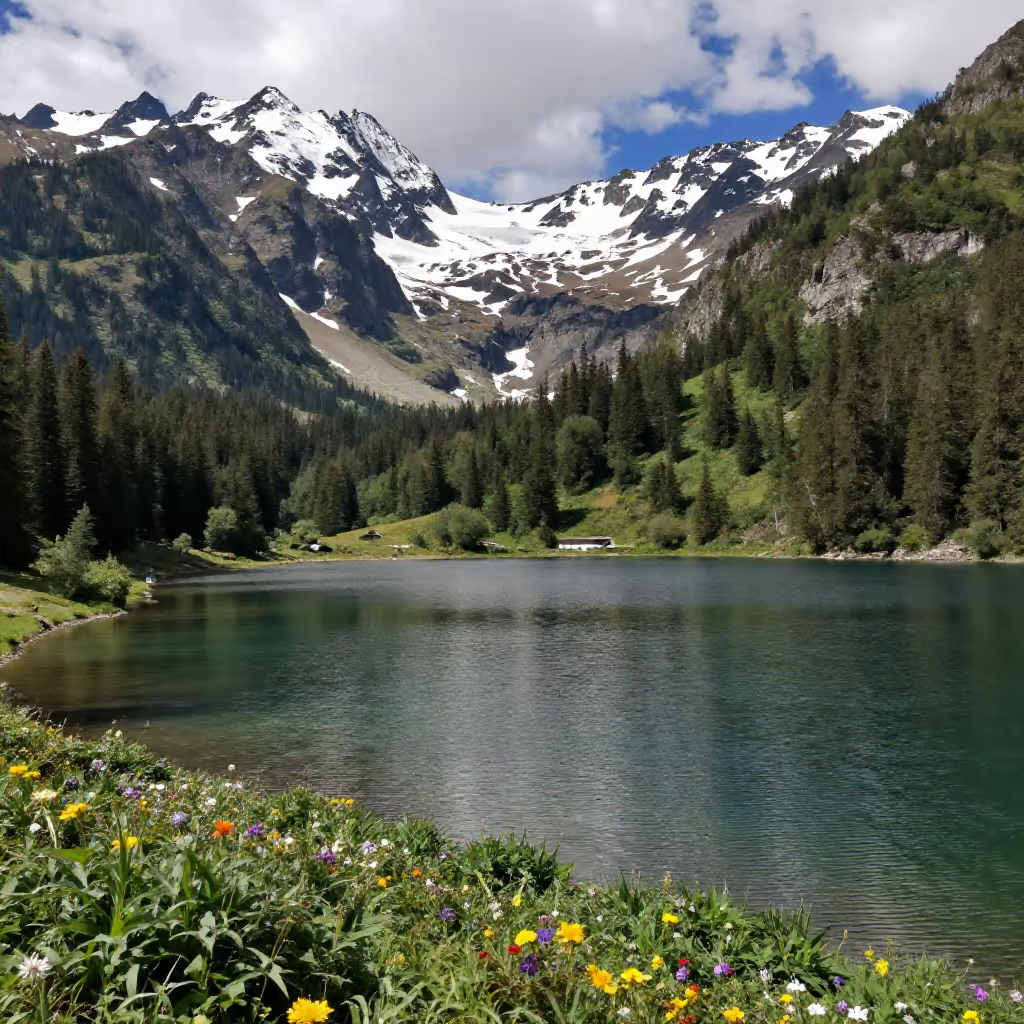
unberührt
untouched
Not changed or influenced by humans; in its natural, original state. Often used for landscapes.
Im Nationalpark gibt es noch große Flächen unberührter Natur.
In the national park, there are still large areas of untouched nature.

untouched
Loading your saved state.
untouched
Not changed or influenced by humans; in its natural, original state. Often used for landscapes.
Im Nationalpark gibt es noch große Flächen unberührter Natur.
In the national park, there are still large areas of untouched nature.
The word is composed of the prefix 'un-' (not) and 'berührt' (past participle of 'berühren' (to touch)). The literal meaning 'not touched' is the basis for all figurative meanings.
Der erste Schnee auf der Wiese war noch völlig unberührt.
The first snow on the meadow was still completely untouched.
In this meaning, 'unberührt' (untouched) is very often used to describe landscapes. Common combinations are 'unberührte Natur' (untouched nature), 'unberührte Landschaft' (untouched landscape), or 'unberührter Wald' (untouched forest).
Touristen suchen oft nach Stränden mit unberührter Natur.
Tourists often look for beaches with untouched nature.
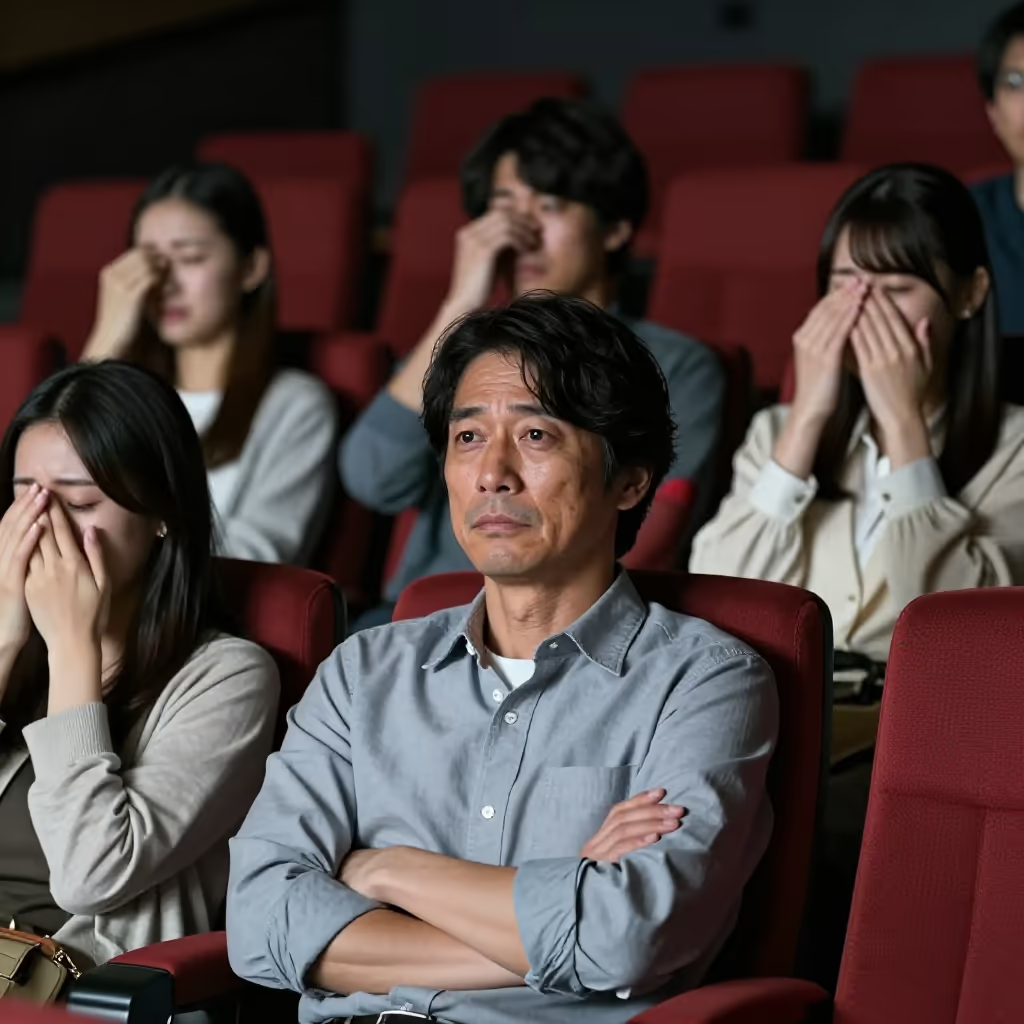
To express that someone is emotionally unmoved, the constructions 'von etwas unberührt bleiben' (to remain untouched/unmoved by something) or 'etwas lässt jemanden unberührt' (something leaves someone untouched/unmoved) are often used.
Sie blieb von seinen traurigen Worten völlig unberührt.
She remained completely unmoved by his sad words.
When a topic is not dealt with, the phrase 'etwas unberührt lassen' (to leave something untouched) is often used. Typical objects here are 'ein Thema' (a topic), 'eine Frage' (a question), or 'ein Problem' (a problem).
Wir sollten diesen Punkt in der Diskussion nicht unberührt lassen.
We should not leave this point untouched in the discussion.
original / originally
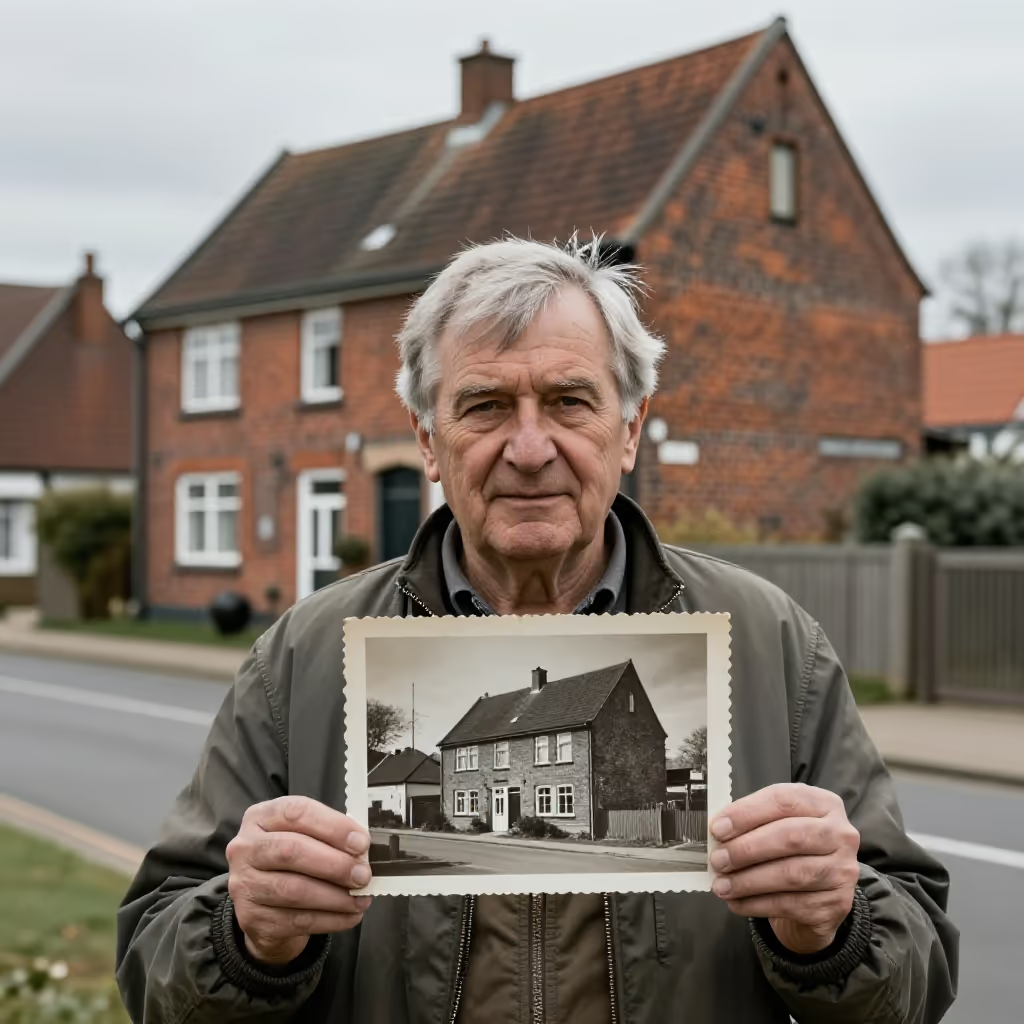
'ursprünglich' and 'unberührt' can both describe something in a natural or original state. 'ursprünglich' generally says what something was like at the beginning or that it is still original. 'unberührt' more strongly emphasizes that people have not changed or influenced something. This fits especially well with nature, landscapes, or places. Learners may confuse the words because both can mean 'not changed'. If you only mean the initial state, 'ursprünglich' is more natural. If you want to say that nobody has intervened, 'unberührt' is more precise.

Im Norden der Insel gibt es noch unberührte Natur.
In the north of the island, there is still untouched nature.
Die Farbe der Tür war ursprünglich dunkelgrün.
The door was originally dark green.