

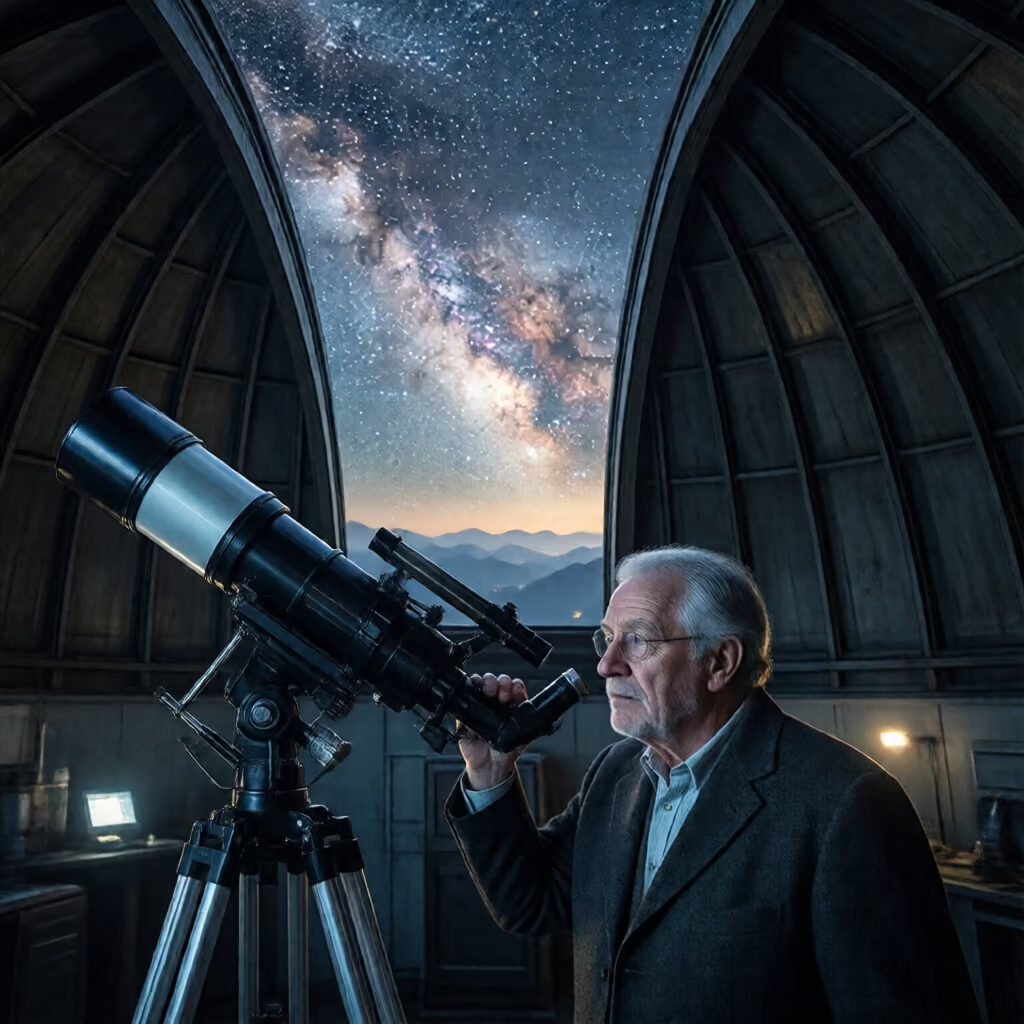
das Unendliche
the infinite
That which has no boundary or end; infinity as an abstract concept.
EXAMPLE
Der Mensch versucht seit jeher, das Unendliche zu begreifen.
Humankind has always tried to comprehend the infinite.
infinite
das Unendliche
Loading your saved state.
the infinite
That which has no boundary or end; infinity as an abstract concept.
Der Mensch versucht seit jeher, das Unendliche zu begreifen.
Humankind has always tried to comprehend the infinite.
| gender | neuter das |
|---|---|
| genitive | des Unendlichen |
| singular | plural | |
|---|---|---|
| nominative | das Unendliche | – |
| accusative | das Unendliche | – |
| dative | dem Unendlichen | – |
| genitive | des Unendlichen | – |
The article changes with the case; it is shown in colour.
'Das Unendliche' (the infinite) is a substantivized adjective: the adjective 'unendlich' (infinite) is used as an abstract concept and is therefore capitalized. It typically appears with an article or a preposition.
In der Philosophie wird das Unendliche als Grenze des menschlichen Denkens diskutiert.
In philosophy, the infinite is discussed as the limit of human thought.
Common collocations include 'das Unendliche begreifen' (to comprehend the infinite), 'ins Unendliche reichen' (to extend into infinity), and 'ins Unendliche wachsen' (to grow infinitely). The phrase 'ins Unendliche' (into infinity) often describes an extension or development without a discernible limit.
Der Blick vom Gipfel schien ins Unendliche zu reichen.
The view from the summit seemed to extend into infinity.
'Das Unendliche' (the infinite) occurs particularly in philosophical, mathematical, and literary texts. In everyday language, it is often used in figurative or contemplative statements.
Das Gedicht verbindet die Weite des Meeres mit der Sehnsucht nach dem Unendlichen.
The poem connects the vastness of the sea with a longing for the infinite.