

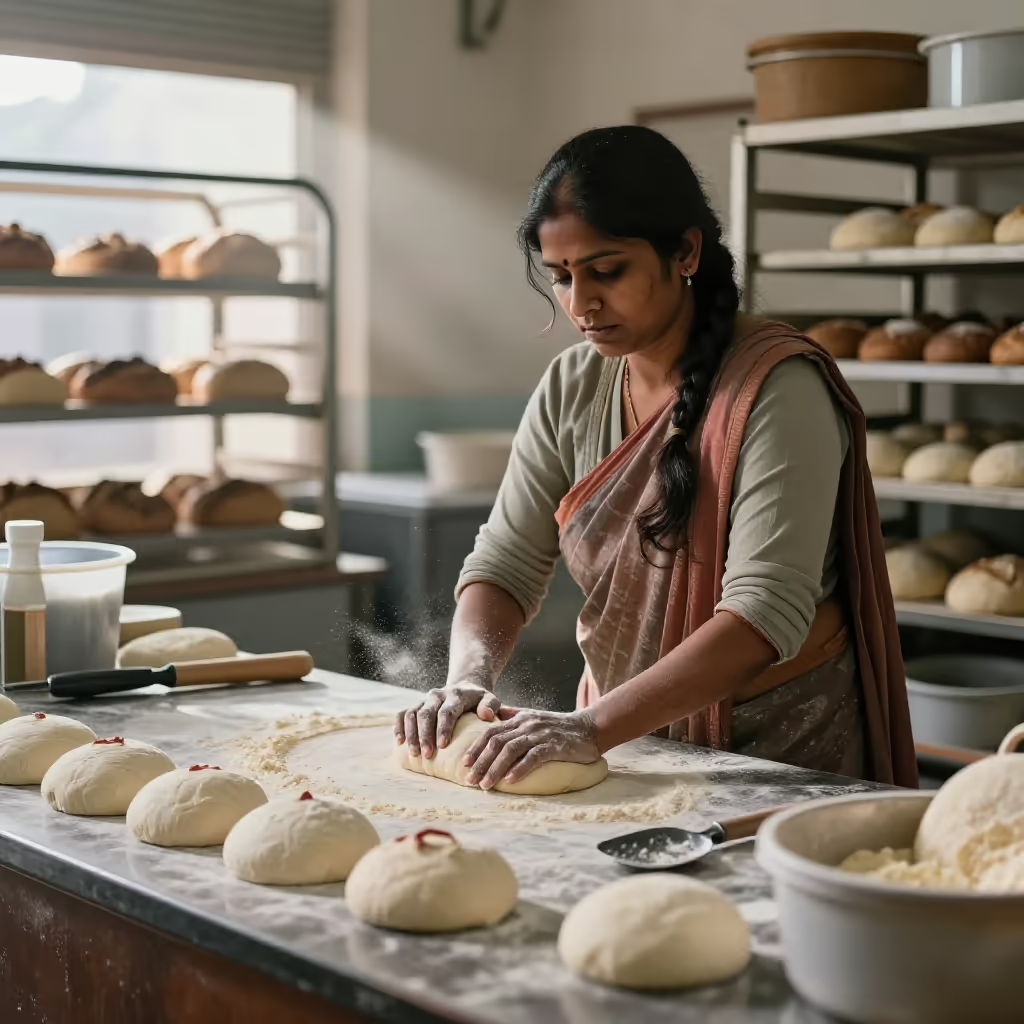
Describes an action or state that continues without interruption; constantly and without pause.
example
Sie blickte während des gesamten Gesprächs unentwegt auf ihr Handy.
Throughout the entire conversation, she looked unceasingly at her phone.

Usage tips
Elevated style
The word 'unentwegt' belongs to a somewhat elevated, more formal, or literary style. It very emphatically expresses the uninterrupted duration of an action.
EXAMPLE
Der Redner gestikulierte unentwegt, um seine Worte zu unterstreichen.
The speaker gestured unceasingly to emphasize his words.
Sentence position
As an adverb, 'unentwegt' usually stands in the middle part of the sentence, often directly after the conjugated verb, to emphasize that the action is taking place without a pause.
EXAMPLE
Er dachte unentwegt an seine bevorstehende Reise.
He thought unceasingly about his upcoming trip.
Typical collocations
'Unentwegt' is typically combined with verbs that describe an ongoing activity. These include, for example, 'reden' (to talk), 'arbeiten' (to work), 'starren' (to stare), 'regnen' (to rain), or 'fließen' (to flow).
EXAMPLE
Es regnete das ganze Wochenende unentwegt.
It rained unceasingly the whole weekend.
Compare with
near_synonym
unentwegt vs ständig
constant
'ständig' and 'unentwegt' both describe that something happens for a very long time or again and again without a break. 'ständig' is more neutral and very common in everyday language. It can mean true continuity, but also simply very frequent repetition. 'unentwegt' emphasizes more strongly that someone or something really does not stop. It sounds a bit more intense and often more descriptive. If you only want to say that something happens often, 'ständig' works well. If you want to especially emphasize continuous movement or action without pauses, 'unentwegt' is more precise.
unentwegt
Am Morgen läuft sie unentwegt durch den Park, weil sie für den Lauf trainiert.
In the morning, she runs through the park without stopping because she is training for the race.
ständig
Die Gäste kommen heute ständig in die Küche, obwohl das Essen noch nicht fertig ist.
The guests keep coming into the kitchen today, even though the food is not ready yet.