

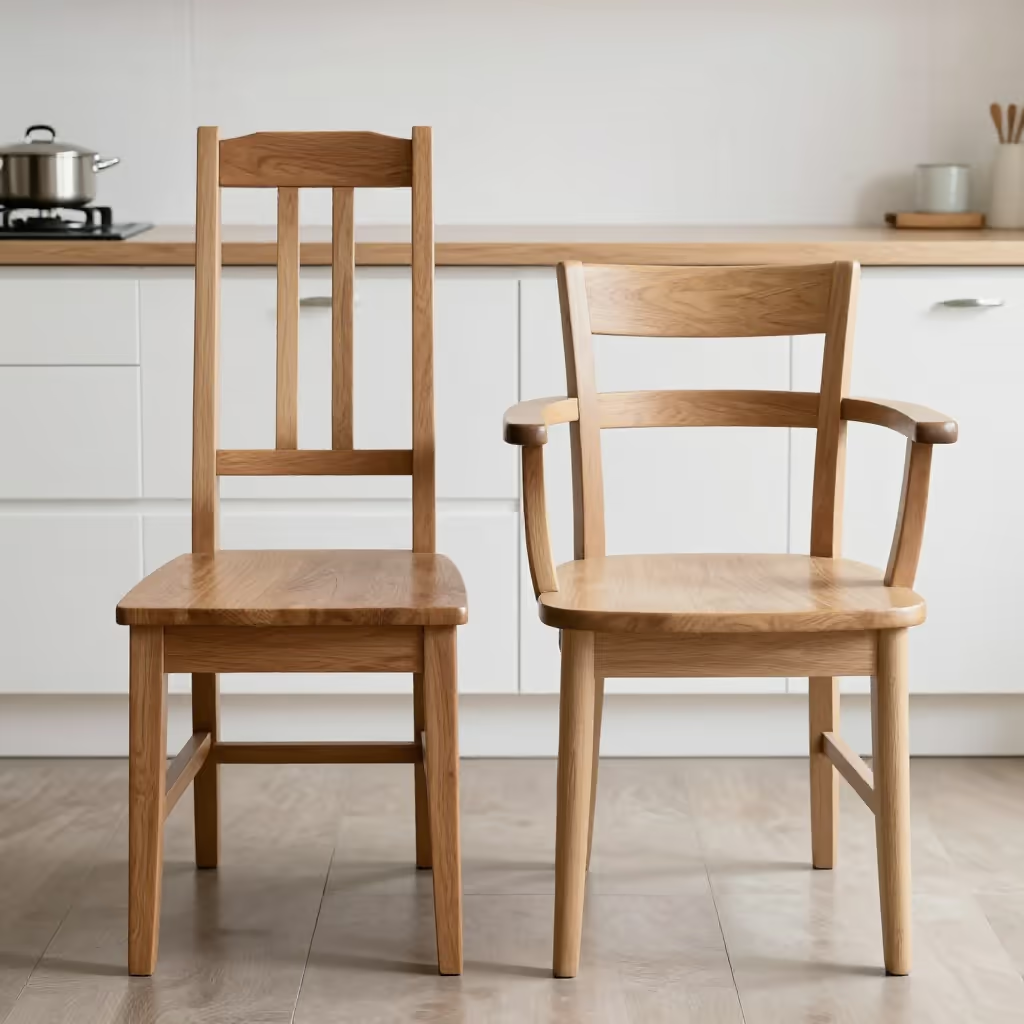
ungleich
unequal
Not the same or identical; different in characteristics, size, or form.
EXAMPLE
Die beiden Brüder sind charakterlich sehr ungleich.
The two brothers are very unequal in character.
unequal / much
Loading your saved state.
unequal
Not the same or identical; different in characteristics, size, or form.
Die beiden Brüder sind charakterlich sehr ungleich.
The two brothers are very unequal in character.

much
Used as an adverb to intensify a comparison and means 'far', 'considerably', or 'much'.
Die Aufgabe war ungleich schwieriger, als wir erwartet hatten.
The task was much more difficult than we had expected.
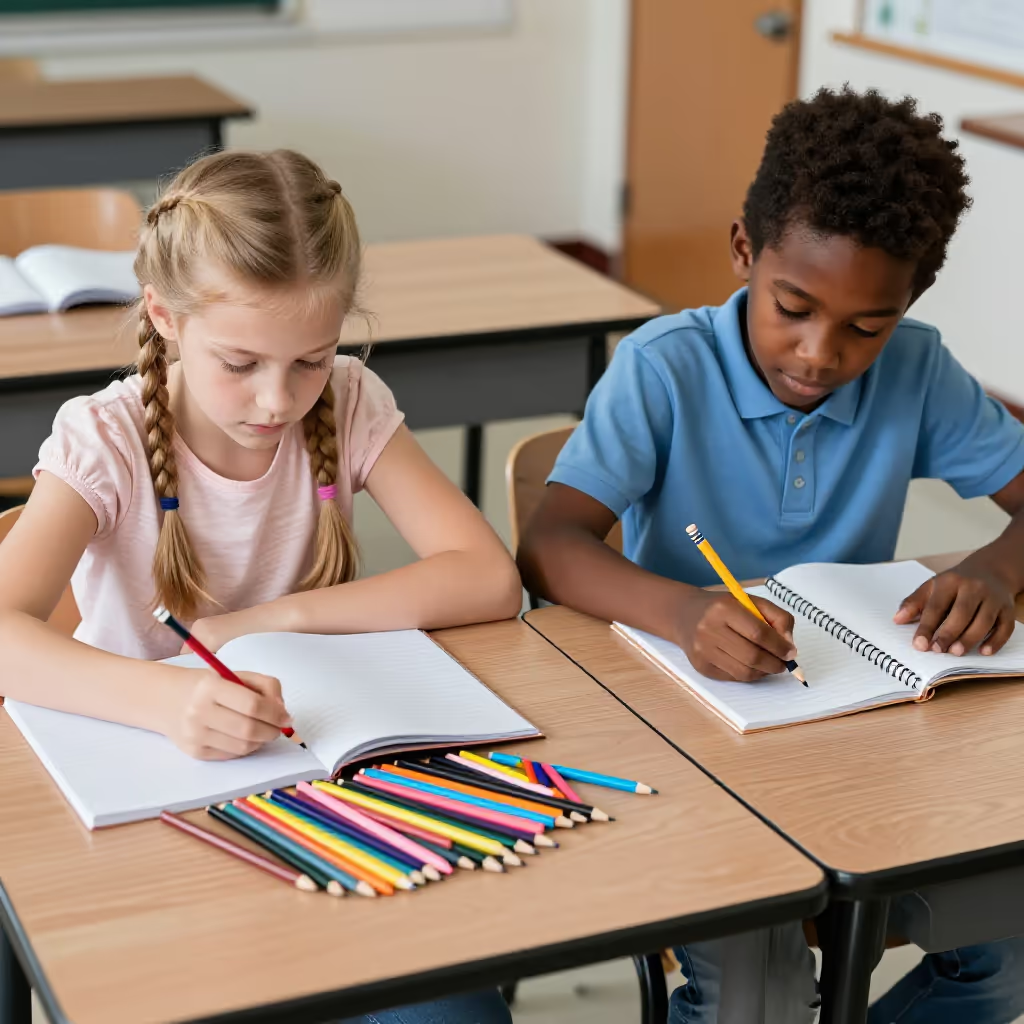
unequal
Not distributed fairly or evenly.
Die Chancen im Wettbewerb waren ungleich verteilt.
The opportunities in the competition were unequally distributed.
The word is the opposite of 'gleich' (same/equal). The prefix 'un-' is often used in German to turn the meaning of an adjective or adverb into its opposite.
Es ist unfair, wenn die Aufgaben ungleich schwer sind.
It is unfair when the tasks are unequally difficult.
In this meaning, 'ungleich' is used as an adverb to intensify a comparative (e.g., 'besser' — better, 'schneller' — faster). It stands directly before the comparative adjective.
Die zweite Prüfung war ungleich anspruchsvoller als die erste.
The second exam was much more demanding than the first.
You can recognize the adverbial meaning by the fact that 'ungleich' stands directly before an adjective in the comparative (e.g., 'größer' — bigger, 'wichtiger' — more important). In the other meanings, it describes a noun or answers the question 'How?'.
Das neue Modell ist ungleich teurer.
The new model is much more expensive.
In the context of fairness and distribution, 'ungleich' is often combined with verbs like 'verteilen' (to distribute) or nouns like 'Chancen' (opportunities) and 'Bedingungen' (conditions).
Der Wohlstand ist in diesem Land sehr ungleich verteilt.
Wealth is very unequally distributed in this country.
different / differently
Anders and ungleich express that something is not the same. Anders typically contrasts one object with a model, expectation, or other reference point. Ungleich directly describes two things as unequal in certain characteristics, their size, or their shape.
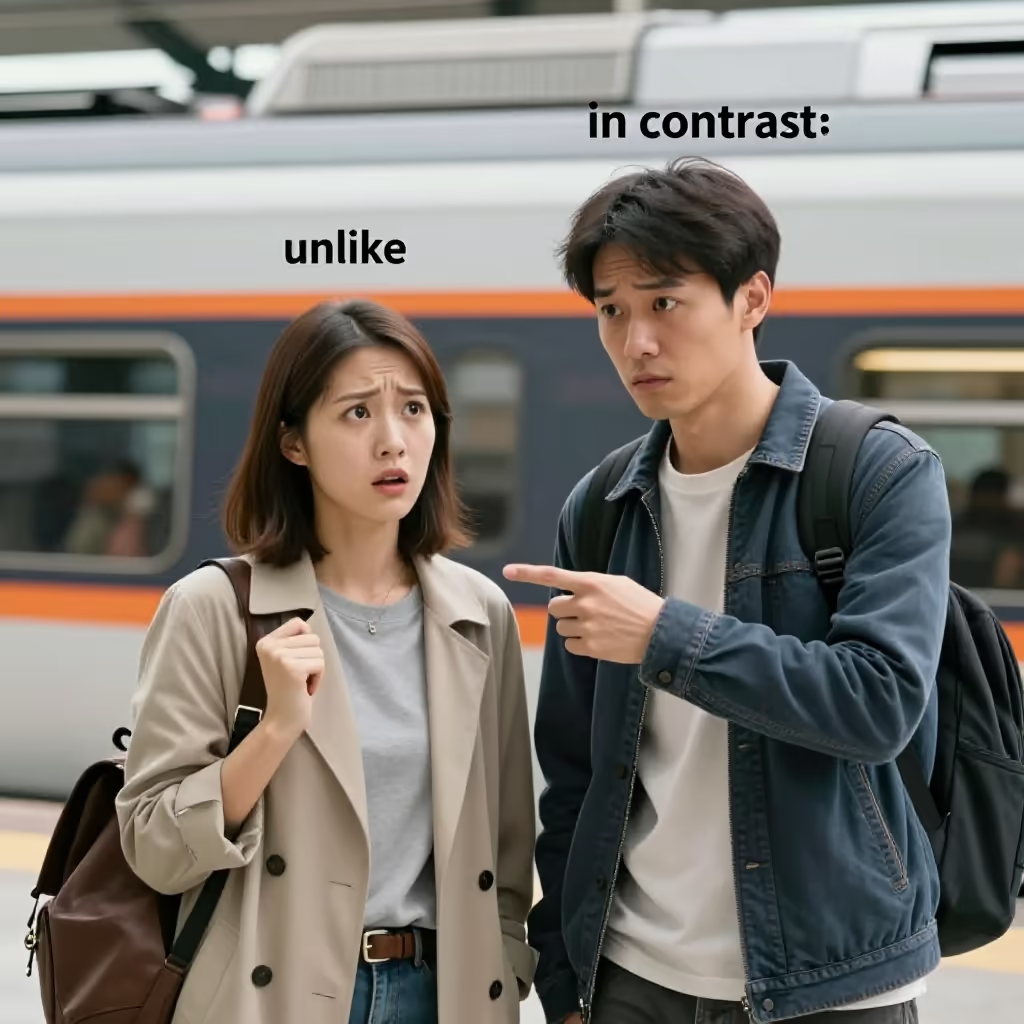
Die beiden Entwürfe sind in Form und Größe ungleich.
The two designs are unequal in shape and size.
Der neue Entwurf ist anders als unsere Vorlage.
The new design is different from our model.