


ungerecht
unfair
Not in accordance with the rules of justice or fairness; biased or undeserved.
EXAMPLE
Die Entscheidung des Schiedsrichters war für alle Fans offensichtlich ungerecht.
The referee's decision was obviously unfair to all the fans.
unfair
Loading your saved state.
unfair
Not in accordance with the rules of justice or fairness; biased or undeserved.
Die Entscheidung des Schiedsrichters war für alle Fans offensichtlich ungerecht.
The referee's decision was obviously unfair to all the fans.
The word is the opposite of 'gerecht' (fair/just). The prefix 'un-' is often used in German to form the opposite of an adjective or noun.
Er findet es ungerecht, dass er mehr arbeiten muss als seine Kollegen.
He thinks it's unfair that he has to work more than his colleagues.
'Ungerecht' (unfair) belongs to the word family of 'das Recht' (the law/right) and 'die Gerechtigkeit' (justice). It describes a state in which the rules of justice are violated.
Eine Welt ohne Kriege und Armut wäre eine gerechte Welt.
A world without wars and poverty would be a fair world.
'Ungerecht' (unfair) is often used to describe actions or situations. Typical combinations are 'ungerechte Behandlung' (unfair treatment), 'ungerechte Verteilung' (unfair distribution), or 'ungerechte Strafe' (unfair punishment).
Viele Menschen empfinden die Verteilung des Reichtums auf der Welt als ungerecht.
Many people perceive the distribution of wealth in the world as unfair.
injustice / wrong
Unrecht is an action or situation that violates moral principles or one's sense of justice. Ungerecht, by contrast, is an adjective describing something as unfair or as treating people unequally. Use “Unrecht” to name the specific disadvantage and “ungerecht” to assess its lack of fairness.
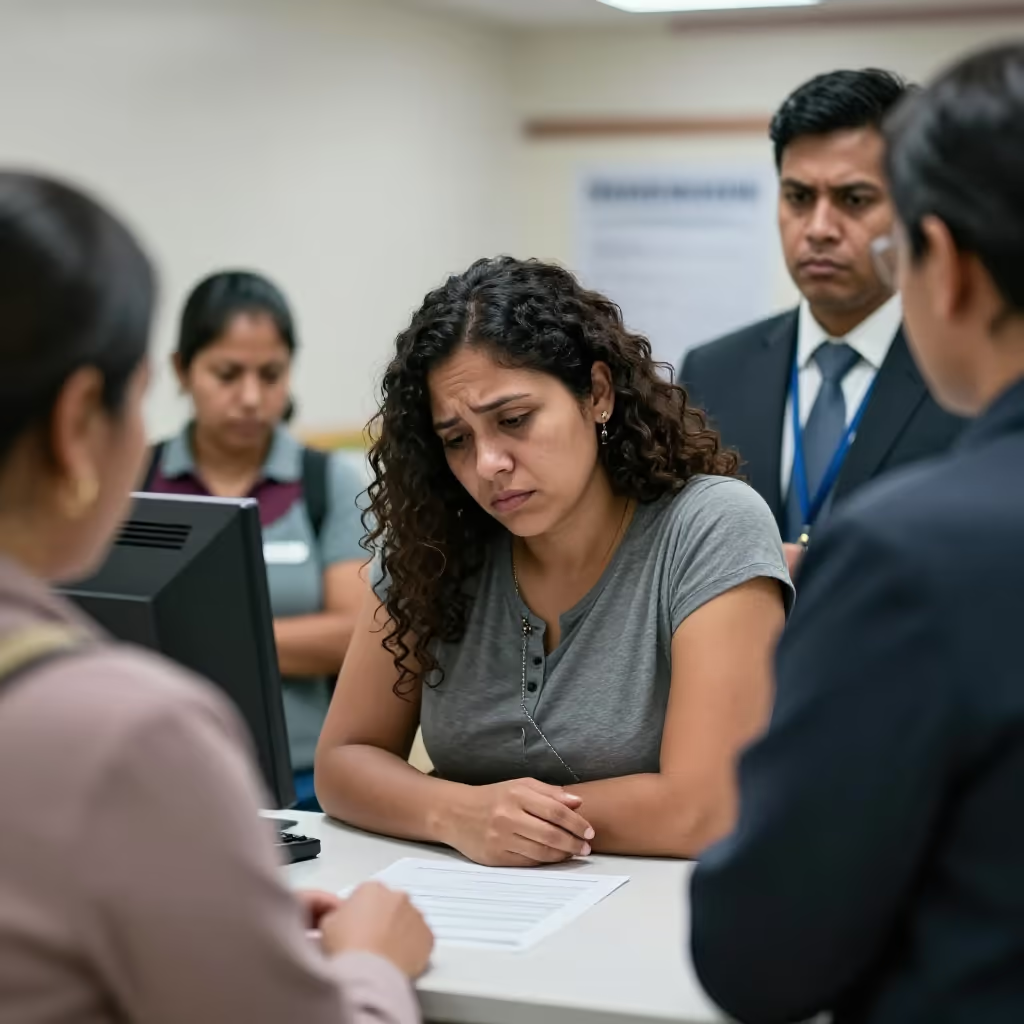
Die Benachteiligung der Familie war ungerecht, weil andere bevorzugt wurden.
The family was treated unfairly because others were given preferential treatment.
Die Benachteiligung der Familie war ein schweres Unrecht.
The family’s disadvantage was a serious injustice.