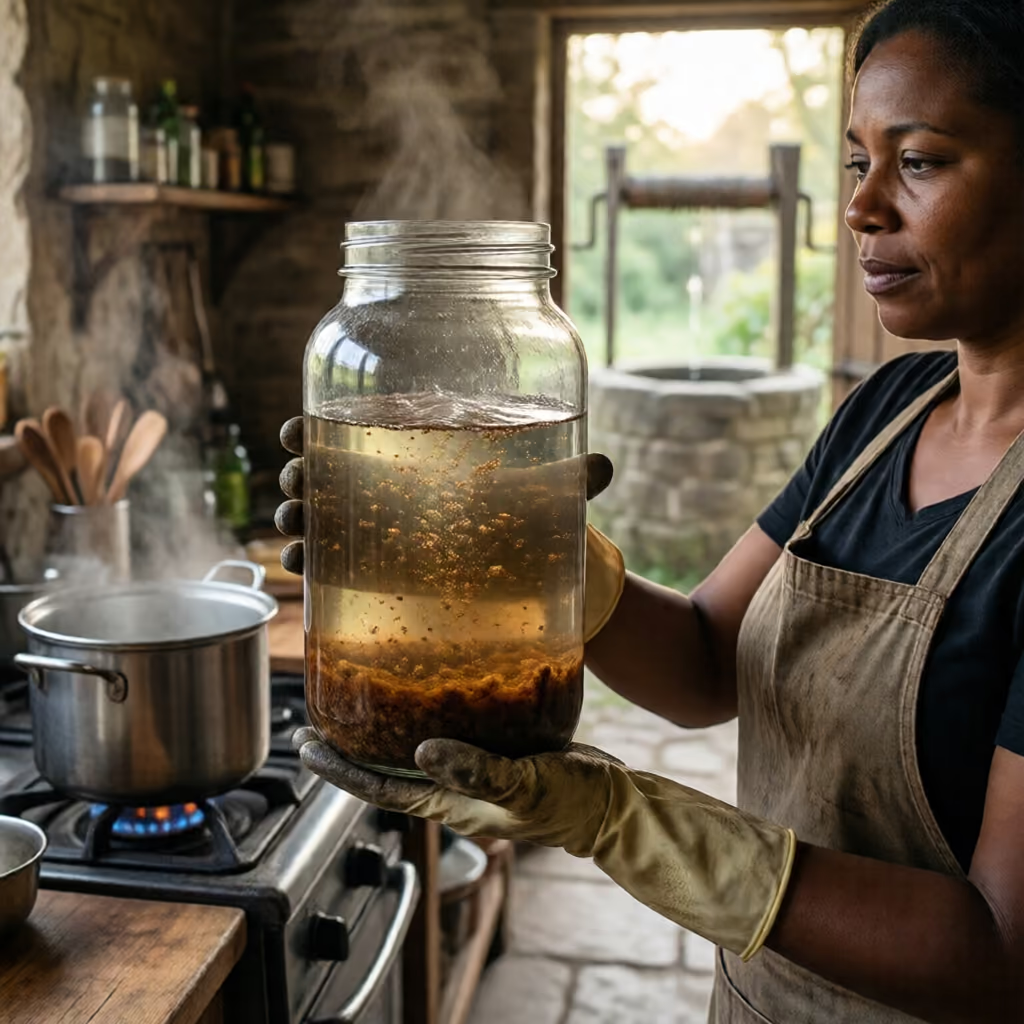
unrein
contaminated
Contaminated with dirt or other unwanted substances; not clean.
Das Wasser aus dem Brunnen ist unrein und muss vor dem Trinken abgekocht werden.
The water from the well is contaminated and must be boiled before drinking.
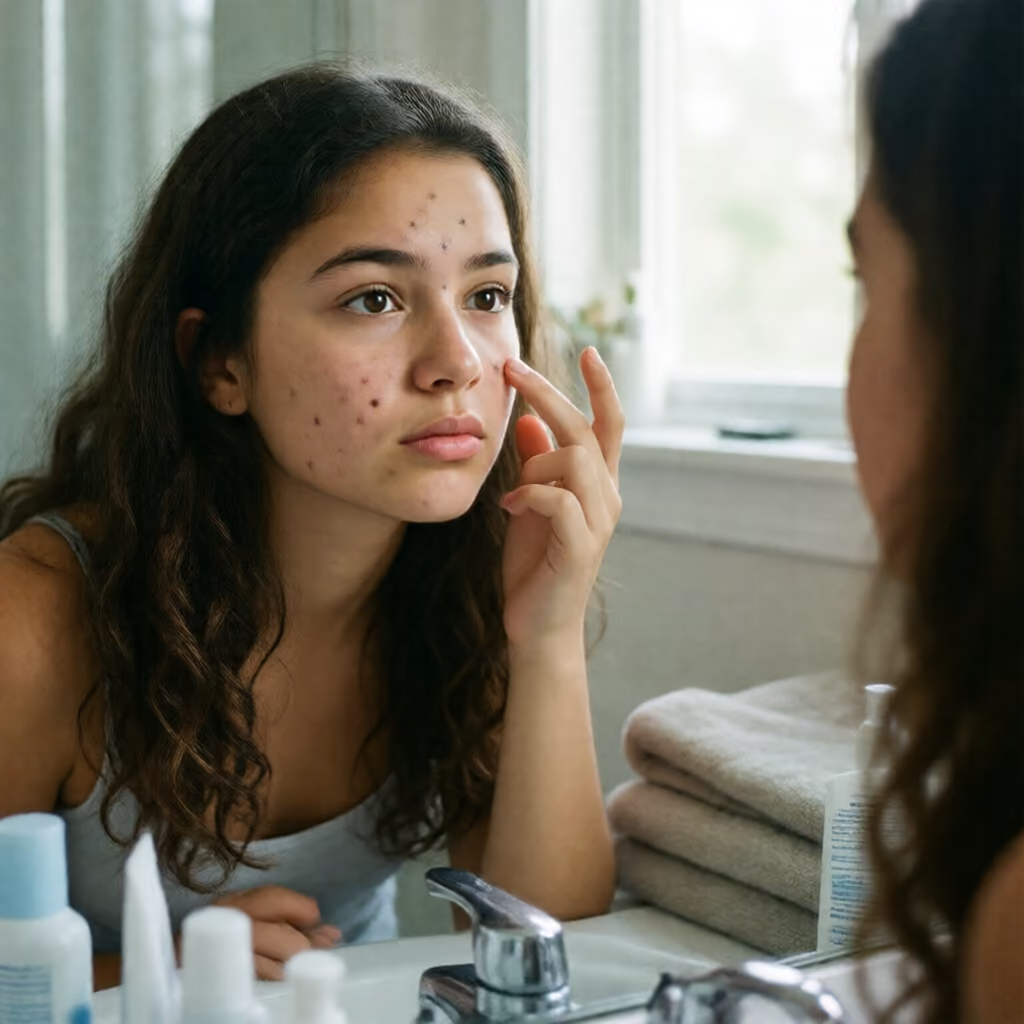
impure / blemished / out of tune
unrein – unreiner – am unreinsten
Loading your saved state.

contaminated
Contaminated with dirt or other unwanted substances; not clean.
Das Wasser aus dem Brunnen ist unrein und muss vor dem Trinken abgekocht werden.
The water from the well is contaminated and must be boiled before drinking.


blemished
Describing skin: not smooth and even, but affected by pimples or blackheads.
In der Pubertät wurde ihre Haut unrein.
During puberty, her skin became blemished.

impure
Mixed with other substances and therefore not pure in composition.
Das unreine Gold enthält noch Silber und Kupfer.
The impure gold still contains silver and copper.

out of tune
Describing notes or musical performances: lacking a clear sound or not quite at the correct pitch.
Der Geiger spielte die hohen Töne unrein.
The violinist played the high notes out of tune.

unclean
Not pure according to the rules of a religion and therefore not permitted for certain religious practices or as food.
Im Judentum gelten Schweine als unrein.
In Judaism, pigs are considered unclean.

slant rhyme
A rhyme in which the sounds from the last stressed vowel onward do not match completely.
Die Wörter „Liebe“ und „Triebe“ bilden einen reinen, „Glück“ und „Blick“ dagegen einen unreinen Reim.
The German words “Liebe” and “Triebe” form a perfect rhyme, whereas “Glück” and “Blick” form a slant rhyme.

impure
Offensive or sinful according to a moral outlook, often shaped by religion, especially in relation to sexual thoughts and desires. This usage is now mostly dated.
Er beichtete dem Priester seine unreinen Gedanken.
He confessed his impure thoughts to the priest.
| basic form | unrein |
|---|---|
| comparative | unreiner |
| superlative | am unreinsten |
| masc. | fem. | neut. | plural | |
|---|---|---|---|---|
| nom. | -e | -e | -e | -en |
| acc. | -en | -e | -e | -en |
| dat. | -en | -en | -en | -en |
| gen. | -en | -en | -en | -en |
Add the ending to unrein.
| masc. | fem. | neut. | plural | |
|---|---|---|---|---|
| nom. | -er | -e | -es | -en |
| acc. | -en | -e | -es | -en |
| dat. | -en | -en | -en | -en |
| gen. | -en | -en | -en | -en |
Add the ending to unrein.
| masc. | fem. | neut. | plural | |
|---|---|---|---|---|
| nom. | -er | -e | -es | -e |
| acc. | -en | -e | -es | -e |
| dat. | -em | -er | -em | -en |
| gen. | -en | -er | -en | -er |
Add the ending to unrein.
“Unrein” (impure) consists of the prefix “un-” and the adjective “rein” (pure). The prefix “un-” indicates that a desirable quality is absent or has been turned into its opposite.
Wegen der Abfälle ist das Wasser unrein geworden.
The waste has caused the water to become contaminated.
The meaning can often be identified from the subject area: with water and air, it usually refers to pollution; with skin, to its appearance; with gold, to its composition; with music, to pitch; and with religion, to rules or beliefs.
Der Arzt stellte fest, dass sie unreine Haut hat.
The doctor found that she had blemished skin.
Der Sänger sang den letzten Ton unrein.
The singer sang the last note out of tune.
Nach den religiösen Vorschriften gilt dieses Tier als unrein.
According to the religious rules, this animal is considered unclean.
Common phrases for substances that are polluted or do not meet hygiene standards include “unreines Wasser” (contaminated water), “unreine Luft” (polluted air), and “unreine Substanzen” (contaminated substances). The adjective usually describes something that needs to be examined, cleaned, or treated.
Die Fabrik darf kein unreines Wasser in den Fluss leiten.
The factory must not discharge contaminated water into the river.
When describing skin, “unrein” (blemished) occurs especially often in the fixed phrase “unreine Haut” (blemished skin). Typical verbs and expressions used with it are “haben” (to have), “bekommen” (to develop), and “unter unreiner Haut leiden” (to suffer from blemished skin).
Mein Bruder leidet seit Jahren unter unreiner Haut.
My brother has suffered from blemished skin for years.
With metals and other raw materials, “unrein” (impure) is often used in technical expressions, for example when testing or processing gold, silver, or ore. In these contexts, the adjective often describes a mixture whose composition still needs to be analyzed.
Der Goldschmied musste das unreine Gold zuerst einschmelzen und prüfen.
The goldsmith first had to melt down and test the impure gold.
In music, “unrein” (out of tune) is often used adverbially with verbs such as “singen” (to sing), “spielen” (to play), or “intonieren” (to intone). It then describes how a note is produced.
Der Chor intonierte den Schlussakkord etwas unrein.
The choir sang the final chord slightly out of tune.
This meaning appears mainly in religious texts and descriptions of religious rules. Typical sentence patterns are “als unrein gelten” (to be considered unclean) and “etwas für unrein halten” (to consider something unclean).
Manche Religionsgemeinschaften halten bestimmte Tiere für unrein.
Some religious communities consider certain animals unclean.
“Unreiner Reim” (slant rhyme) is an established term in literary studies. In poetry analysis, “unrein” (imperfect) usually appears directly before the word “Reim” (rhyme).
Die Autorin verwendet im letzten Vers einen unreinen Reim.
The author uses a slant rhyme in the final line.
In its moral or religious sense, “unrein” (impure) occurs especially often in the phrase “unreine Gedanken” (impure thoughts). This phrase is mainly found in older, religious, or literary texts.
In seinem Tagebuch schrieb der Mönch über seine unreinen Gedanken.
In his diary, the monk wrote about his impure thoughts.