

unschuldig
innocent
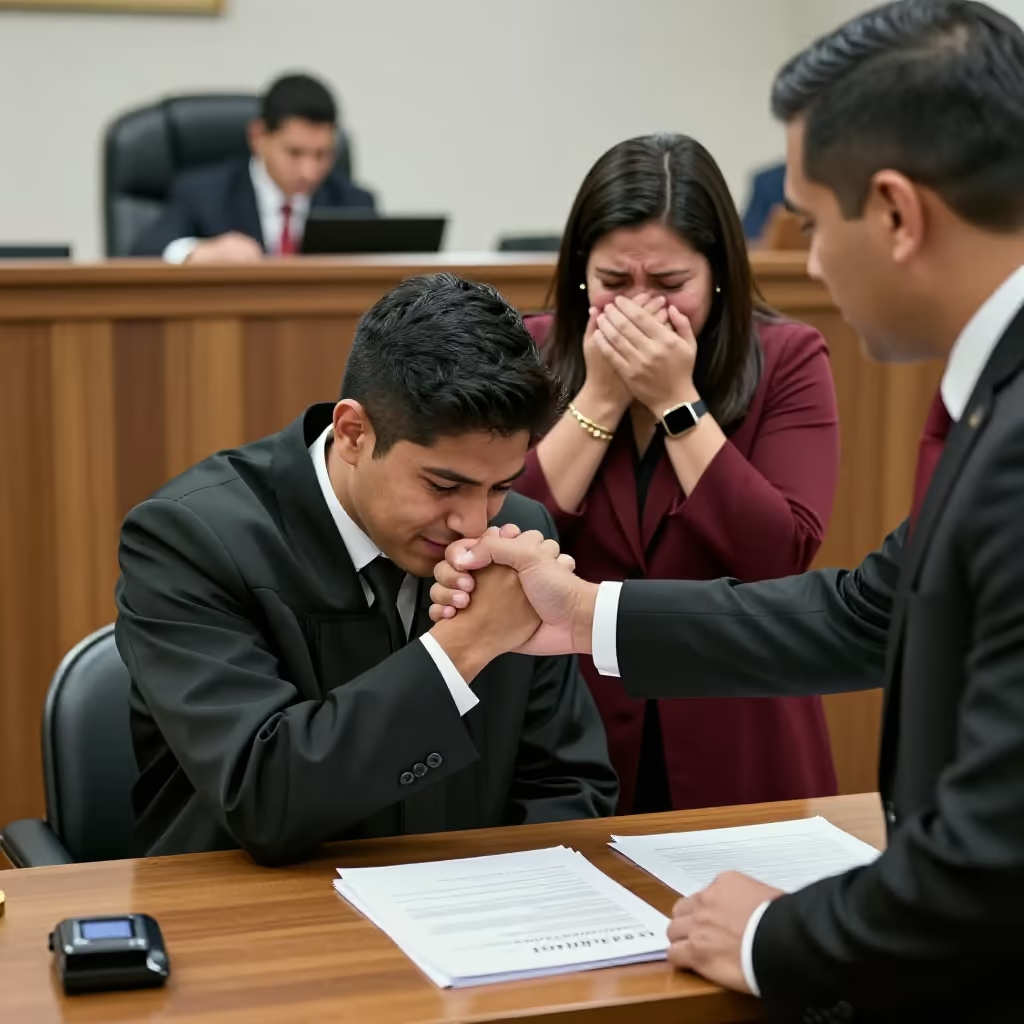
Not guilty in the sense of an accusation, crime, or offense.
EXAMPLE
Der Angeklagte plädierte auf unschuldig und wurde am Ende freigesprochen.
The defendant pleaded innocent and was eventually acquitted.
innocent
Loading your saved state.
innocent
Not guilty in the sense of an accusation, crime, or offense.
Der Angeklagte plädierte auf unschuldig und wurde am Ende freigesprochen.
The defendant pleaded innocent and was eventually acquitted.

innocent
Naive, unsuspecting, and inexperienced with the negative sides of life, especially in relation to malice or sexuality.
Mit ihrem kindlichen Lächeln wirkte sie völlig unschuldig.
With her childlike smile, she seemed completely innocent.

innocent
Harmless and without bad intent; not meant to hurt or offend anyone.
Es war nur ein unschuldiger Scherz, ich wollte dich nicht ärgern.
It was just an innocent joke; I didn't mean to annoy you.
The word is built simply: the prefix 'un-' negates the adjective 'schuldig' (guilty). Someone who is 'unschuldig' (innocent) is therefore 'nicht schuldig' (not guilty).
Das kleine Kind schaute mich mit einem unschuldigen Lächeln an.
The little child looked at me with an innocent smile.
The context shows the exact meaning. In the legal field (court, police), it means 'not guilty'. In a social context, it often describes a naive person (child) or a harmless action (joke).
Der Angeklagte beteuerte, er sei unschuldig.
The defendant insisted that he was innocent.
In the legal meaning, the preposition 'an' with the dative is often used to say what someone is innocent of. The structure is: 'unschuldig an etwas sein' (to be innocent of something).
Er ist unschuldig an diesem Verbrechen.
He is innocent of this crime.
naive
Both words can describe a question or action without bad intentions. Naiv, however, emphasizes a lack of experience or excessive trust, while unschuldig mainly says that nothing hurtful or malicious is intended. Use naiv for a person's attitude and unschuldig for a harmless intention.

Seine Frage war unschuldig gemeint und sollte niemanden verletzen.
His question was meant innocently and was not intended to hurt anyone.
Seine naive Frage zeigte, dass er noch wenig Erfahrung mit solchen Problemen hatte.
His naive question showed that he still had little experience with problems like these.