

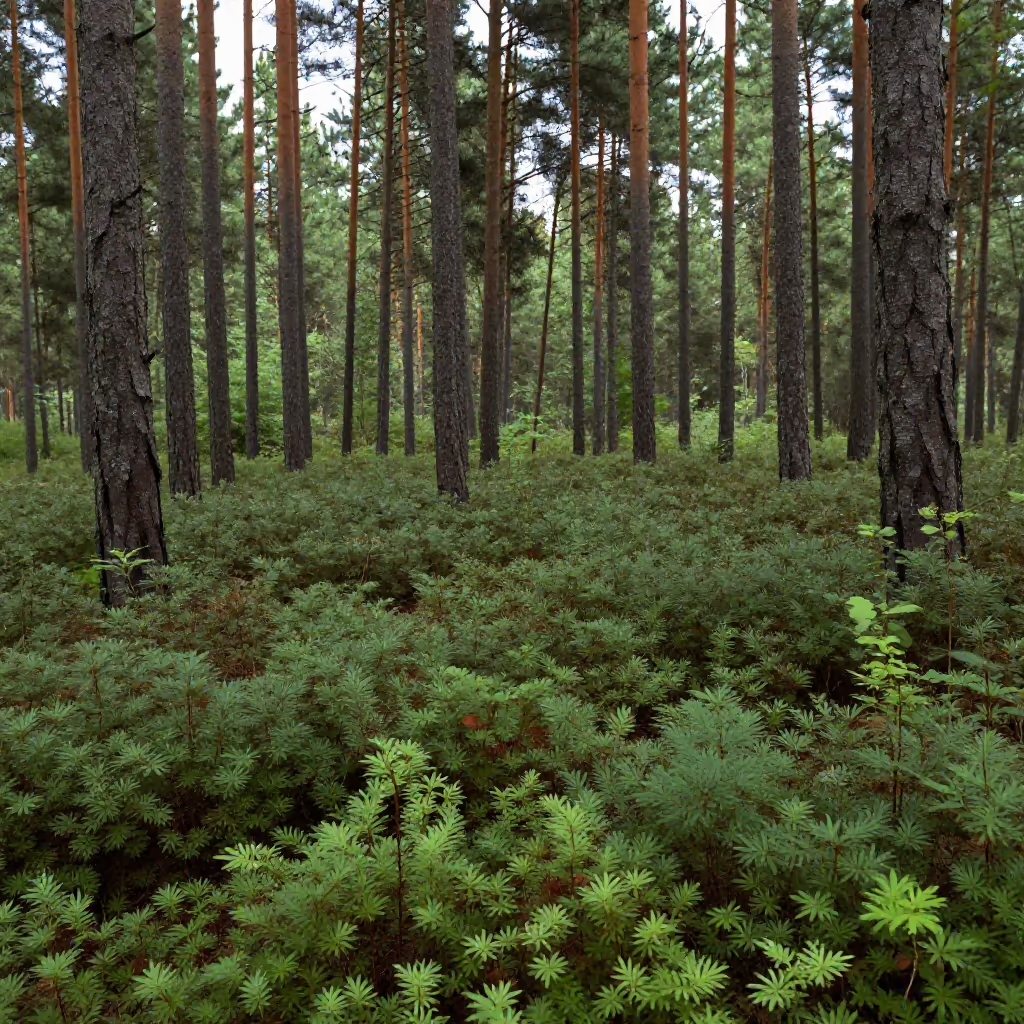
das Unterholz
undergrowth
All the low-growing plants such as bushes, shrubs, and young trees that grow beneath the larger trees in a forest.
EXAMPLE
Das Reh verschwand im dichten Unterholz.
The deer disappeared into the dense undergrowth.
undergrowth
Loading your saved state.
undergrowth
All the low-growing plants such as bushes, shrubs, and young trees that grow beneath the larger trees in a forest.
Das Reh verschwand im dichten Unterholz.
The deer disappeared into the dense undergrowth.
The word is made up of 'unter' (under) and 'Holz' (wood). So it literally describes what grows in the forest 'under' the large trees—namely bushes and small plants.
Ein kleiner Fuchs versteckte sich im Unterholz.
A small fox hid in the undergrowth.
'Unterholz' (undergrowth) is often combined with the adjective 'dicht' (dense). Typical verbs are 'sich verstecken' (to hide) or 'verschwinden' (to disappear), often together with the preposition 'im' (in the).
Der Wanderweg führte durch dichtes Unterholz.
The hiking trail led through dense undergrowth.
'Unterholz' (undergrowth) is a collective term for many plants. Therefore, the word is used almost exclusively in the singular. A plural form ('Unterhölzer') is very rare and uncommon.
Nach dem Sturm lag viel totes Holz im Unterholz.
After the storm, there was a lot of dead wood in the undergrowth.
undergrowth
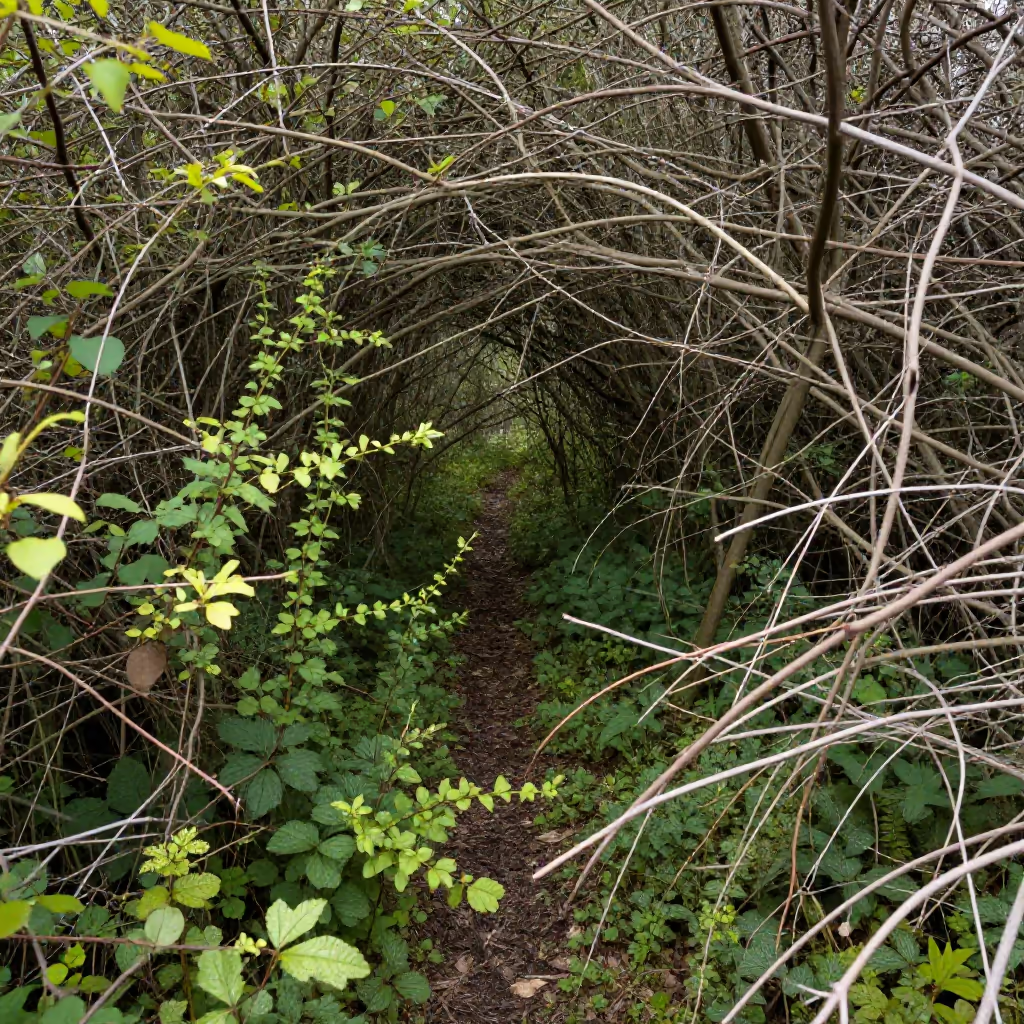
Unterholz and Gestrüpp can both consist of low bushes and young trees. Unterholz is defined by its location beneath the large trees in a forest, whereas Gestrüpp emphasizes dense, tangled growth that is difficult to move through.
Unter den hohen Buchen wächst dichtes Unterholz aus Sträuchern und jungen Bäumen.
Dense undergrowth of shrubs and young trees grows beneath the tall beech trees.
Zwischen den hohen Buchen versperrt dichtes Gestrüpp den schmalen Weg.
Dense thickets block the narrow path between the tall beech trees.