

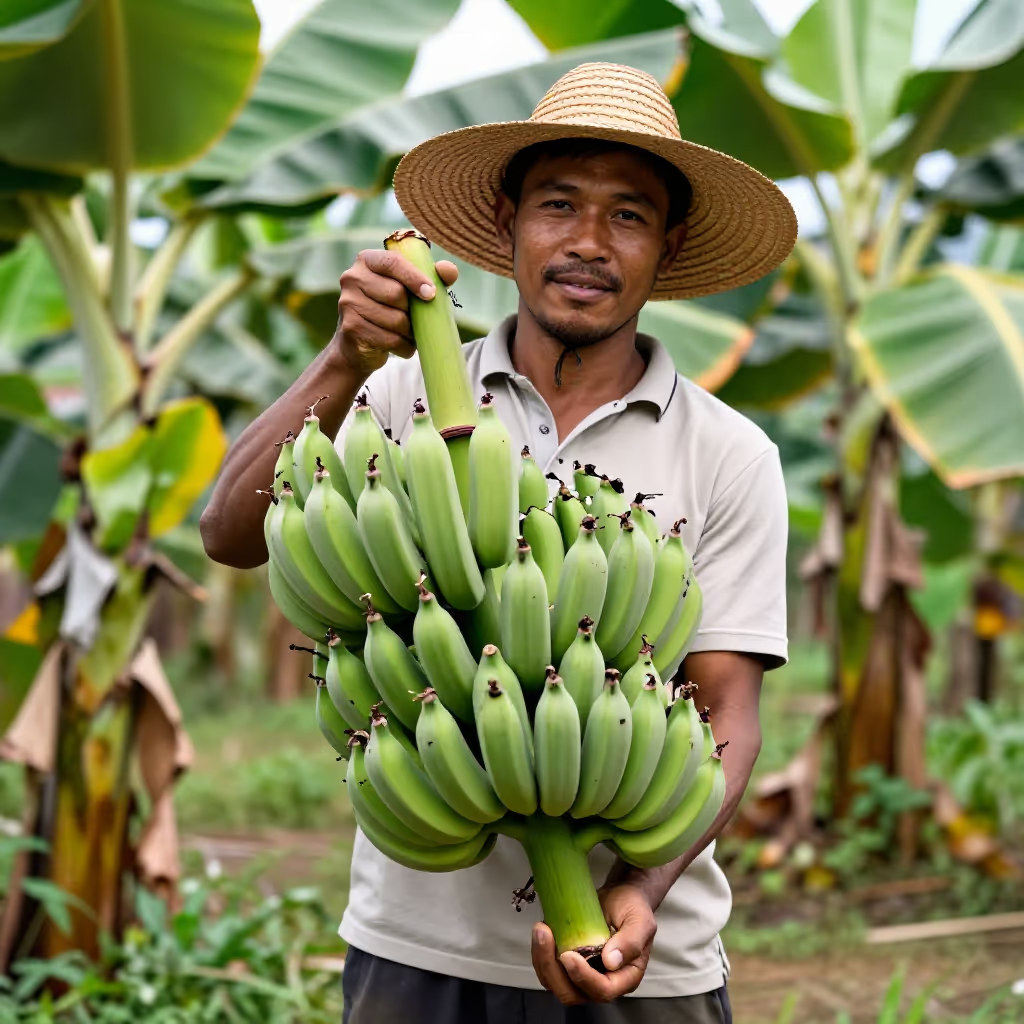
unreif
unripe
Describes fruit, vegetables, or other plants that are not yet ripe and therefore not yet suitable for eating or harvesting.
EXAMPLE
Die Tomaten sind noch grün und unreif.
The tomatoes are still green and unripe.
unripe / immature
Loading your saved state.
unripe
Describes fruit, vegetables, or other plants that are not yet ripe and therefore not yet suitable for eating or harvesting.
Die Tomaten sind noch grün und unreif.
The tomatoes are still green and unripe.

immature
Describes a person's behavior that is childish or not developed in a way appropriate to their age. It lacks mental or emotional maturity.
Seine Reaktion auf die Kritik war sehr unreif.
His reaction to the criticism was very immature.
The word consists of the prefix 'un-' and the adjective 'reif' (ripe/mature). The prefix 'un-' means 'not'. So 'unreif' literally means 'not ripe' or 'not mature' and is used both for fruit and for people.
Diese Mangos sind noch hart und unreif.
These mangoes are still hard and unripe.
You can recognize whether the biological or character-related meaning is intended from the noun. If people are talking about fruit, vegetables, or fruits in general, it is about the degree of ripeness. If the word refers to a person or their behavior, it means emotional or mental maturity.
Die Äpfel sind noch unreif und sauer.
The apples are still unripe and sour.
In connection with plants, 'unreif' (unripe) is often combined with specific types. Typical phrases are 'unreifes Obst' (unripe fruit), 'unreife Früchte' (unripe fruits), or 'unreife Beeren' (unripe berries).
Man sollte unreife Holunderbeeren nicht essen.
You should not eat unripe elderberries.
When it comes to people, 'unreif' (immature) often describes abstract concepts. Common combinations are 'unreifes Verhalten' (immature behavior), 'ein unreifer Charakter' (an immature character), or the statement 'er ist emotional unreif' (he is emotionally immature).
Für sein Alter zeigt er manchmal ein sehr unreifes Verhalten.
For his age, he sometimes shows very immature behavior.
green
Grün and unreif can refer to the same early state when talking about fruit or vegetables. Grün emphasizes the visible color or the early stage of development more strongly, while unreif directly says that the food is not yet suitable for eating or harvesting. Use unreif when the lack of ripeness is clearly intended.
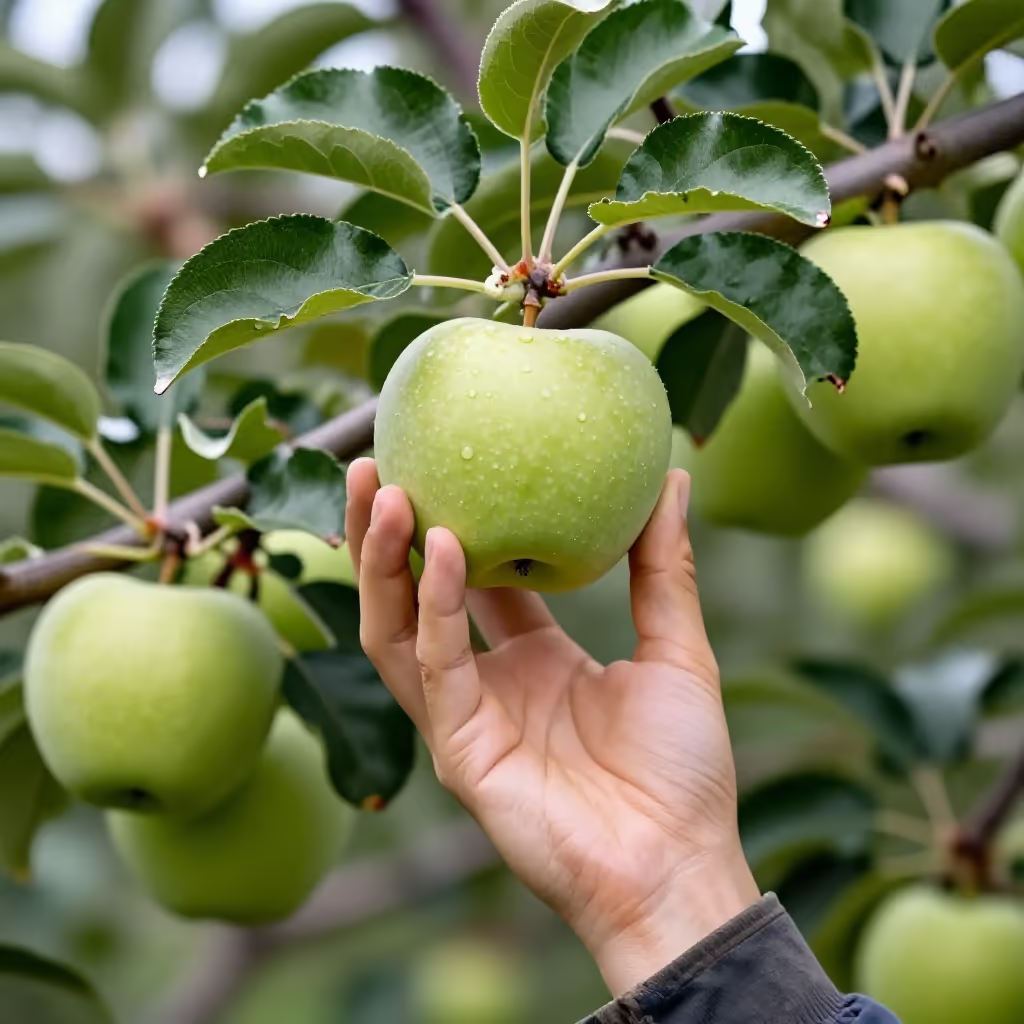
Die unreife Mango liegt noch einige Tage auf der Fensterbank, bevor wir sie essen.
The unripe mango will sit on the windowsill for a few more days before we eat it.
Die grüne Mango liegt noch einige Tage auf der Fensterbank.
The green mango will sit on the windowsill for a few more days.