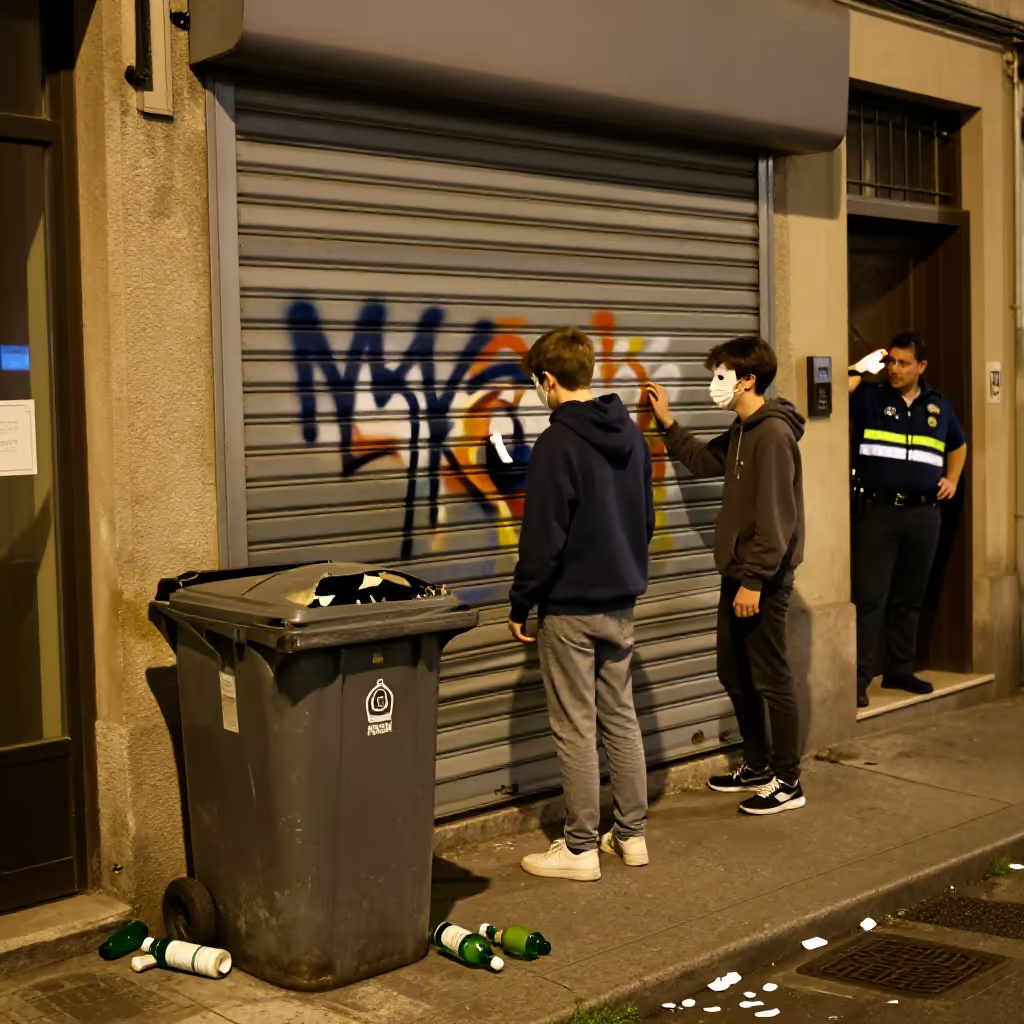
In a fixed expression: to carry out harmful, disruptive, or criminal activities.
example
Eine Gruppe von Vandalen treibt nachts in der Parkanlage ihr Unwesen.
A group of vandals is up to mischief in the park at night.

Usage tips
Word structure
'Unwesen' combines the negative prefix 'un-' with 'Wesen' (a creature, a living being). So it literally describes a 'bad being' or a destructive force.
EXAMPLE
Die Dorfbewohner fürchteten das Unwesen, das im dunklen Wald leben sollte.
The villagers feared the monster that was said to live in the dark forest.
Fixed expression
In modern German, 'Unwesen' is almost only used in the fixed expression 'sein Unwesen treiben' (to be up to mischief/to wreak havoc). The possessive pronoun ('sein', 'ihr') agrees with the subject of the sentence.
EXAMPLE
Die Diebesbande treibt nachts in der Innenstadt ihr Unwesen.
The gang of thieves is up to mischief in the city center at night.
Usage context
The expression 'sein Unwesen treiben' (to be up to mischief/to wreak havoc) describes negative, harmful, or criminal actions. You can use it for people (thieves, vandals) or metaphorically for things (a storm, a virus).
EXAMPLE
Ein neuer Computervirus treibt im Internet sein Unwesen.
A new computer virus is wreaking havoc on the internet.
Outdated meaning
The meaning of 'Unwesen' (monster/evil spirit) is outdated. Today, you find it almost only in fairy tales, legends, and old stories.
EXAMPLE
Das Märchen handelte von einem schrecklichen Unwesen, das Kinder entführte.
The fairy tale was about a terrible monster that kidnapped children.
Compare with
near_synonym · confusable
Unwesen vs Wesen
essence / being
'das Wesen' and 'das Unwesen' look similar and can both make you think of a figure or creature. However, 'das Wesen' is a neutral word for a living being or figure, including in fairy tales or fantasy stories. 'das Unwesen' as an evil or harmful being is rare and sounds old-fashioned. It appears much more often in the fixed expression 'sein Unwesen treiben' (to be up to mischief / to cause trouble). This means that someone or something is causing disruption, doing damage, or acting criminally. The words can be confused because 'Unwesen' looks like the opposite of 'Wesen'. In everyday language, however, people usually do not say 'ein Unwesen', but rather 'sein Unwesen treiben'.
Unwesen
Am Wochenende trieben Diebe in der Nachbarschaft ihr Unwesen.
At the weekend, thieves were up to mischief in the neighborhood.
Wesen
Im Kinderbuch lebt ein kleines Wesen im Wald und hilft den Tieren.
In the children's book, a small creature lives in the forest and helps the animals.