

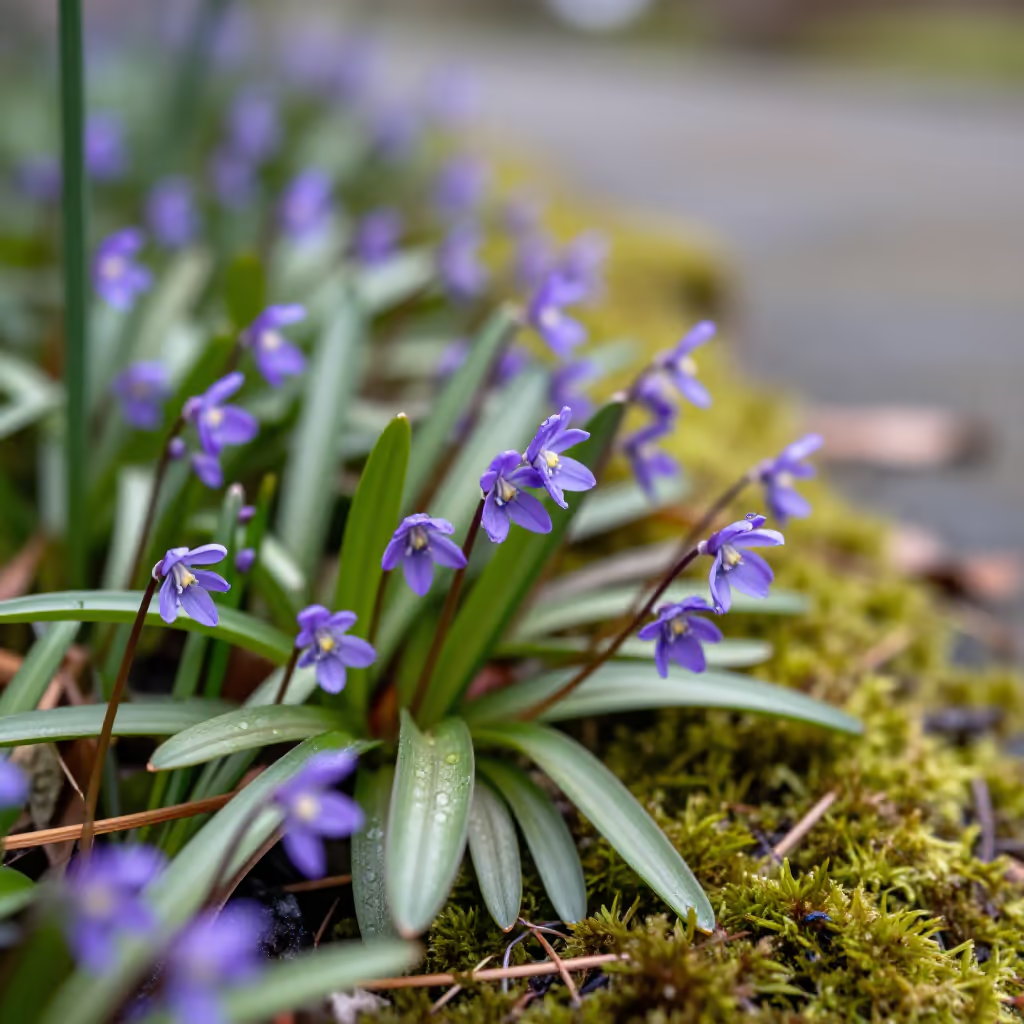
A small, often fragrant plant with distinctive flowers, usually violet or blue, that grows in spring.
example
Im Frühling pflücke ich gerne einen kleinen Strauß Veilchen im Garten.
In spring, I like to pick a small bouquet of violets in the garden.

Usage tips
Context clue
The two meanings are very different and are made clear by context. If people are talking about a garden, flowers, or fragrance, the plant is meant. If people are talking about an eye, a blow, a fall, or a fight, the injury is meant.
EXAMPLE
Im Garten meiner Oma duften die Veilchen.
The violets in my grandma's garden smell lovely.
Word structure: diminutive
The ending '-chen' is a diminutive form. It makes the noun neuter ('das Veilchen') and indicates that it is something small—fitting for the small flower.
EXAMPLE
Das kleine Veilchen wächst zwischen den großen Steinen.
The little violet grows between the large stones.
Register: colloquial language
The meaning 'blaues Auge' (black eye) is colloquial. In a medical report or in formal language, you would more likely use 'Hämatom am Auge' (hematoma around the eye) or 'blaues Auge' (black eye).
EXAMPLE
Woher hast du denn das Veilchen?
Where did you get that black eye?
Typical collocations
When referring to the injury, typical phrases are 'ein Veilchen haben' (to have a black eye), 'ein Veilchen bekommen' (to get a black eye), or 'sich ein Veilchen holen' (to end up with a black eye). It is often intensified with adjectives like 'dick' (big/swollen) or 'blau' (blue).
EXAMPLE
Pass auf, dass du dir beim Spielen kein Veilchen holst.
Be careful you don't end up with a black eye while playing.