
A person who chases or pursues another person or a vehicle, often in order to catch them or harm them.
example
Der Flüchtende konnte seine Verfolger im dichten Wald abschütteln.
The fugitive was able to shake off his pursuers in the dense forest.
Usage tips
Word family
'Verfolger' (pursuer) is derived directly from the verb 'verfolgen' (to pursue). The ending '-er' turns the verb into a masculine person who performs the action.
EXAMPLE
Die Polizei verfolgt den Dieb.
The police are pursuing the thief.
Context clue
The context makes the meaning clear. If it is about escape, police, or a chase, it means a person who is chasing someone. In a sports or business context, it refers to the runner-up in a competition.
EXAMPLE
Der Detektiv blieb seinem Verfolger dicht auf den Fersen.
The detective stayed close on his pursuer's heels.
Typical collocations
In the meaning of 'Jäger' (hunter/chaser), 'Verfolger' (pursuer) is often combined with verbs that describe escaping, for example 'seine Verfolger abschütteln' (to shake off one's pursuers) or 'den Verfolgern entkommen' (to escape the pursuers).
EXAMPLE
Dem Spion gelang es, seine Verfolger in der Menschenmenge abzuschütteln.
The spy managed to shake off his pursuers in the crowd.
Typical collocations
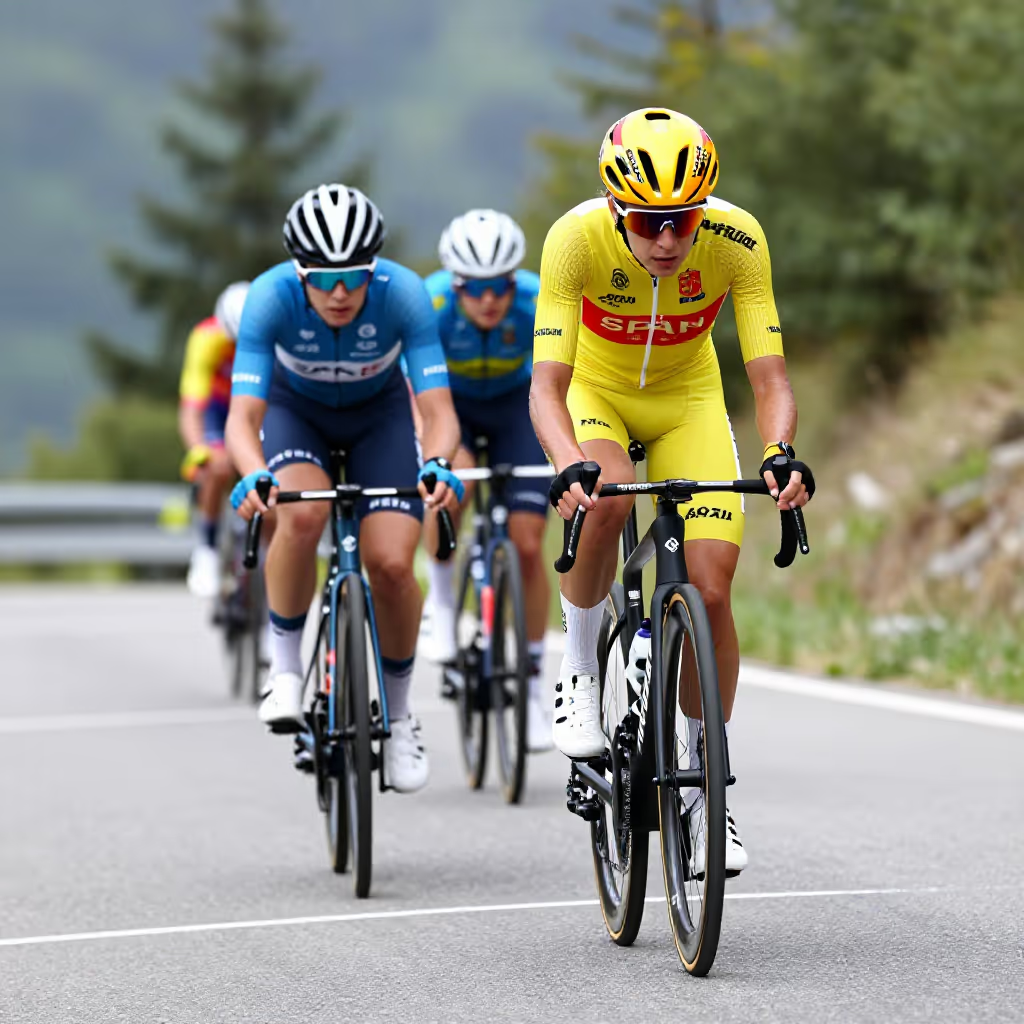
In a sports context, typical combinations are 'der nächste Verfolger' (the nearest challenger) or 'der schärfste Verfolger' (the strongest challenger). The 'Vorsprung auf die Verfolger' (lead over the challengers) is also often mentioned.
EXAMPLE
Der Radrennfahrer konnte seinen Vorsprung auf die Verfolger weiter ausbauen.
The cyclist was able to further extend his lead over the challengers.
Compare with
near_synonym · confusable
Verfolger vs Schatten
shadow
'der Schatten' and 'der Verfolger' can both refer to a person who follows someone. 'der Verfolger' is the clear and direct word: someone chases or pursues a person or vehicle, often visibly and with a goal. 'der Schatten' is more figurative in this sense. It means someone who follows a person discreetly and constantly, for example a detective or bodyguard. Learners may confuse the words because both have to do with following. If the pursuit is active or threatening, 'Verfolger' fits better. If someone stays quietly and discreetly nearby all the time, you can say 'Schatten'.
Verfolger
Auf der Flucht sah Ali seinen Verfolger immer wieder im Rückspiegel.
While fleeing, Ali kept seeing his pursuer in the rearview mirror.
Schatten
Der Detektiv blieb den ganzen Tag wie ein Schatten hinter dem Verdächtigen.
The detective stayed behind the suspect like a shadow all day.