


vergessen
to forget
To no longer be able to remember something or someone; to no longer have a piece of information in your memory.
Ich habe komplett vergessen, wo ich meine Schlüssel hingelegt habe.
I completely forgot where I put my keys.
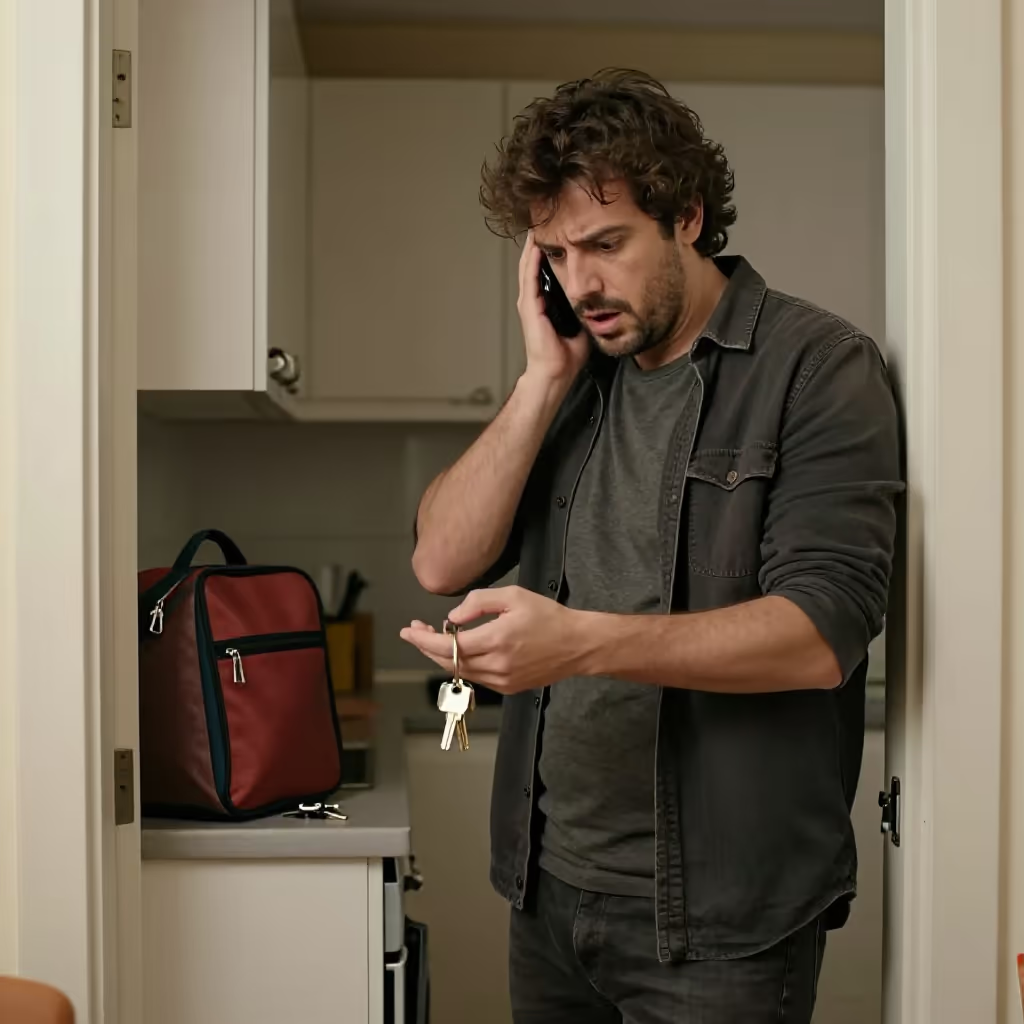

to forget
Loading your saved state.
to forget
To no longer be able to remember something or someone; to no longer have a piece of information in your memory.
Ich habe komplett vergessen, wo ich meine Schlüssel hingelegt habe.
I completely forgot where I put my keys.

The prefix 'ver-' is inseparable and always stays attached to the verb. This prefix often suggests that something is lost or done incorrectly, which fits well with the meaning of 'vergessen' (to forget).
Er hat seinen Regenschirm im Zug vergessen.
He forgot his umbrella on the train.
There are two important constructions to distinguish: When you forget a piece of information, you use a noun in the accusative. When you forget to carry out an action, you use 'zu' + infinitive.
Ich habe seinen Namen vergessen.
I forgot his name.
When it is about no longer remembering something, 'vergessen' (to forget) is often combined with everyday things: 'einen Namen vergessen' (to forget a name), 'einen Termin vergessen' (to forget an appointment), 'den Geburtstag vergessen' (to forget the birthday), or 'die Hausaufgaben vergessen' (to forget the homework).
Oh nein, ich habe unseren Hochzeitstag vergessen!
Oh no, I forgot our wedding anniversary!
The reflexive form 'sich vergessen' has a special meaning: to lose self-control. The reflexive pronoun 'sich' is a fixed part here and is in the accusative.
Auf der Party hat er sich leider völlig vergessen und wurde sehr laut.
At the party, he unfortunately completely lost control and became very loud.
to think
'denken' and 'vergessen' form a contrast here when it comes to memory. With 'an etwas denken' (to remember something / to think of something), you mean that you keep something in mind or remember it in time. 'vergessen' means that you do not remember, or that because of this you do not do something or do not take something with you. The contrast is especially clear with appointments, tasks, or things you are supposed to bring. You 'denkt an' the key if you take it with you; you 'vergisst' it if you did not think of it.

Vor der Reise vergessen die Eltern oft, die Blumen zu gießen.
Before a trip, parents often forget to water the flowers.
Denkt ihr bitte morgen an die Unterlagen für die Prüfung?
Could you please remember the documents for the exam tomorrow?