

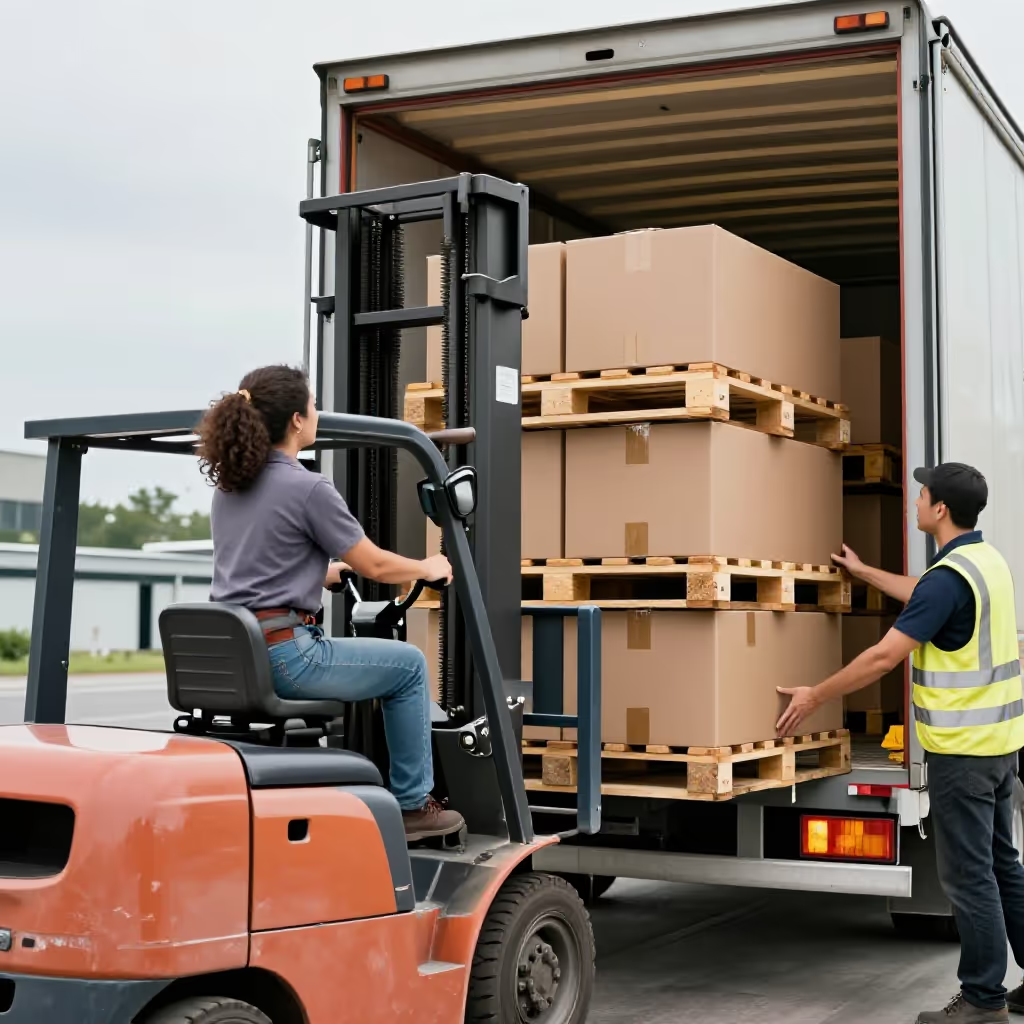
verladen
to load
To load goods, merchandise, or freight onto a means of transport such as a truck, ship, or train.
EXAMPLE
Die Möbel wurden sorgfältig auf den Lastwagen verladen.
The furniture was carefully loaded onto the truck.
to load / fool
Loading your saved state.
to load
To load goods, merchandise, or freight onto a means of transport such as a truck, ship, or train.
Die Möbel wurden sorgfältig auf den Lastwagen verladen.
The furniture was carefully loaded onto the truck.

to fool someone
Colloquial for tricking, deceiving, or making fun of someone, often through a joke.
Er hat mich komplett verladen, ich habe ihm die ganze Geschichte geglaubt.
He completely fooled me; I believed his whole story.
'Verladen' is an inseparable verb. The prefix 'ver-' remains firmly attached to the verb stem 'laden' (to load) in all tenses and sentence constructions.
Der Kran hat den Container auf das Schiff verladen.
The crane loaded the container onto the ship.
The two meanings can easily be distinguished by the object. If the object is a thing (goods, furniture), it means 'laden' (to load). If the object is a person ('jemanden' = someone), it colloquially means 'hereinlegen' (to trick/fool).
Die Firma verlädt täglich hunderte Pakete.
The company loads hundreds of packages every day.
In the meaning 'laden' (to load), the preposition 'auf' with the accusative is often used to indicate the destination of the loading. You load something onto a vehicle.
Die Umzugshelfer haben alle Kisten auf den LKW verladen.
The moving helpers loaded all the boxes onto the truck.
The meaning 'jemanden hereinlegen' (to trick/fool someone) is colloquial. It is used in informal conversations with friends or family, but normally not in formal or written contexts.
Glaub ihm nicht jedes Wort, er verlädt dich nur.
Don't believe every word he says; he's just fooling you.
to invite / load
Einladen and verladen can both refer to loading goods onto a means of transport. Einladen focuses more on the concrete movement of the goods into a vehicle. Verladen refers more to the entire loading process as part of transporting the goods.
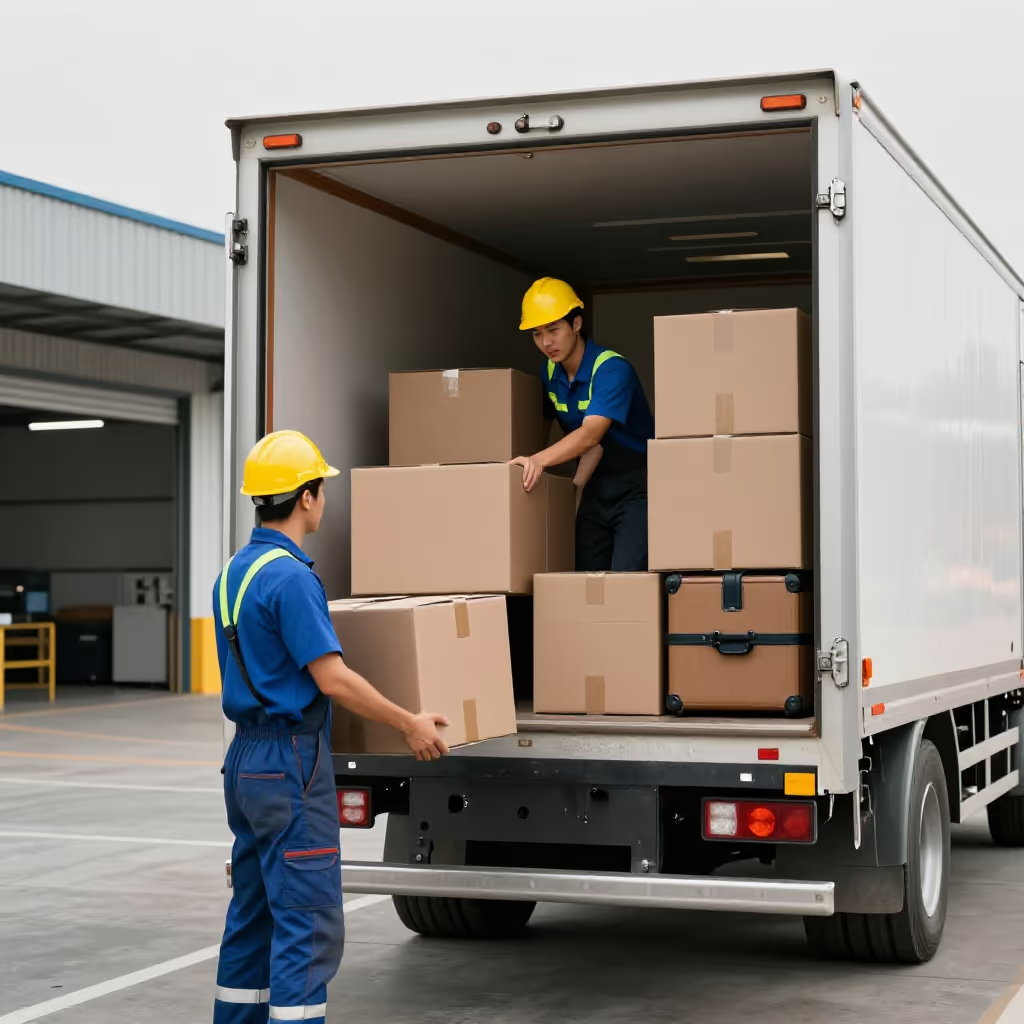
Die Spedition verlädt die gesamte Lieferung für den Weitertransport auf den Lastwagen.
The freight company is loading the entire shipment onto the truck for onward transport.
Die Arbeiter laden die einzelnen Kisten in den Lastwagen ein.
The workers are loading the individual crates into the truck.