

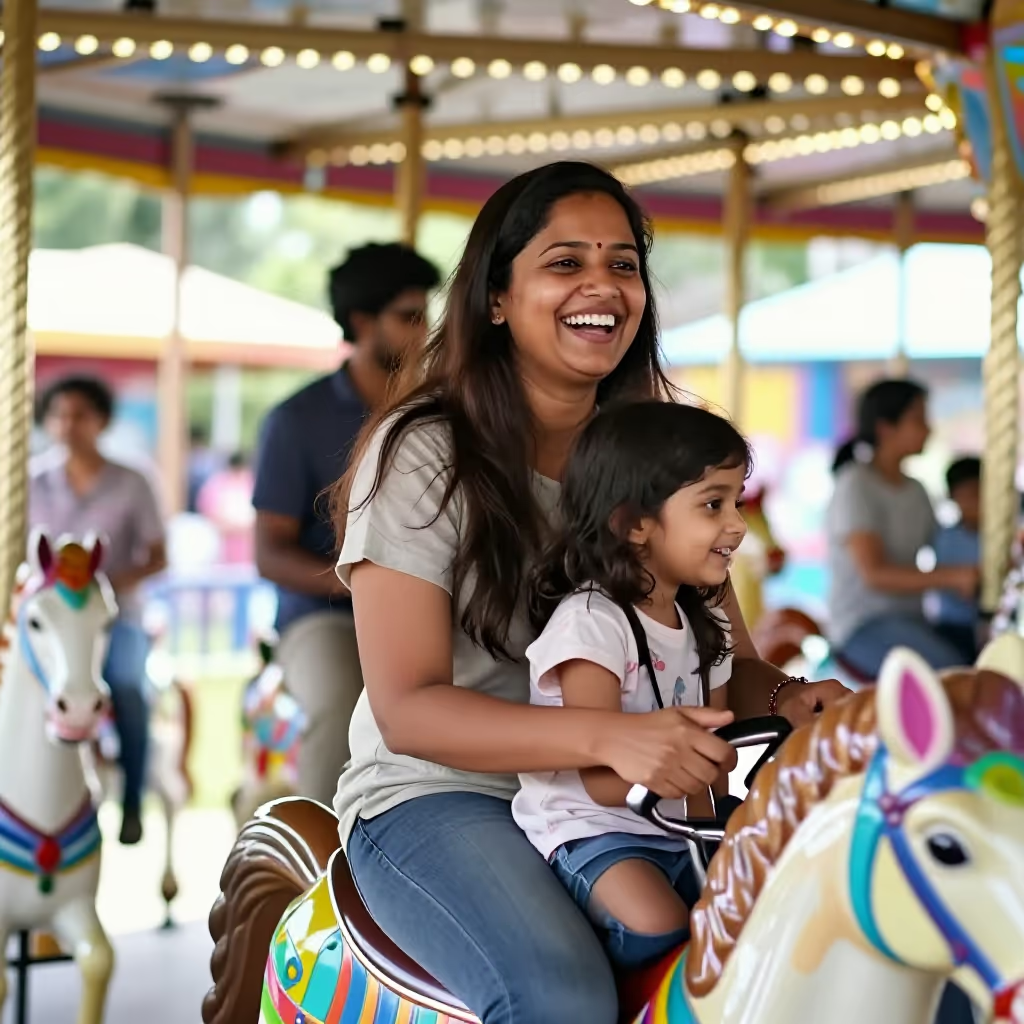
vergnügt
cheerful
To be in a happy, cheerful, and good-humored mood. It describes a state of carefree happiness or joy.
EXAMPLE
Die Kinder spielten vergnügt im Garten.
The children played cheerfully in the garden.
cheerful
Loading your saved state.
cheerful
To be in a happy, cheerful, and good-humored mood. It describes a state of carefree happiness or joy.
Die Kinder spielten vergnügt im Garten.
The children played cheerfully in the garden.
The adjective 'vergnügt' (cheerful) is closely related to the noun 'das Vergnügen' (pleasure, enjoyment). So when someone is 'vergnügt', that person is currently feeling pleasure or enjoyment.
Es war mir ein großes Vergnügen, Sie kennenzulernen.
It was a great pleasure to meet you.
'Vergnügt' can describe a person or a mood (predicatively or attributively), or the manner of an action (adverbially).
Er hat ein vergnügtes Lächeln im Gesicht.
He has a cheerful smile on his face.
The word often describes audible or visible expressions of joy. Typical combinations are 'vergnügt lachen' (to laugh cheerfully), 'vergnügt pfeifen' (to whistle cheerfully), or 'ein vergnügtes Gesicht' (a cheerful face).
Der alte Mann saß auf der Parkbank und pfiff vergnügt ein Lied.
The old man sat on the park bench and cheerfully whistled a song.
happy / lucky
Both words can express a good mood or joy. „Vergnügt“ usually describes a light, temporary, carefree mood, while „glücklich“ can also refer to deeper or longer-lasting well-being. Use „vergnügt“ for a cheerful moment and „glücklich“ for more comprehensive personal happiness.

Beim Kartenspiel war sie den ganzen Abend vergnügt.
She was cheerful throughout the evening while playing cards.
Mit ihrer Familie ist sie auch nach vielen Jahren glücklich.
She has remained happy with her family even after many years.