


sich verspäten
to be late
To arrive at a place or begin something later than the agreed or expected time.
Entschuldigung, der Zug hatte eine technische Störung, deshalb habe ich mich verspätet.
Sorry, the train had a technical fault, so I was late.
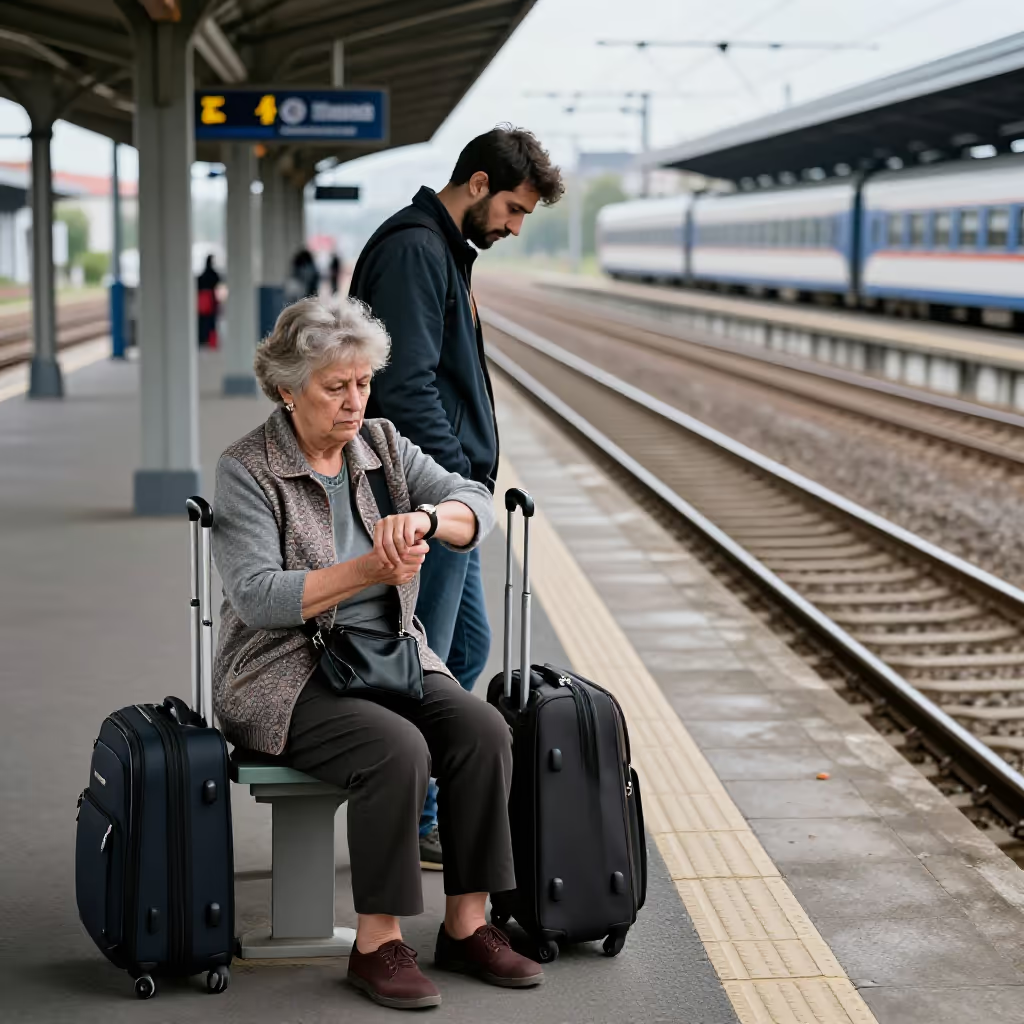
to be late
Loading your saved state.
to be late
To arrive at a place or begin something later than the agreed or expected time.
Entschuldigung, der Zug hatte eine technische Störung, deshalb habe ich mich verspätet.
Sorry, the train had a technical fault, so I was late.

'Verspäten' (to be late) is a reflexive verb and is always used with a reflexive pronoun in the accusative: 'sich verspäten' (to be late). The pronoun must always be included.
Ich habe mich heute Morgen um zehn Minuten verspätet.
I was ten minutes late this morning.
The verb 'sich verspäten' (to be late) belongs to the word family of 'spät' (late, adjective) and 'die Verspätung' (delay, noun). The prefix 'ver-' turns the state of 'spät sein' (being late) into an event.
Wegen der Verspätung des Busses habe ich mich verspätet.
Because of the bus's delay, I was late.
To indicate the length of a delay, you use the preposition 'um' with the accusative. The reason is often expressed with 'wegen' (because of) or a 'weil' clause.
Der Flug hat sich um eine Stunde verspätet.
The flight was delayed by one hour.
Not only people can be late; means of transport or events can be delayed too. In this case, the means of transport is the subject of the sentence.
Die Lieferung wird sich voraussichtlich um zwei Tage verspäten.
The delivery is expected to be delayed by two days.
to miss / to give
'verpassen' and 'sich verspäten' both have to do with arriving too late. The difference lies in the result. Someone who 'sich verspätet' arrives later than planned, but may still arrive. Someone who 'etwas verpasst' is too late, so the means of transport, event, or opportunity is no longer reachable. So you can be late without missing anything. The words can be confused because both occur with appointments, trains, or meetings.

Wir verspäten uns um zehn Minuten, weil der Bus im Stau steht.
We are ten minutes late because the bus is stuck in traffic.
Am Bahnhof hat Anna den letzten Zug nach Hause verpasst.
At the station, Anna missed the last train home.