

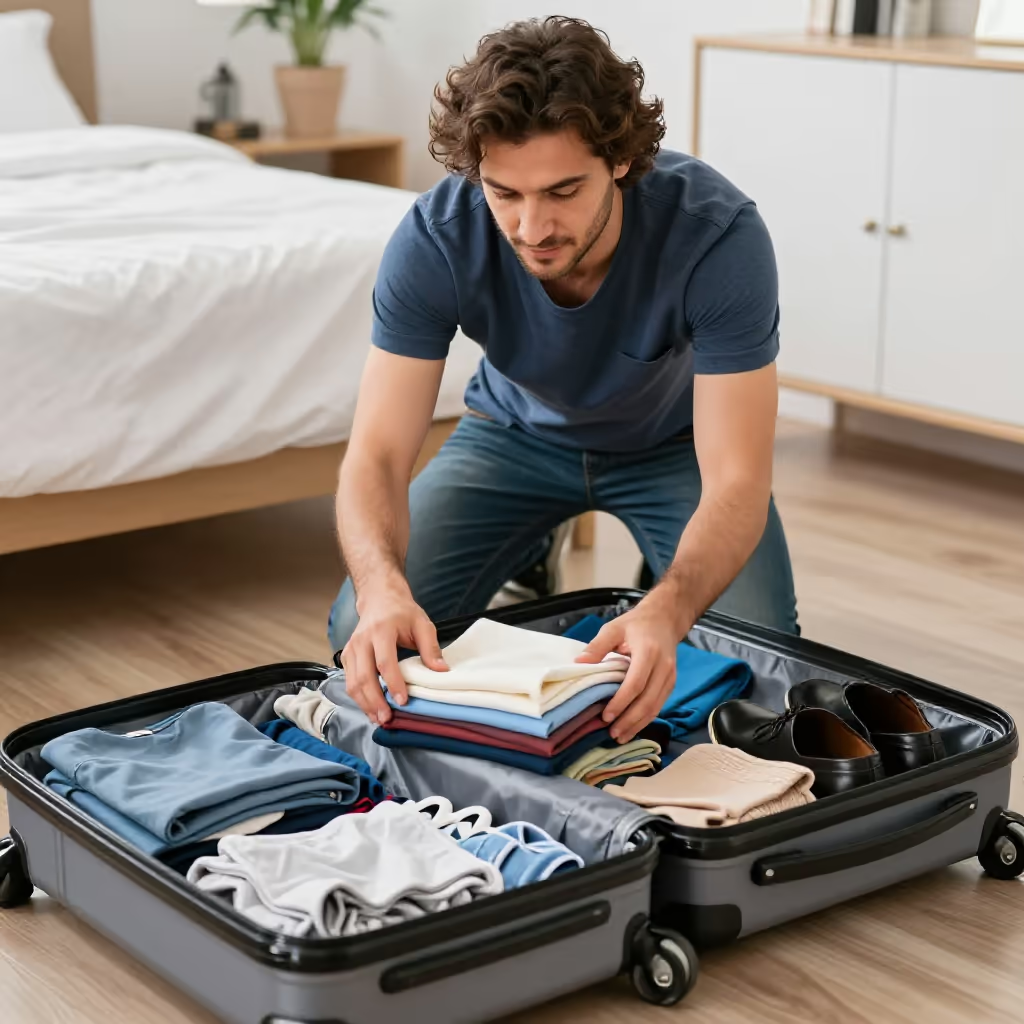
verstauen
to stow
To put objects away neatly and in a space-saving way in a designated place, often for transport or storage.
EXAMPLE
Er verstaute das Gepäck sorgfältig im Kofferraum.
He carefully stowed the luggage in the trunk.
to stow
Loading your saved state.
to stow
To put objects away neatly and in a space-saving way in a designated place, often for transport or storage.
Er verstaute das Gepäck sorgfältig im Kofferraum.
He carefully stowed the luggage in the trunk.
'Verstauen' (to stow) is an inseparable verb. The prefix 'ver-' remains firmly attached to the stem 'stauen' in all sentence forms and tenses.
Sie hat alle ihre Bücher in Kisten verstaut.
She has stowed all her books in boxes.
The verb always requires an accusative object (what you stow) and often a location phrase (where you stow it). The structure is: subject + verstaut + accusative object + location phrase.
Der Kapitän verstaut die Rettungswesten sicher an Bord.
The captain stows the life jackets safely on board.
You typically 'verstauen' (stow) things that you want to transport or store. Common objects are 'Gepäck' (luggage), 'Einkäufe' (groceries/shopping), 'Waren' (goods), or 'Ausrüstung' (equipment). Places are often 'im Kofferraum' (in the trunk), 'im Schrank' (in the closet/cupboard), or 'im Keller' (in the basement).
Wir müssen die Einkäufe schnell im Kühlschrank verstauen.
We need to quickly stow the groceries in the refrigerator.
to accommodate / fit
Unterbringen and verstauen can both mean placing objects in a limited space. Unterbringen emphasizes finding a suitable place at all, while verstauen highlights arranging things neatly, in a space-saving way, and securely. Unterbringen fits when looking for a place; verstauen is more appropriate when packing for transport or storage.
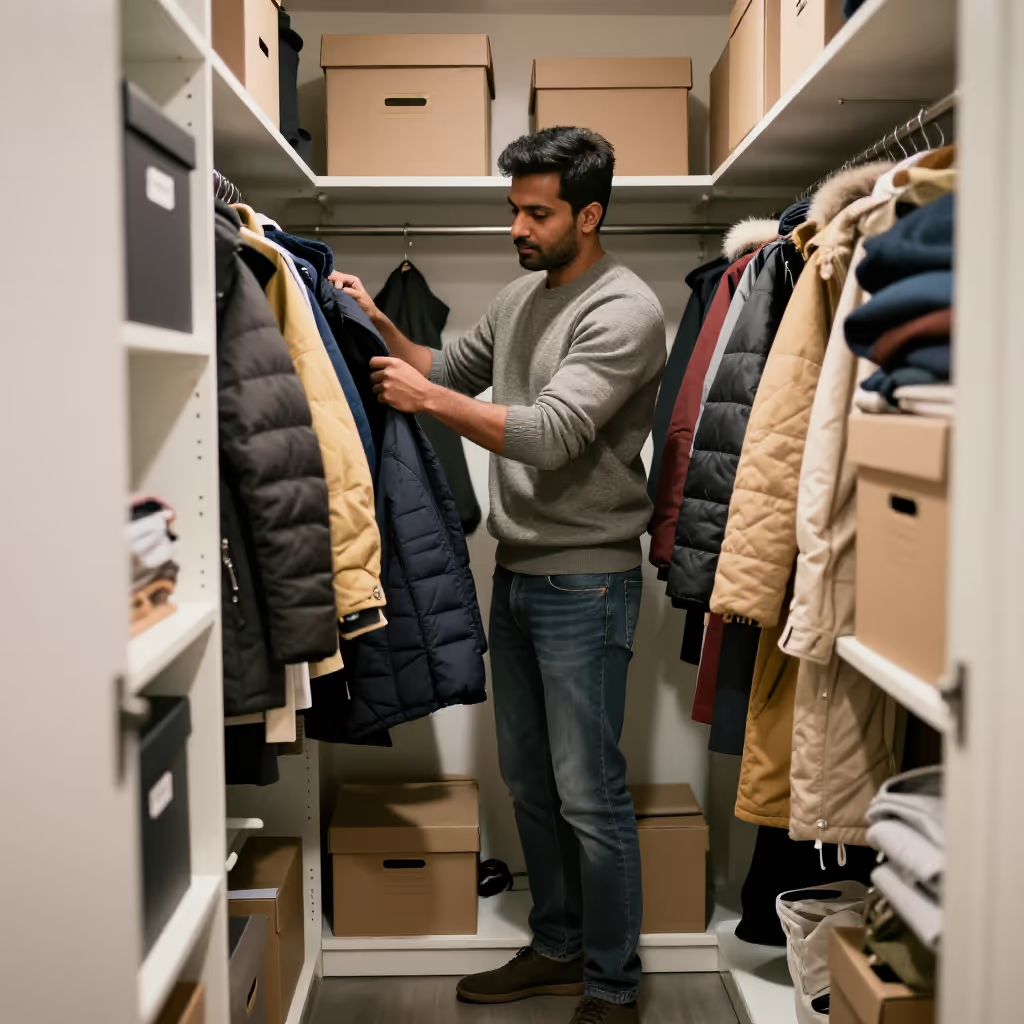
Wir verstauten die drei Koffer ordentlich und platzsparend im kleinen Auto.
We stowed the three suitcases neatly and compactly in the small car.
Wir mussten noch drei Koffer im kleinen Auto unterbringen.
We still had to fit three suitcases into the small car.