

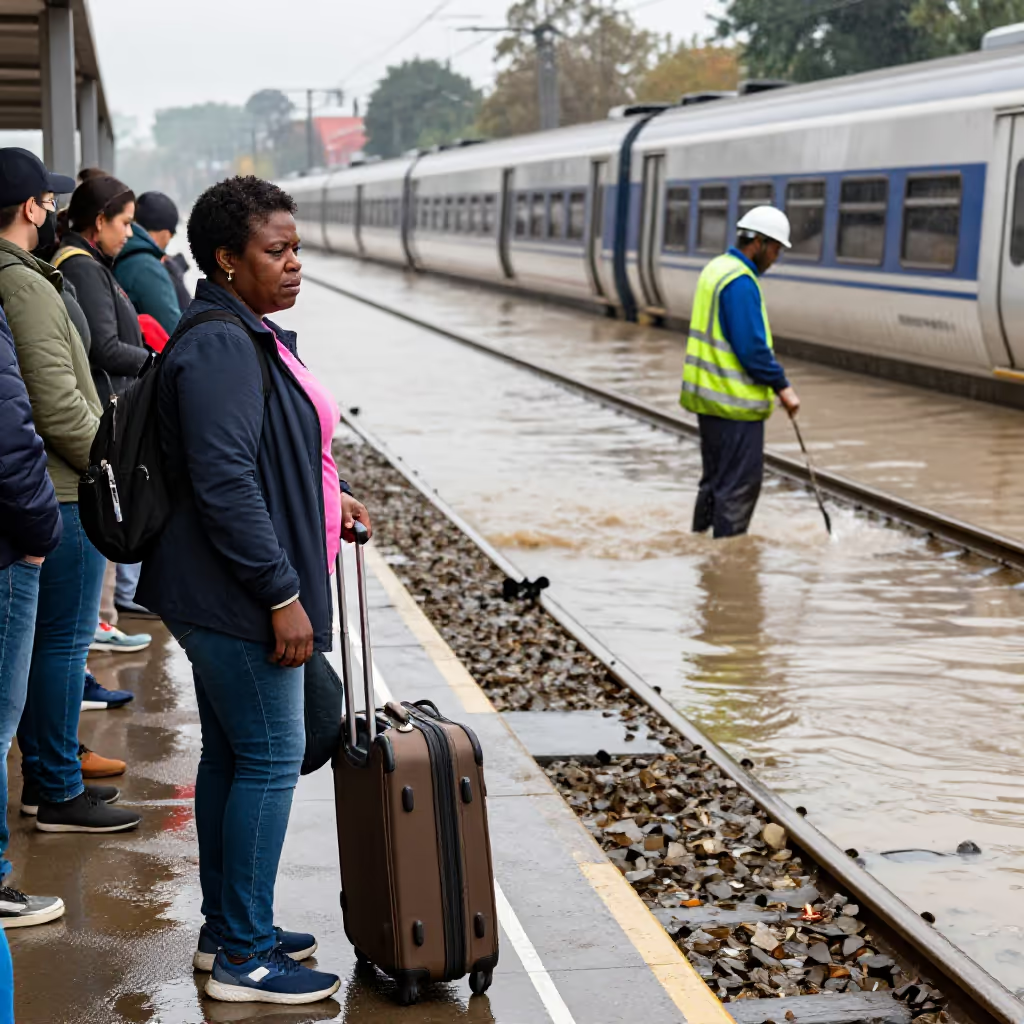
unvermeidbar
unavoidable
Something that cannot be prevented or avoided and will certainly happen.
EXAMPLE
Aufgrund des Streiks waren Verspätungen im Zugverkehr unvermeidbar.
Because of the strike, delays in train service were unavoidable.
unavoidable
Loading your saved state.
unavoidable
Something that cannot be prevented or avoided and will certainly happen.
Aufgrund des Streiks waren Verspätungen im Zugverkehr unvermeidbar.
Because of the strike, delays in train service were unavoidable.
The word is logically structured: the prefix 'un-' means 'not', the stem comes from the verb 'vermeiden' (to avoid), and the ending '-bar' means 'possible'. So 'unvermeidbar' (unavoidable) is something that one cannot avoid.
Einige Fehler sind am Anfang unvermeidbar.
Some mistakes are unavoidable at the beginning.
'Unvermeidbar' (unavoidable) is very often used predicatively with the verb 'sein' (to be). The structure is then: 'Etwas ist unvermeidbar' (Something is unavoidable).
Eine Preiserhöhung war leider unvermeidbar.
A price increase was unfortunately unavoidable.
This adjective often describes negative or neutral events and their results. Typical nouns are 'Folgen' (consequences), 'Konsequenzen' (consequences), 'Verluste' (losses), or 'Konflikte' (conflicts).
Der Klimawandel hat unvermeidbare Folgen für die Umwelt.
Climate change has unavoidable consequences for the environment.
inevitable
Zwangsläufig and unvermeidbar both describe something that is certain to happen. Zwangsläufig, however, emphasizes that the consequence necessarily arises from a situation or action, while unvermeidbar mainly says that it cannot be prevented. Use zwangsläufig for a necessary consequence and unvermeidbar when there is no control over it.

Wegen des starken Sturms waren einige Verspätungen unvermeidbar.
Because of the severe storm, some delays were unavoidable.
Wenn niemand den Fehler korrigiert, führt das zwangsläufig zu weiteren Problemen.
If no one corrects the mistake, it will inevitably lead to further problems.