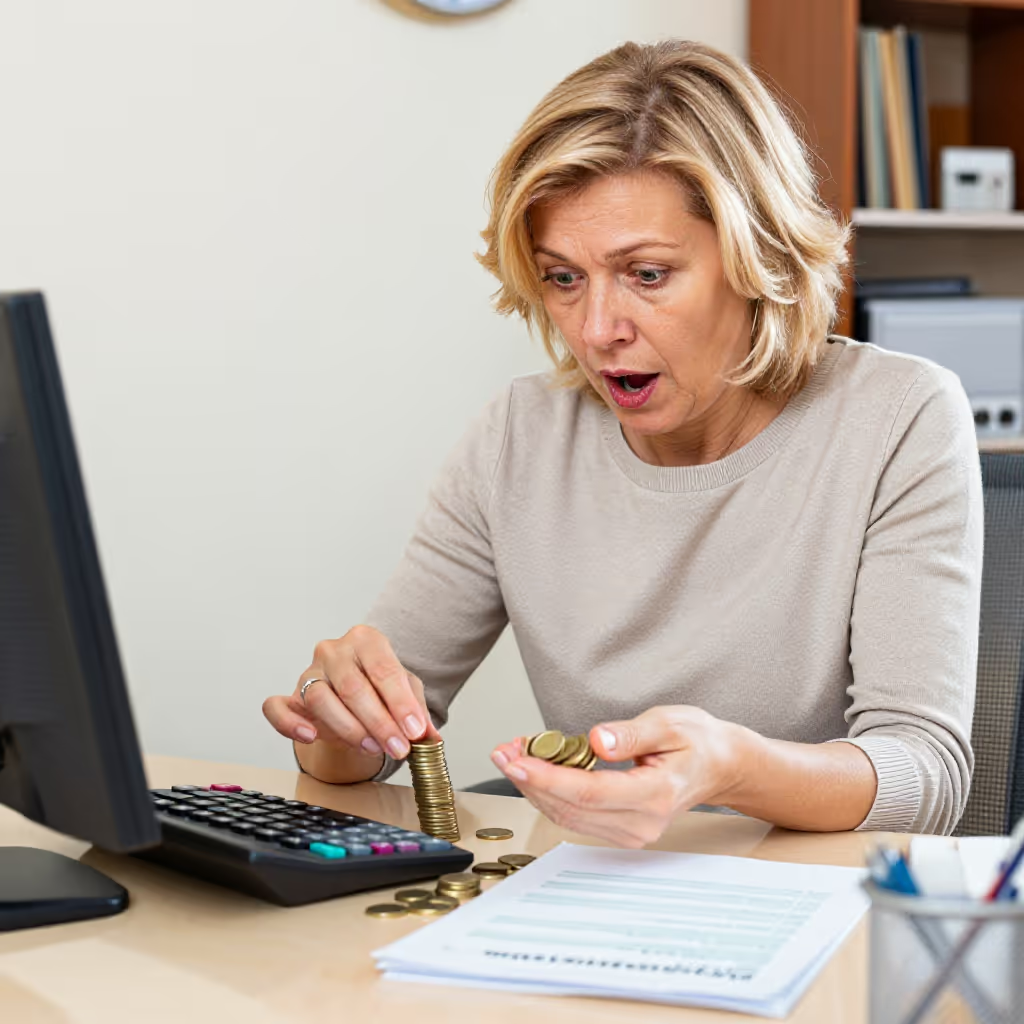
To make an error or be mistaken, especially in a calculation, count, or assessment.
example
Entschuldigung, ich habe mich beim Wechselgeld vertan, hier fehlt ein Euro.
Sorry, I made a mistake with the change; one euro is missing here.
Usage tips
Word structure
The verb is made up of the prefix 'ver-' and the verb 'tun' (to do). The prefix 'ver-' indicates here that something is done wrongly or incorrectly.
EXAMPLE
Oh, ich glaube, bei der Adresse habe ich mich vertan.
Oh, I think I made a mistake with the address.
Context clue
The meaning changes depending on the structure: 'sich vertun' (to make a mistake) always means 'to be mistaken'. 'Etwas vertun' (to waste something), with an accusative object, usually 'Zeit' (time), means 'to waste something'.
EXAMPLE
Ich habe mich in der Uhrzeit vertan und kam zu spät.
I got the time wrong and arrived late.
Sentence structure
In the meaning 'sich irren' (to be mistaken), the verb is always reflexive. You can make a mistake not only with numbers, but also about a person or a situation.
EXAMPLE
Er hat sich in seiner Einschätzung des Projekts völlig vertan.
He was completely wrong in his assessment of the project.
Fixed expression
The expression 'Zeit vertun' (to waste time) is very common. It is often expanded with the preposition 'mit' (with) to indicate what the time was wasted on.
EXAMPLE
Ich habe den ganzen Sonntag damit vertan, aufzuräumen.
I wasted the whole Sunday cleaning up.
Compare with
confusable
vertun vs verbringen
to spend / transfer
'verbringen' and 'vertun' can both be connected with time. 'verbringen' is neutral: it simply says that you fill a certain amount of time in a place or with an activity. That can be pleasant, boring, or useful. 'Zeit vertun' is negative and means that you waste time or do nothing important with it. The words can be confused because in both cases you are talking about time. Pay attention to the evaluation: 'Zeit verbringen' only describes, while 'Zeit vertun' criticizes.
vertun
Vor der Reise vertut Herr Müller keine Zeit und prüft sofort die Technik.
Before the trip, Mr. Müller wastes no time and immediately checks the equipment.
verbringen
Im Sommer verbringen wir viele Nachmittage am See.