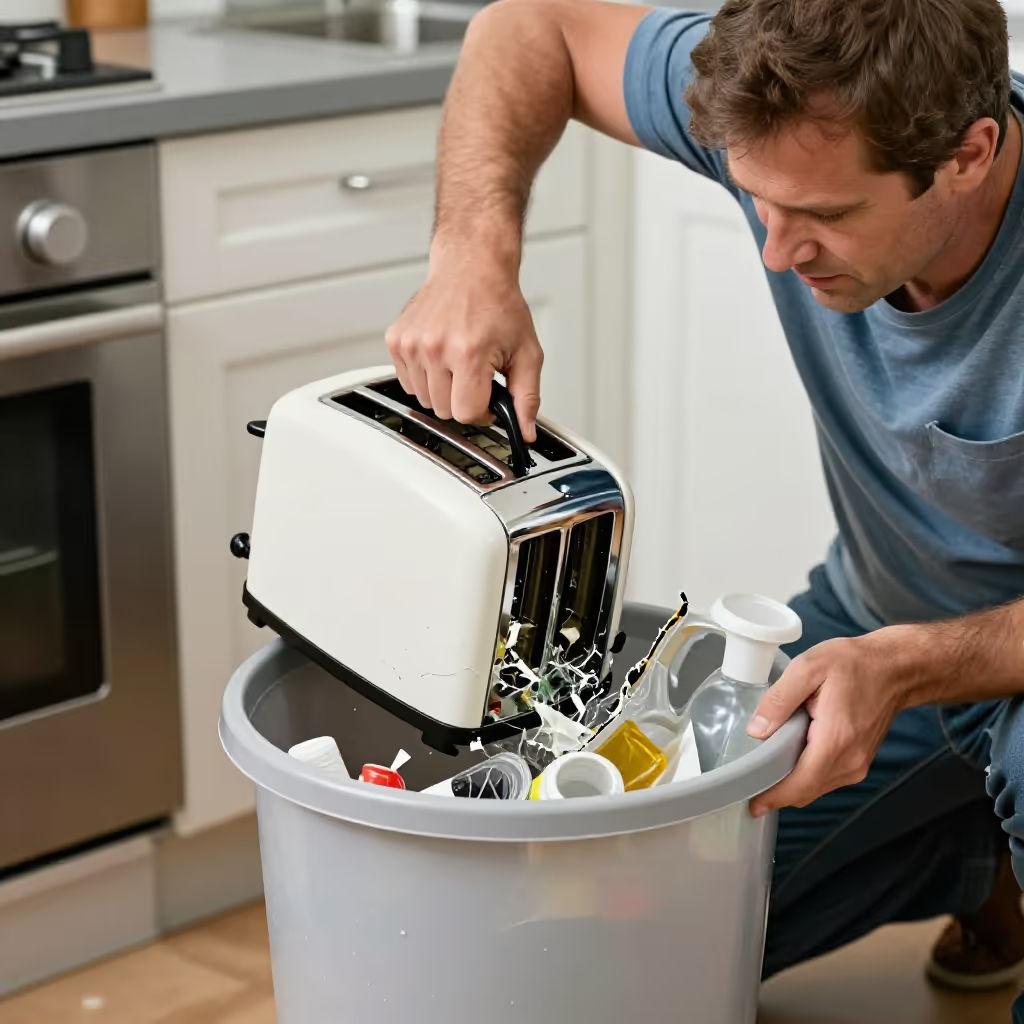
To throw something in the trash because it is unusable, broken, or no longer needed. This is a colloquial expression.
example
Die Joghurtbecher sind leer, du kannst sie wegschmeißen.
The yogurt cups are empty; you can throw them away.

Usage tips
Separable verb
'Wegschmeißen' (to throw away) is a separable verb. The prefix 'weg-' comes at the end in a main clause. In a subordinate clause, the verb stays together, and in the infinitive with 'zu', 'zu' comes in the middle.
EXAMPLE
Ich schmeiße die alten Zeitungen weg.
I’m throwing the old newspapers away.
Register: colloquial
The verb 'wegschmeißen' (to throw away) belongs to colloquial language. It is very common in everyday life, but in formal texts or conversations you would more likely use 'wegwerfen' (to throw away) or 'entsorgen' (to dispose of).
EXAMPLE
Soll ich den leeren Karton wegschmeißen?
Should I throw away the empty cardboard box?
Context clue
Whether the literal or figurative meaning is intended can be recognized from the object. If it refers to a concrete object, it is literal. If it refers to something abstract like a chance or money, it is meant figuratively.
EXAMPLE
Schmeiß die kaputte Tasse bitte weg. (wörtlich)
Please throw the broken cup away. (literal)
Typical collocations
In the figurative meaning, 'wegschmeißen' (to waste) is often used with abstract nouns that represent value: 'eine Chance wegschmeißen' (to waste a chance), 'sein Talent wegschmeißen' (to waste one's talent), 'sein Leben wegschmeißen' (to throw one's life away), or 'Geld wegschmeißen' (to waste money).
EXAMPLE
Du hast so ein großes Talent, schmeiß es nicht einfach weg!
You have such great talent; don’t just throw it away!
Compare with
confusable
wegschmeißen vs verpassen
to miss / to give
'verpassen' and 'wegschmeißen' can both have to do with an unused opportunity. You use 'verpassen' when you do not take an opportunity, often because you are too late or were not there. 'wegschmeißen' is more colloquial and sounds stronger: you had the chance, but used it badly or gave it up carelessly. The words can be confused because both ultimately mean that a possibility has been lost. 'verpassen' fits better with time and opportunities, while 'wegschmeißen' fits better with waste caused by one's own behavior.
wegschmeißen
Mit dieser schlechten Vorbereitung hat sie ihre Chance auf den Job weggeschmissen.
With such poor preparation, she threw away her chance at the job.
verpassen
Weil sein Handy aus war, hat Paul den wichtigen Anruf verpasst.
Because his phone was off, Paul missed the important call.