


versehen mit
to provide with
To equip or furnish something or someone with something.
EXAMPLE
Das neue Modell ist mit zahlreichen Sicherheitsfunktionen versehen.
The new model is provided with numerous safety features.
to provide / to be mistaken
Loading your saved state.
to provide with
To equip or furnish something or someone with something.
Das neue Modell ist mit zahlreichen Sicherheitsfunktionen versehen.
The new model is provided with numerous safety features.

to be mistaken
To make a mistake, be mistaken, or unintentionally do something incorrectly.
Entschuldigung, ich habe mich in der Hausnummer versehen.
Sorry, I was mistaken about the house number.
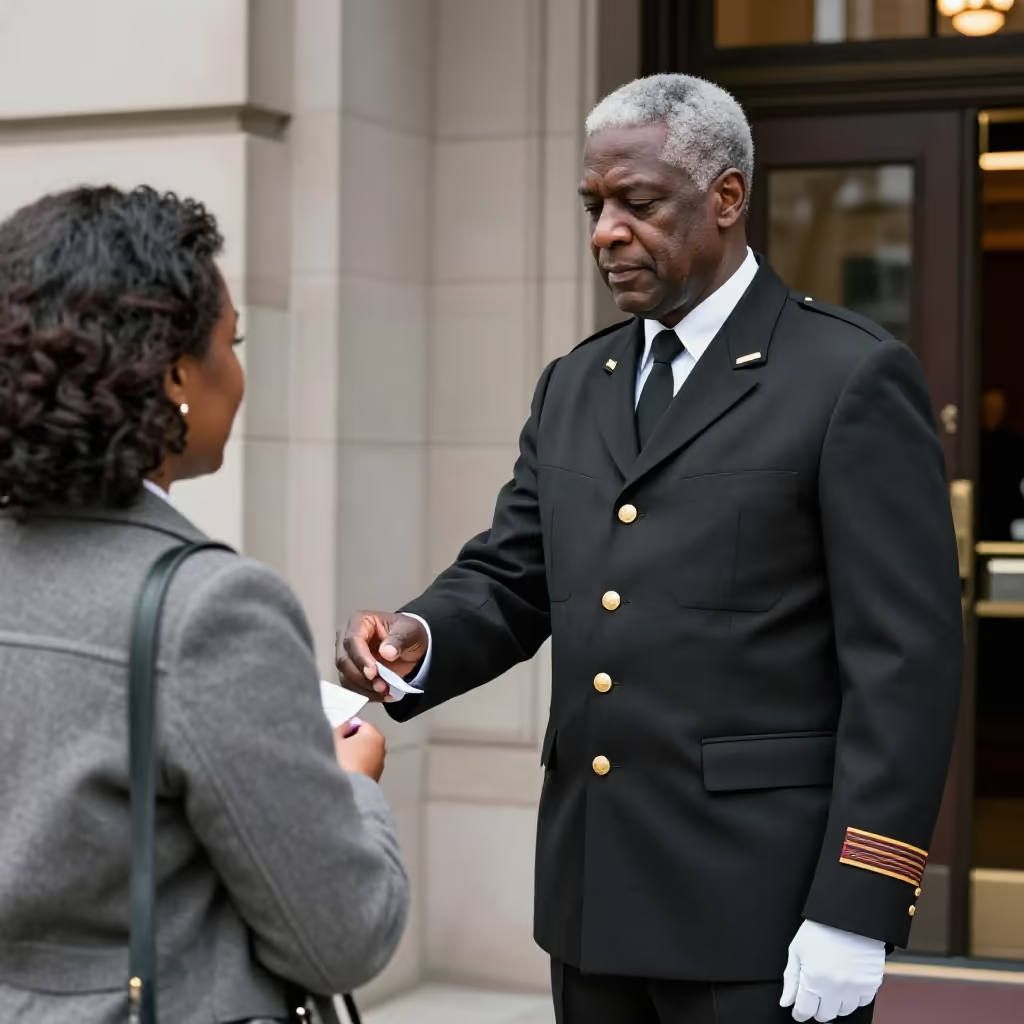
to perform
To carry out or perform a task, office, or duty. This use is formal and rather rare.
Der Beamte versieht seinen Dienst stets gewissenhaft.
The civil servant always performs his duties conscientiously.
'Versehen' (to provide / to be mistaken) is an inseparable verb that comes from the stem 'sehen' (to see). The prefix 'ver-' here indicates either a mistake ('sich versehen' = to be mistaken) or the result of an action ('etwas mit etwas versehen' = to provide something with something).
Ich habe mich beim Datum versehen, das Treffen ist erst morgen.
I was mistaken about the date; the meeting is not until tomorrow.
In the meaning 'ausstatten' (to equip), 'versehen' is always used with the preposition 'mit' and the dative. The structure is: something is provided with something (dative).
Alle Dokumente müssen mit einer Unterschrift versehen sein.
All documents must be provided with a signature.
When 'versehen' is used reflexively ('sich versehen'), it always means 'to make a mistake' or 'to be mistaken'. It is often followed by a preposition such as 'in' or 'bei' to name the area of the mistake.
Ich habe mich in der Uhrzeit versehen und war eine Stunde zu früh da.
I was mistaken about the time and was there an hour too early.
The meaning 'to perform a duty or hold an office' is very formal and is used mainly in official or administrative language. In normal everyday life, you almost never hear this use.
Der Richter versieht sein Amt seit über zwanzig Jahren.
The judge has held his office for over twenty years.
mistake / error
A Fehler (mistake) is an incorrect action or decision without saying anything about the intention behind it. By contrast, someone who sich versieht does something wrong or is mistaken unintentionally. When the lack of intention is important, sich versehen is more precise.

Ich habe mich versehen und dem Kunden unbeabsichtigt die falsche Datei geschickt.
I made a mistake and unintentionally sent the customer the wrong file.
Es war ein Fehler, dem Kunden die falsche Datei zu schicken.
It was a mistake to send the customer the wrong file.