

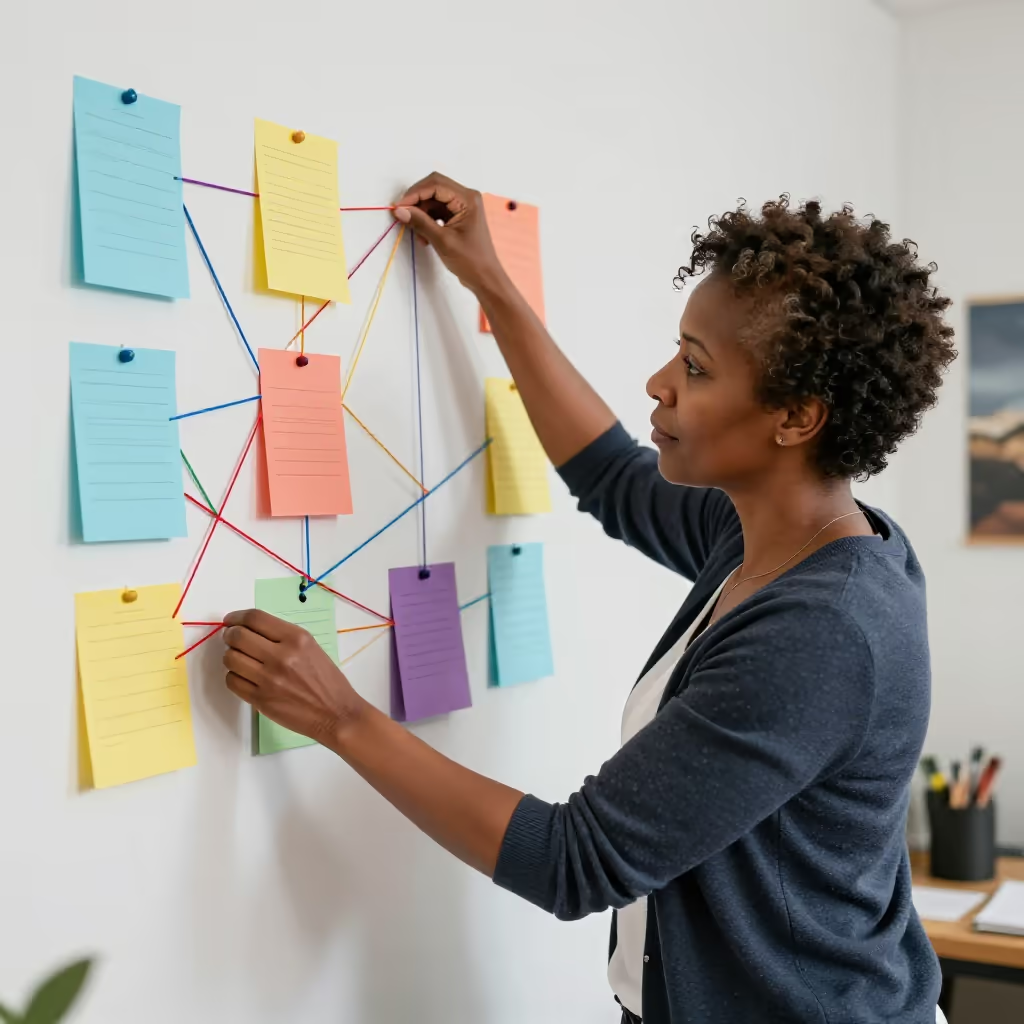
In a figurative sense: to artfully and closely connect different elements such as ideas, plotlines, or themes, so that a complex whole emerges.
example
Die Autorin verwebt geschickt historische Fakten mit einer fiktiven Liebesgeschichte.
The author skillfully interweaves historical facts with a fictional love story.
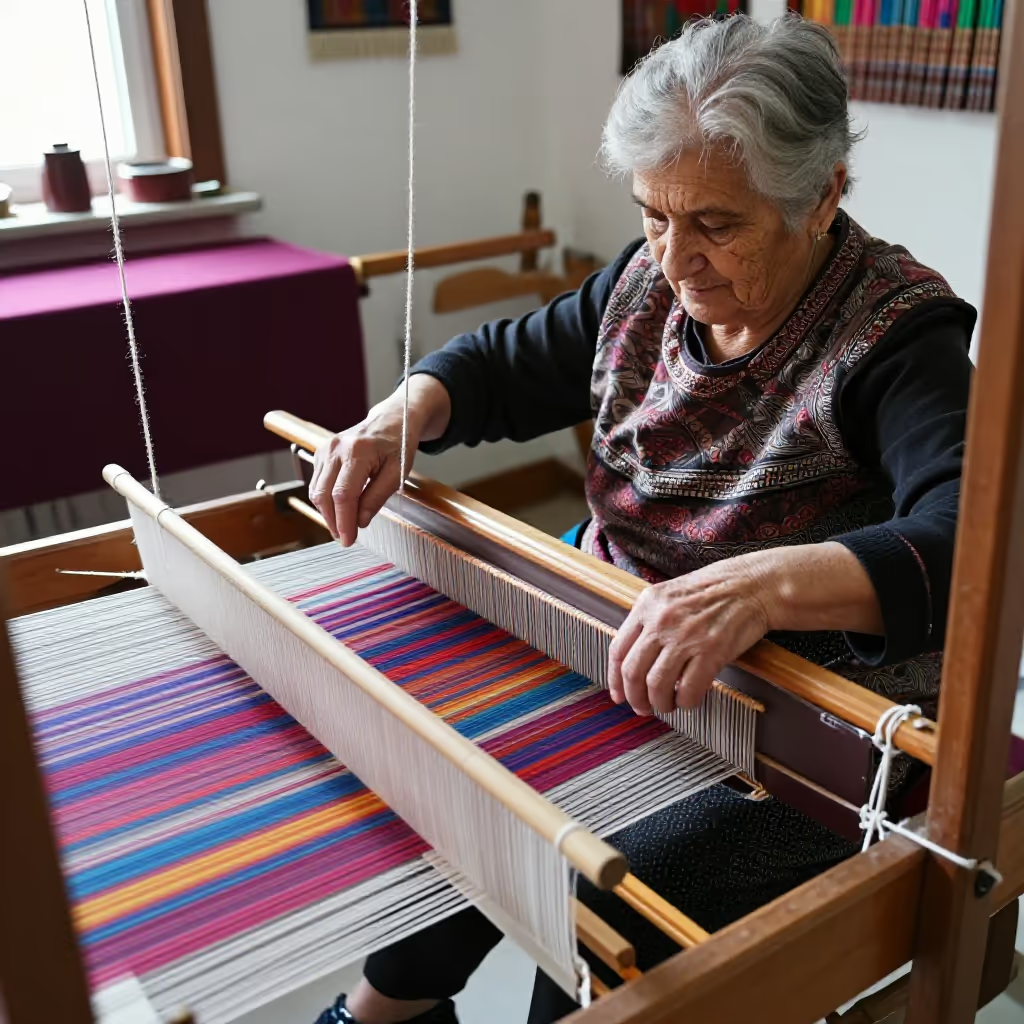
Usage tips
Inseparable verb
'Verweben' (to interweave) begins with the prefix 'ver-' and is therefore an inseparable verb. The prefix remains firmly attached to the stem 'weben' (to weave) in all sentence forms.
EXAMPLE
Der Film verwebt drei verschiedene Lebensgeschichten.
The film interweaves three different life stories.
Sentence structure with 'mit'
A very typical sentence structure for this verb is 'etwas (Akkusativ) mit etwas (Dativ) verweben' (to interweave something with something). This construction describes how two or more elements are connected with one another.
EXAMPLE
Der Roman verwebt die Realität mit Elementen der Fantasie.
The novel interweaves reality with elements of fantasy.
Context clue
You can recognize the meaning from the object: if physical materials like 'Fäden' (threads), 'Wolle' (wool), or 'Stoffe' (fabrics/materials) are mentioned, the literal meaning is intended. With abstract things like 'Themen' (themes), 'Geschichten' (stories), or 'Fakten' (facts), it is the figurative meaning.
EXAMPLE
Die Künstlerin verwebt bunte Wollfäden zu einem Bild. (wörtlich)
The artist weaves colorful wool threads together into a picture. (literal)
Participle as adjective
The past participle 'verwoben' (interwoven) is very often used as an adjective, often in the expression 'eng miteinander verwoben sein' (to be closely interwoven with one another). This describes a complex and inseparable connection.
EXAMPLE
Politik und Wirtschaft sind in diesem Land eng miteinander verwoben.
Politics and the economy are closely interwoven in this country.
Compare with
near_synonym · confusable
verweben vs verbinden
to connect / to bandage
'verbinden' and 'verweben' can both mean that several elements become a whole. 'verbinden' is neutral and general. It fits things, ideas, or qualities that belong together or are joined together. 'verweben' is more figurative and more specific: literally, it is about threads becoming fabric. Figuratively, it is often used for stories, themes, or ideas that interlock artfully. The words can be confused because 'verweben' describes a special, finer kind of 'verbinden'. If the connection is simple or technical, use 'verbinden'. If many parts run closely and artfully into one another, 'verweben' fits better.
verweben
Die Autorin verwebt in ihrem Roman mehrere Familiengeschichten.
In her novel, the author interweaves several family stories.
verbinden
Der Vortrag verbindet einfache Beispiele mit wichtigen Fakten.
The lecture combines simple examples with important facts.