

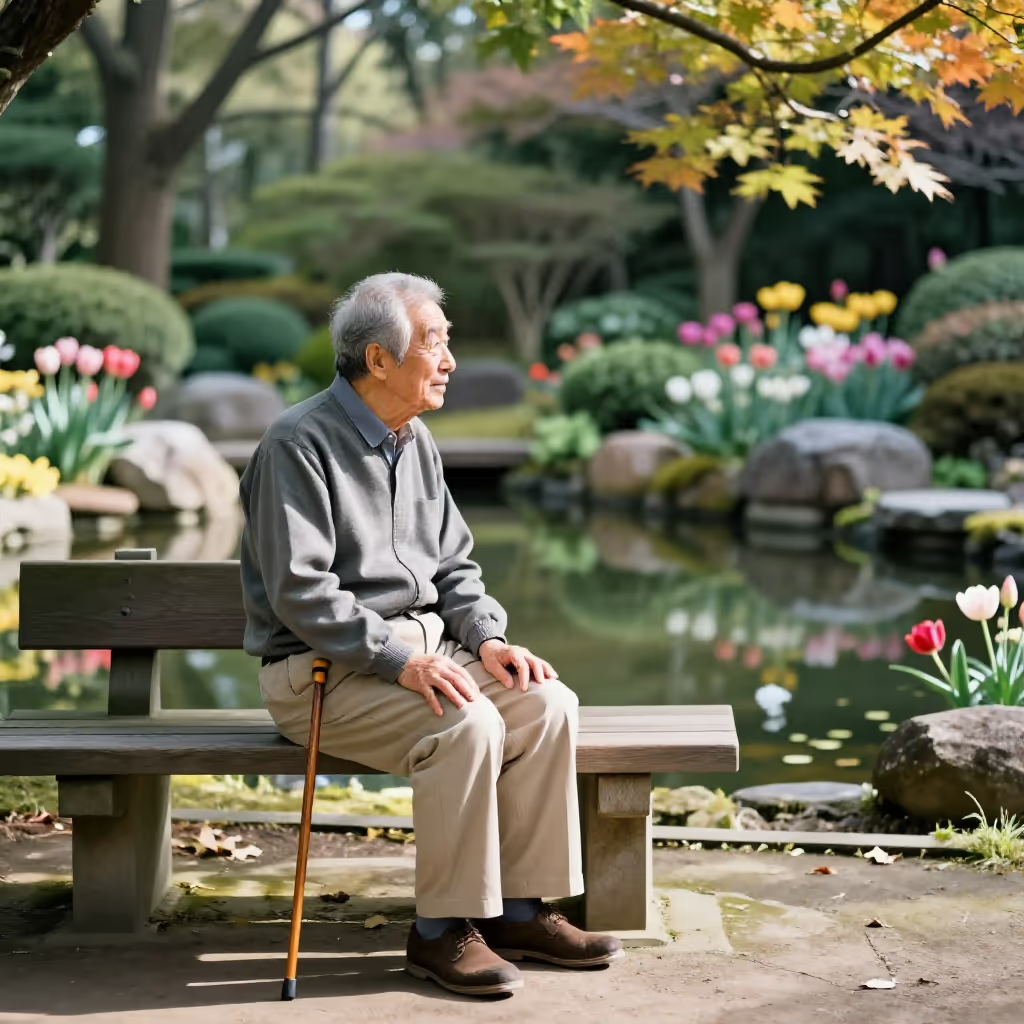
(elevated) To stay in a place for a certain amount of time, often in a calm and pleasant way.
example
Lassen Sie uns noch einen Augenblick auf der Terrasse verweilen und die Aussicht genießen.
Let us linger on the terrace for another moment and enjoy the view.

Usage tips
Inseparable verb
'Verweilen' (to linger) is an inseparable verb because it begins with the prefix 'ver-'. The prefix remains firmly attached to the verb in all sentence forms and tenses.
EXAMPLE
Er verweilte einen Moment am Fenster und blickte hinaus.
He lingered at the window for a moment and looked outside.
Elevated style
This verb belongs to an elevated, almost poetic style of language. It is used only rarely in everyday colloquial speech.
EXAMPLE
Die Gäste verweilten nach dem Essen noch lange im Garten.
After the meal, the guests lingered in the garden for a long time.
Sentence structure and usage
'Verweilen' (to linger) is often combined with a prepositional phrase that indicates a place. Typical prepositions are 'an' (at/by), 'auf' (on), or 'in' (in).
EXAMPLE
Wir verweilten einige Stunden am Seeufer.
We lingered at the lakeshore for several hours.
Compare with
near_synonym
verweilen vs bleiben
to stay / remain
'bleiben' and 'verweilen' can both mean that someone does not leave a place right away. 'bleiben' is the normal everyday word and fits almost any situation. 'verweilen' sounds elevated and calmer. It is used more when someone spends a while in a place, often pleasantly or deliberately. In everyday life, people usually say 'bleiben'; 'verweilen' is more suitable in texts, reports, or beautiful descriptions.
verweilen
Nach dem Spaziergang verweilen sie noch kurz am See.
After the walk, they linger by the lake for a little while.
bleiben
Mein Kollege bleibt heute länger im Büro.
My colleague is staying longer at the office today.