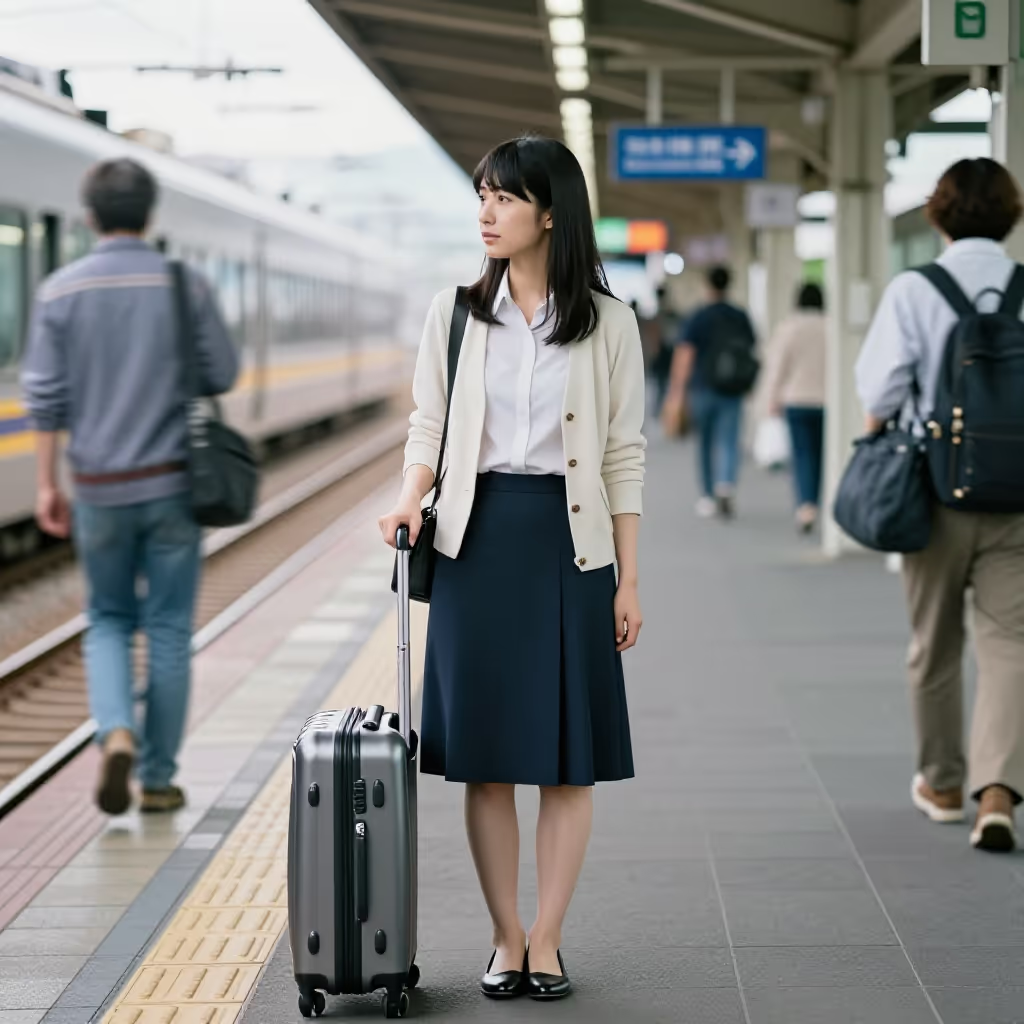
To stay in a particular place or in a particular position without moving. It often expresses waiting, deliberate immobility, or pausing.
example
Er verharrte einen Moment an der Tür, bevor er den Raum betrat.
He remained at the door for a moment before entering the room.

Usage tips
Inseparable verb
'Verharren' (to remain) is an inseparable verb. The prefix 'ver-' stays firmly attached to the stem 'harren' (to wait, to endure) in all sentence forms and is not separated.
EXAMPLE
Sie verharrte lange vor dem Schaufenster.
She remained in front of the shop window for a long time.
Perfect tense with 'sein'
The perfect tense of 'verharren' (to remain) is always formed with the auxiliary verb 'sein' (to be), because it describes a state of staying. The correct form is therefore 'ist verharrt' (has remained).
EXAMPLE
Der Wanderer ist auf dem Gipfel in Stille verharrt.
The hiker remained on the summit in silence.
Elevated style
The word 'verharren' (to remain) belongs more to written language or an elevated style. It sounds more formal and poetic than 'bleiben' (to stay) or 'stehen bleiben' (to stop / stand still).
EXAMPLE
Die Katze verharrte regungslos, als sie die Maus sah.
The cat remained motionless when it saw the mouse.
Fixed preposition 'in'
When referring to a state or an opinion, 'verharren' (to persist) is firmly used with the preposition 'in' and the dative. This structure shows that someone remains in an attitude or state.
EXAMPLE
Er verharrt in seinem Schweigen und will nicht antworten.
He persists in his silence and does not want to answer.
Compare with
near_synonym
verharren vs bleiben
to stay / remain
'bleiben' and 'verharren' can both mean that someone does not change place, position, or state. 'bleiben' is the normal and general word. 'verharren' is more specific and stronger: it emphasizes that someone remains still, motionless, or very firmly in a position or attitude. 'bleiben' is used very often in everyday language. 'verharren' fits better when immobility or firmly holding on to something is especially important.
verharren
Der Hund verharrt vor der Tür und wartet auf sein Herrchen.
The dog remains in front of the door and waits for his owner.
bleiben
Zur Sicherheit bleiben die Kinder während des Gewitters im Haus.
To be safe, the children are staying inside during the thunderstorm.