

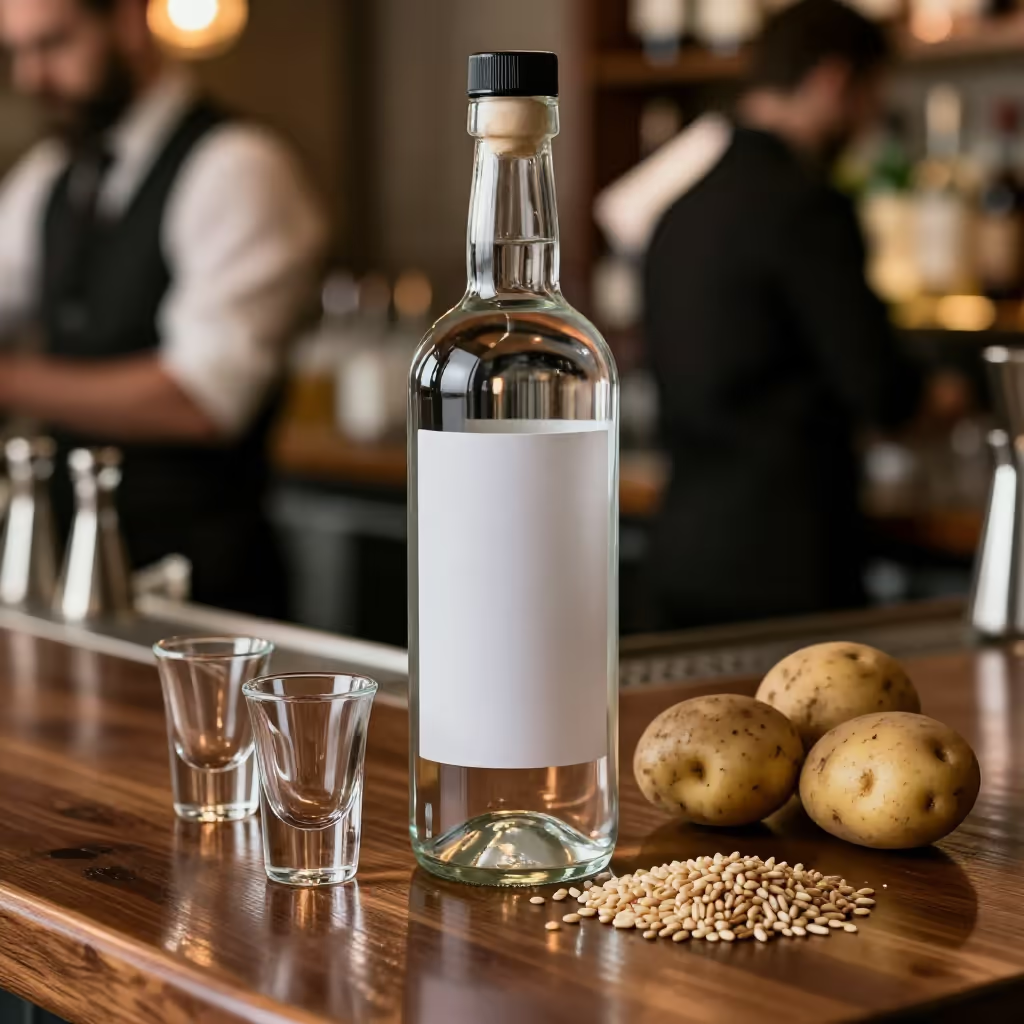
A clear, high-proof spirit usually made from grain or potatoes by distillation and originally from Eastern Europe.
example
Für den Cocktail „Moscow Mule“ benötigt man Vodka, Ginger Beer und Limettensaft.
For the cocktail 'Moscow Mule', you need vodka, ginger beer, and lime juice.
Usage tips
Alternative spelling
Besides 'Vodka', the spelling 'Wodka' is also very common and correct. Both variants are understood and can be found in the Duden dictionary.
EXAMPLE
In vielen Bars wird polnischer Wodka angeboten.
Polish vodka is served in many bars.
Typical collocations
Common verbs used in connection with vodka are 'trinken' (to drink), 'mischen' (to mix), and 'genießen' (to enjoy). People often drink it 'pur' (straight), 'auf Eis' (on ice), or in a 'Cocktail' (cocktail).
EXAMPLE
Manche Leute trinken ihren Vodka am liebsten eiskalt und pur.
Some people prefer to drink their vodka ice-cold and straight.
Use without an article
When talking about the spirit as a substance or in general, 'Vodka' (vodka) is often used without an article. The article is used when referring to a specific type or bottle.
EXAMPLE
Ich mag keinen Vodka.
I don't like vodka.
Compare with
near_synonym · confusable
Vodka vs Schnaps
schnapps
'Schnaps' and 'Vodka' can both refer to strong, distilled alcoholic drinks. 'Schnaps' is the more general term and can refer to many different types. 'Vodka' is a specific clear spirit, usually made from grain or potatoes, and is often associated with Eastern Europe. The words can be confused because vodka is drunk like a schnapps in many situations. To be precise, however: every vodka can be understood as a strong spirit, but not every schnapps is vodka. If the type matters, you say 'Vodka'; if you only mean a small strong drink, 'Schnaps' fits.
Vodka
Für den Cocktail mischt Maria Vodka mit Orangensaft.
For the cocktail, Maria mixes vodka with orange juice.
Schnaps
Er trinkt heute keinen Schnaps, weil er noch Auto fahren muss.
He is not drinking any schnapps today because he still has to drive.