

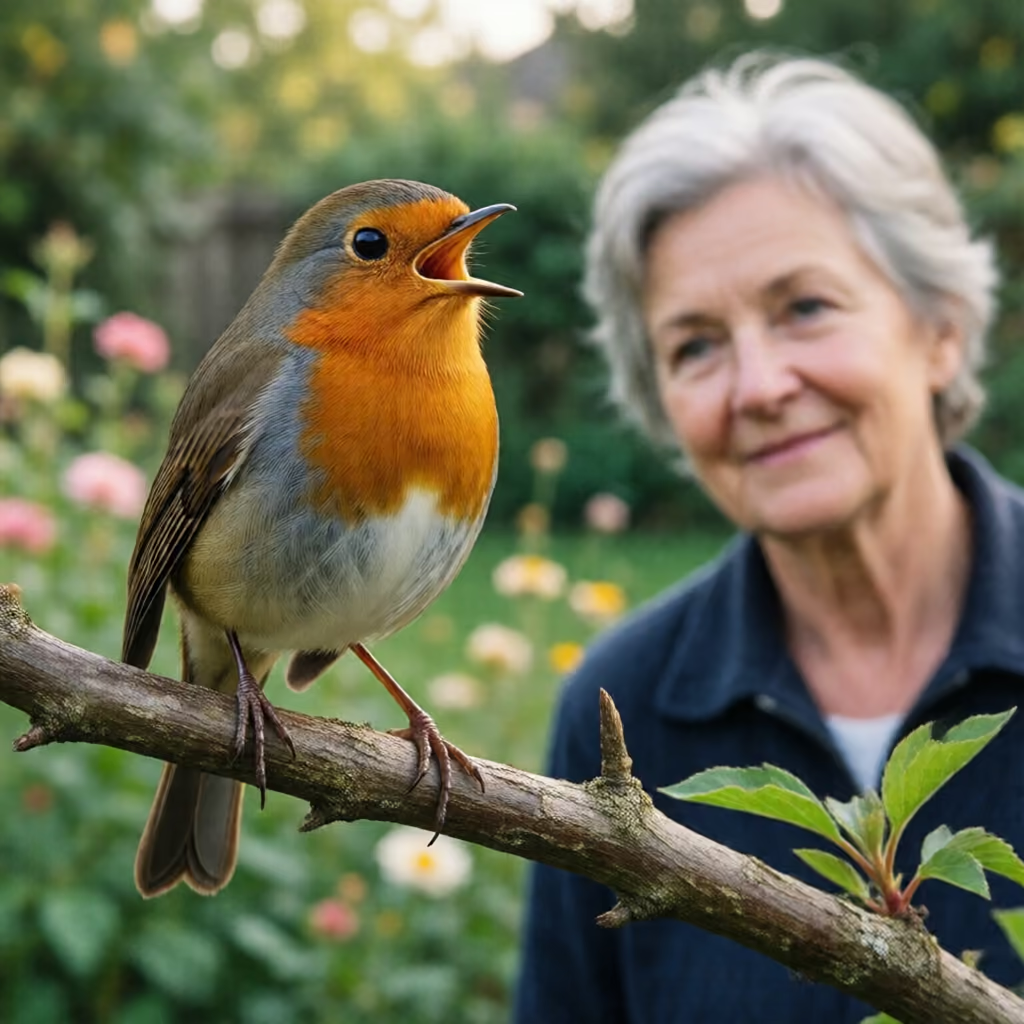
das Vogelgezwitscher
birdsong
The chirping, usually short, high-pitched sounds that birds make.
EXAMPLE
Am frühen Morgen weckte mich das Vogelgezwitscher im Garten.
Early in the morning, the birdsong in the garden woke me up.
birdsong
das Vogelgezwitscher
Loading your saved state.
birdsong
The chirping, usually short, high-pitched sounds that birds make.
Am frühen Morgen weckte mich das Vogelgezwitscher im Garten.
Early in the morning, the birdsong in the garden woke me up.
| gender | neuter das |
|---|---|
| genitive | des Vogelgezwitschers |
| singular | plural | |
|---|---|---|
| nominative | das Vogelgezwitscher | – |
| accusative | das Vogelgezwitscher | – |
| dative | dem Vogelgezwitscher | – |
| genitive | des Vogelgezwitschers | – |
The article changes with the case; it is shown in colour.
'Vogelgezwitscher' (birdsong) is made up of 'Vogel' (bird) and 'Gezwitscher' (chirping). The head word 'Gezwitscher' (chirping) refers to a series of short, high-pitched sounds; 'Vogel' (bird) indicates which animal makes them.
Im Frühling ist das Vogelgezwitscher besonders lebhaft.
In spring, the birdsong is especially lively.
'Vogelgezwitscher' (birdsong) often occurs with verbs such as 'hören' (to hear), 'genießen' (to enjoy), and 'aufwachen' (to wake up), or in the phrase 'von Vogelgezwitscher geweckt werden' (to be woken up by birdsong). The word often describes pleasant natural background sounds.
Am Wochenende genießt er das Vogelgezwitscher auf dem Balkon.
On weekends, he enjoys the birdsong while sitting on the balcony.
'Vogelgezwitscher' (birdsong) occurs especially often in descriptions of early mornings, gardens, forests, and warm seasons. References to time and place make the word's typical context easy to recognize.
Durch das Vogelgezwitscher im Park begann ihr Tag sehr ruhig.
The birdsong in the park gave her day a very peaceful start.